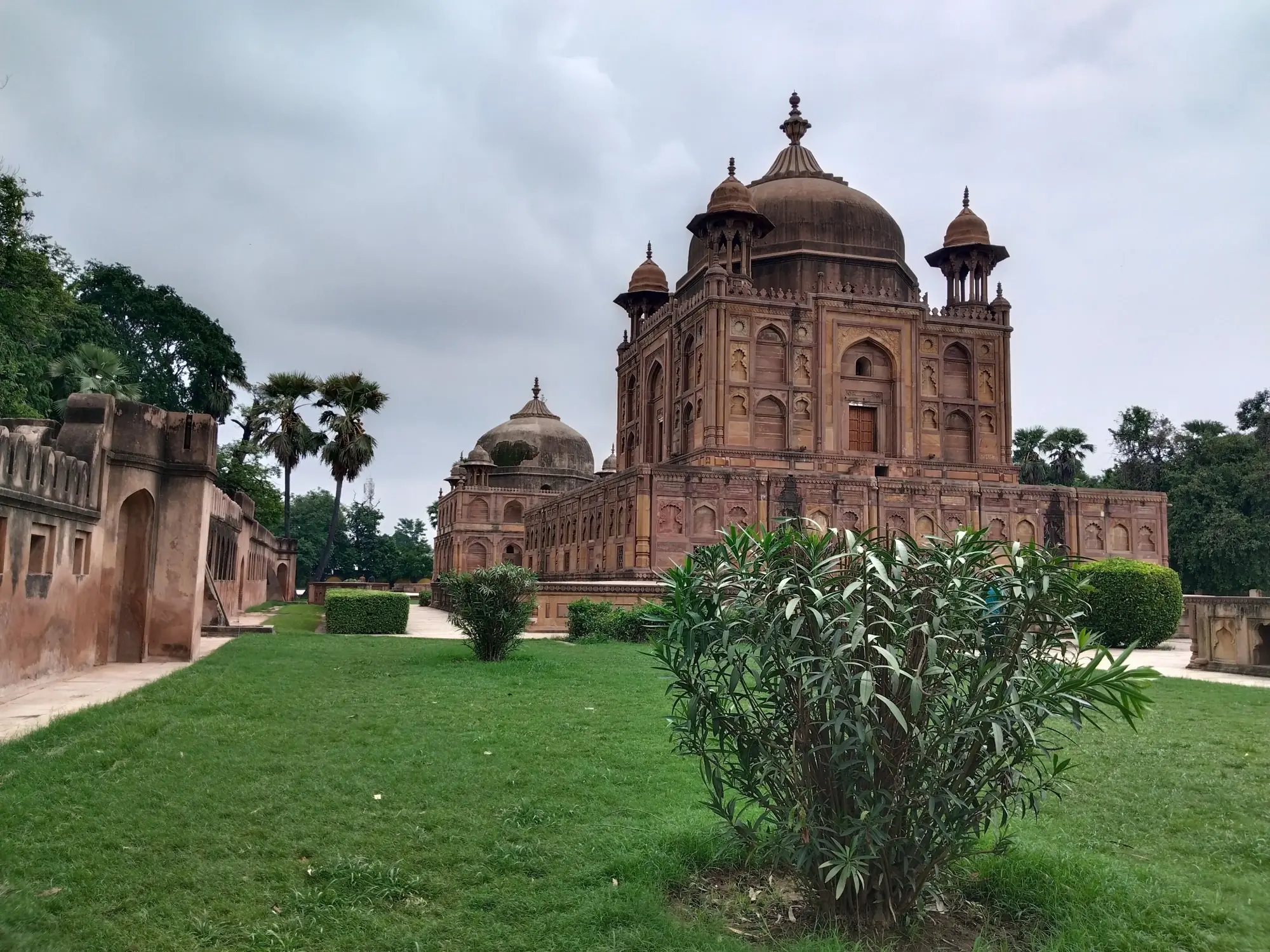
Khusro Bagh is a serene, walled garden located near the Allahabad Junction station. It is a prime example of Mughal architecture and garden design (Charbagh). It houses three massive sandstone mausoleums dedicated to Prince Khusrau (the eldest son of Emperor Jahangir), his mother Shah Begum, and his sister Nithar Begum.
The history here is tragic. Prince Khusrau rebelled against his father Jahangir, was blinded, imprisoned, and eventually murdered by his brother Shah Jahan (who built the Taj Mahal). The tombs are exquisite, featuring intricate stone carving, dome architecture, and remnants of frescoes inside.
The garden itself is filled with guava trees and provides a quiet escape from the city's noise. The tomb of Nithar Begum is architecturally the most elaborate, with floral motifs painted on the ceiling.
It is a protected monument of national importance, often compared to the Lodi Gardens in Delhi but much quieter.

The sacred confluence of the Ganga, Yamuna, and mythical Saraswati. The distinct colors of the rivers are visible where they meet mid-stream.
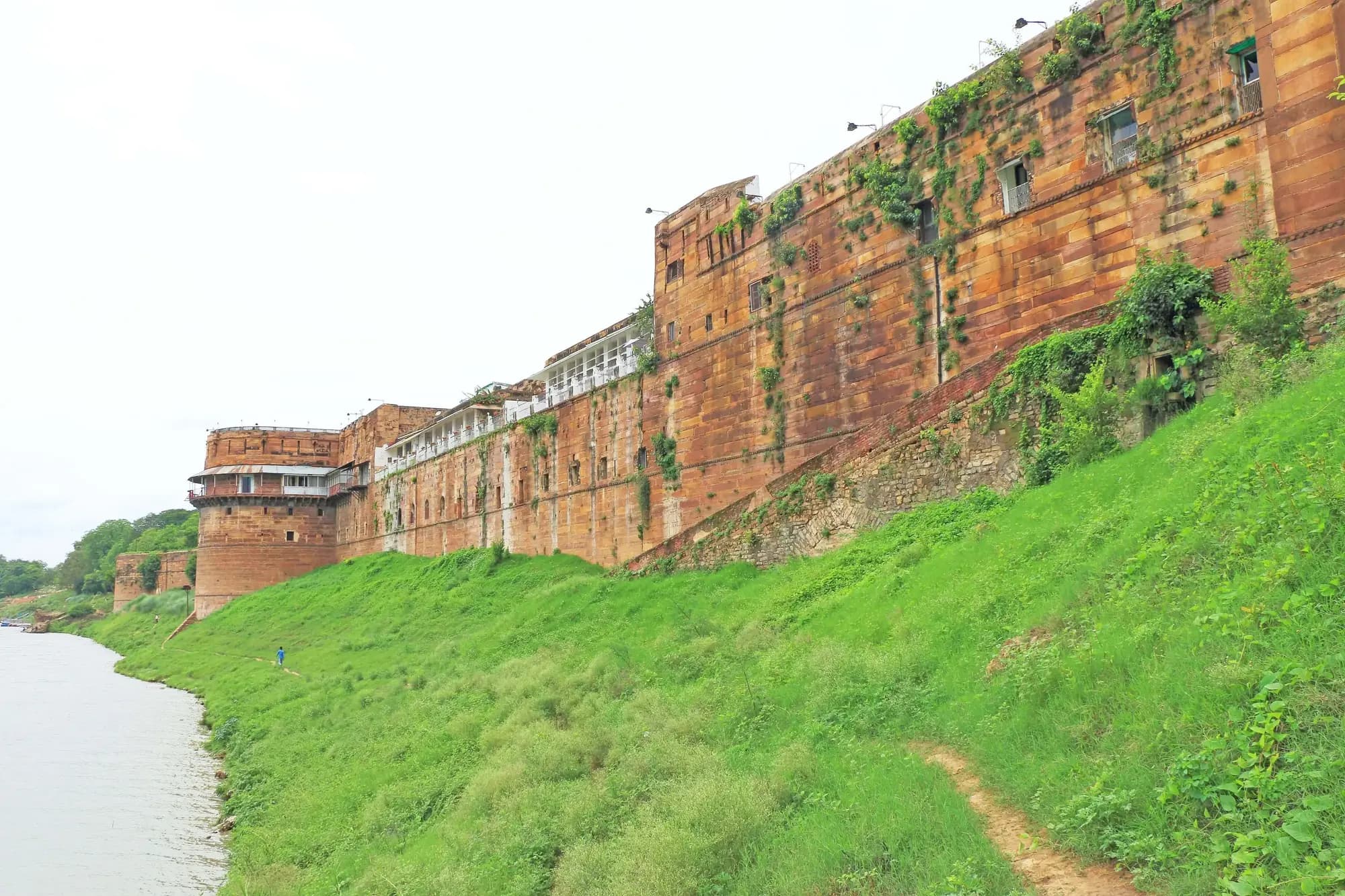
A massive fort built by Emperor Akbar in 1583 on the banks of the confluence. It houses the immortal 'Akshaya Vat' tree and the Patalpuri Temple.
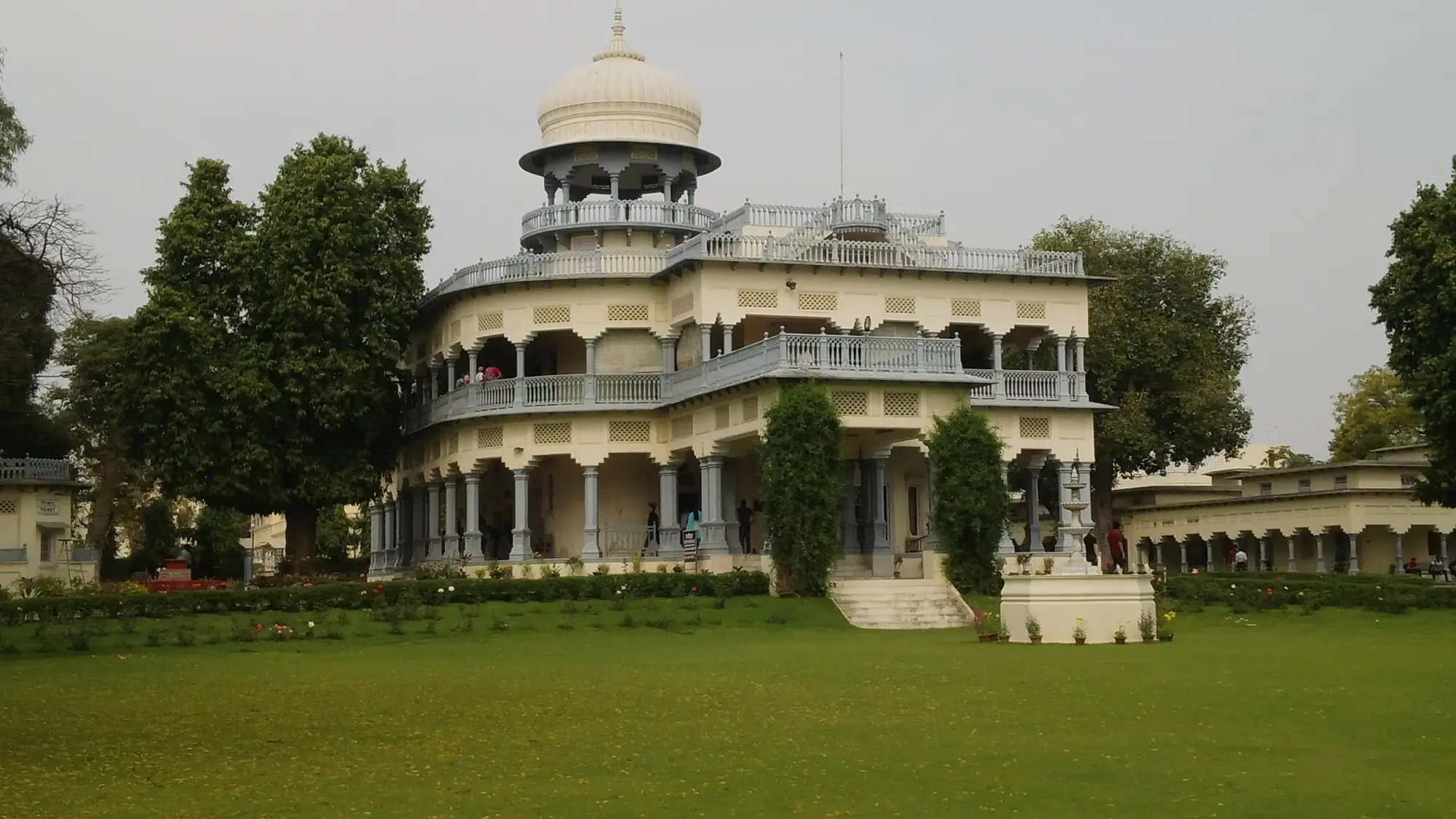
The historic ancestral home of the Nehru-Gandhi family. A pilgrimage site for those interested in India's freedom struggle.