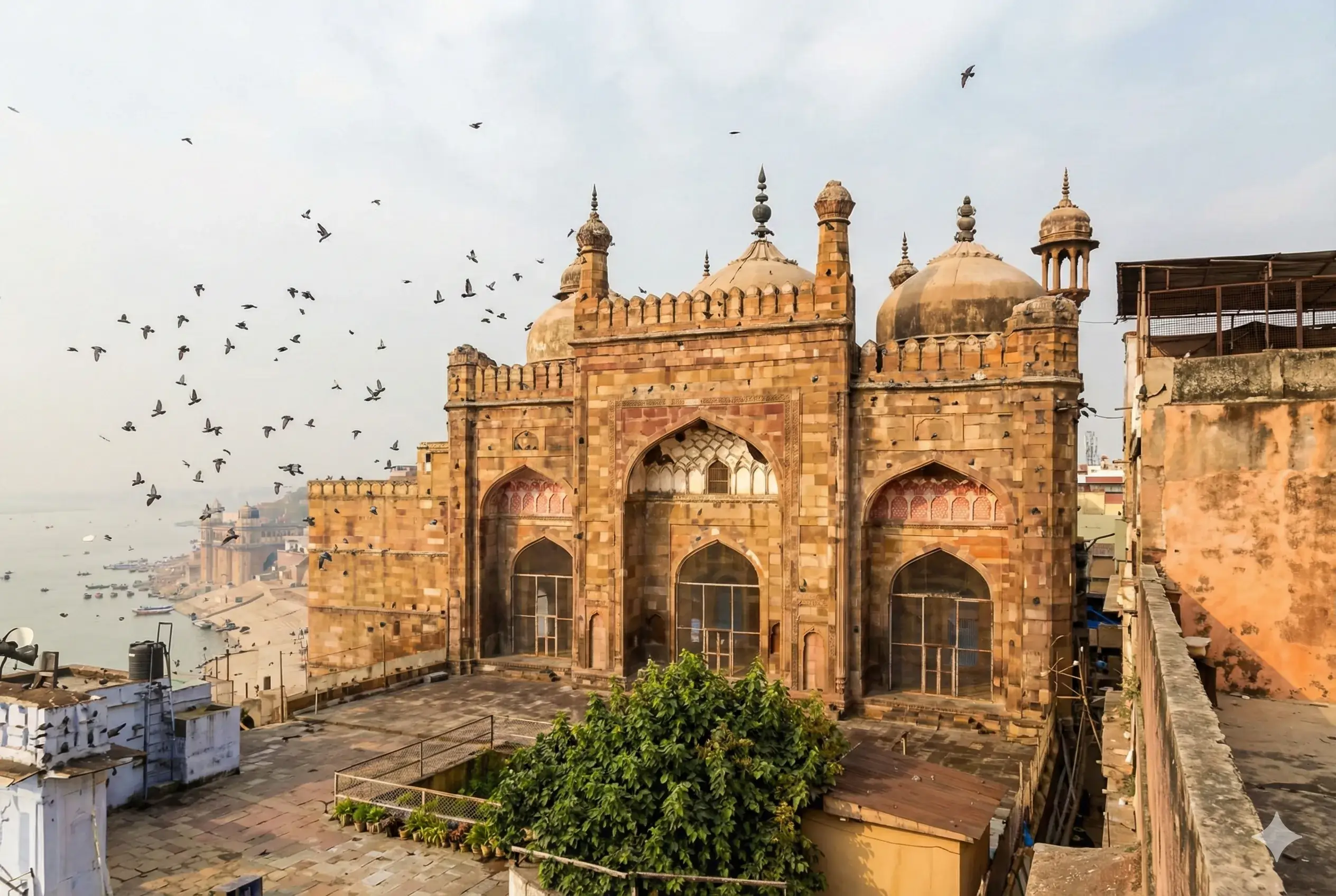
The Alamgir Mosque, also known as Beni Madhav Ka Darera, is a defining feature of the Varanasi skyline. Built in the 17th century by Emperor Aurangzeb, it sits atop the ruins of a much older Vishnu temple at Panchganga Ghat. The structure is a blend of Hindu and Islamic architecture, with the lower walls retaining some original Hindu carvings.
Historically, its minarets were much taller and served as a landmark for miles, but they were shortened due to structural instability. The mosque offers a breathtaking bird's-eye view of the Ganges. It stands as a testament to the complex and layered history of conquest and coexistence in the city.
Non-Muslims are generally allowed in the courtyard but may be restricted from the prayer hall during prayer times. It is a quiet, breezy spot high above the river.
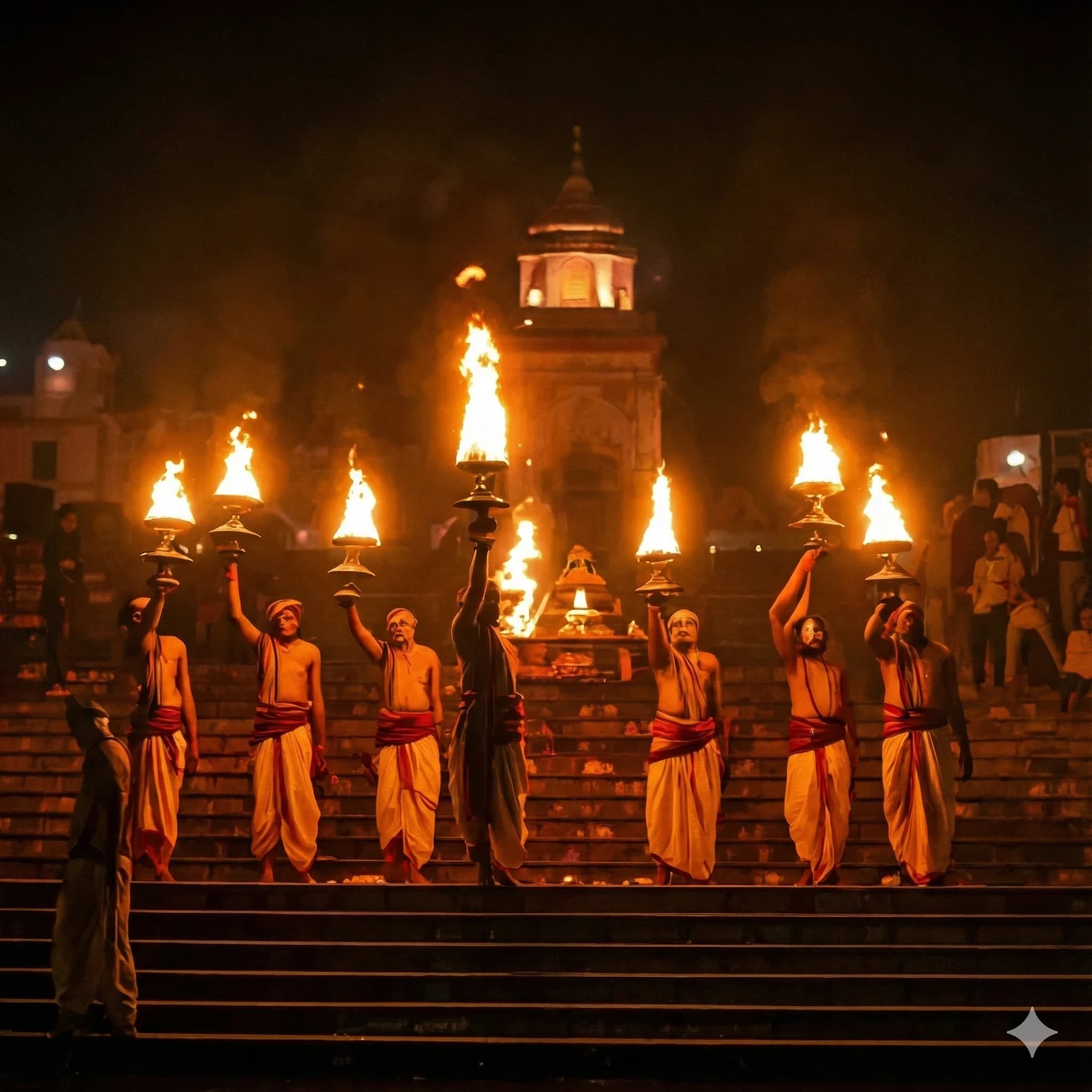
The most spectacular and bustling ghat in Varanasi, famous for the Agni Pooja (Ganga Aarti). Legend says Lord Brahma sacrificed ten horses here, making it a site of supreme cosmic power and vibrant daily devotion.
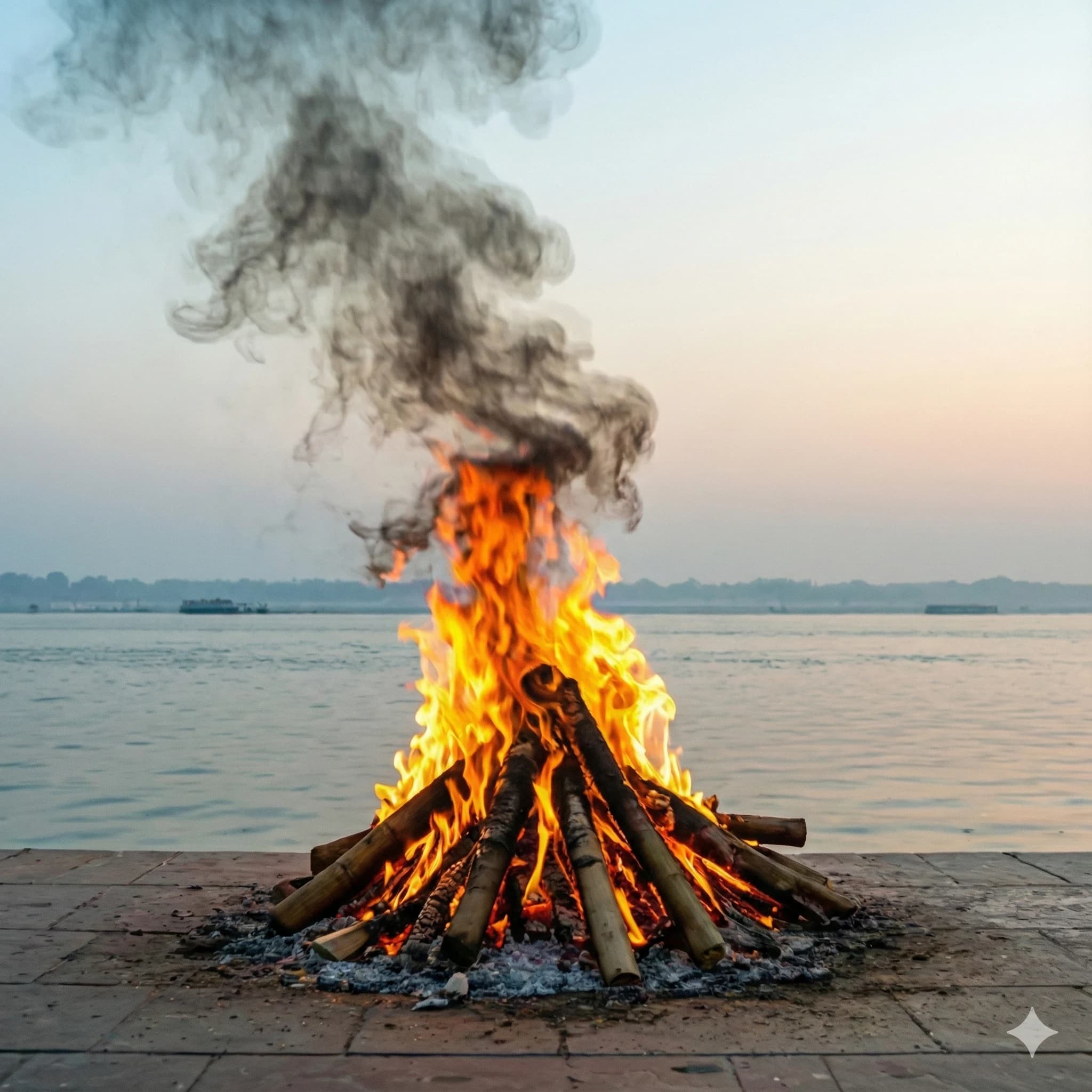
The Mahashmashana or 'Great Cremation Ground.' It is believed that the fires here have never gone out for centuries. Hindus believe cremation here grants immediate liberation (Moksha) from the cycle of rebirth.
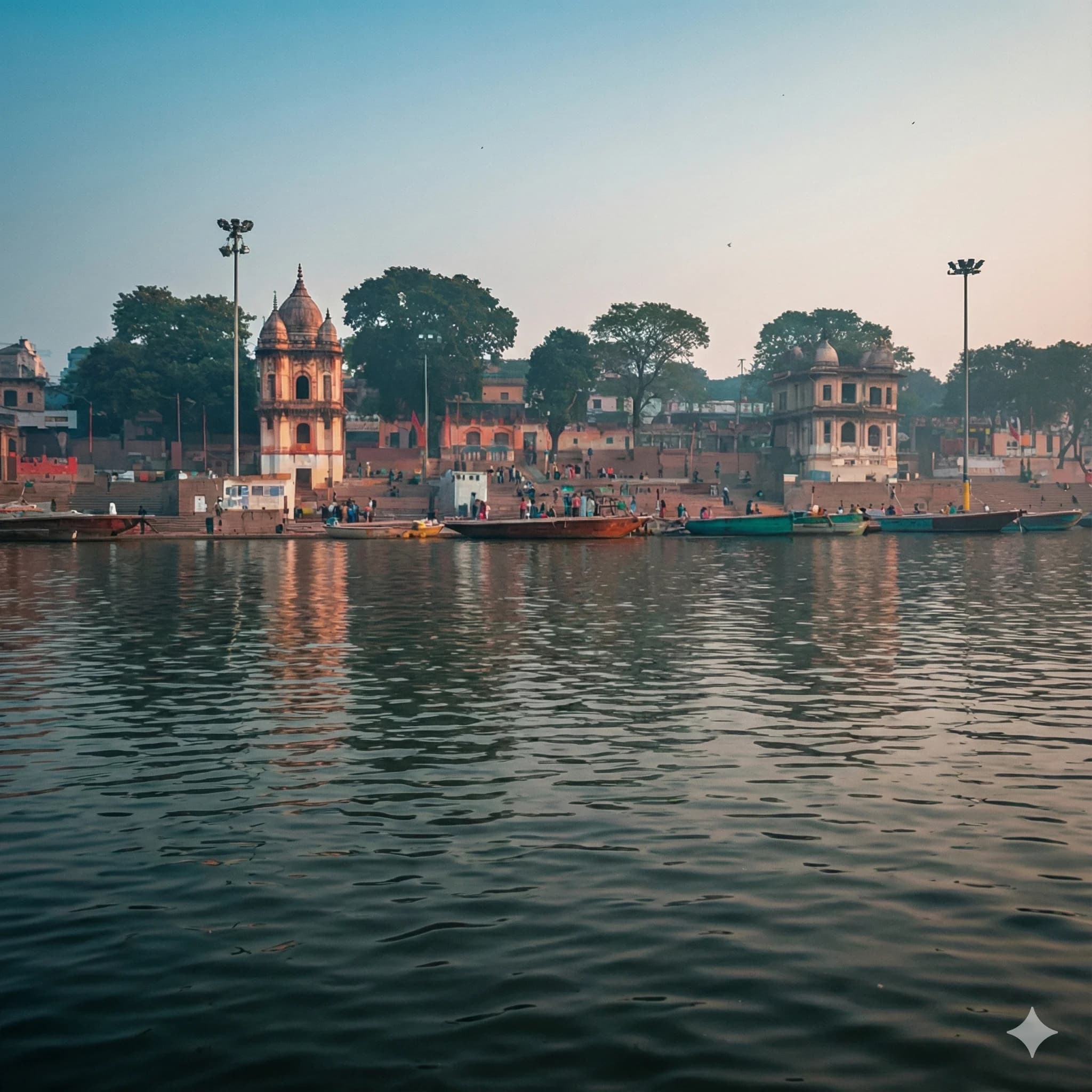
The southernmost ghat where the river Assi meets the Ganges. Famous for its 'Subah-e-Banaras' morning program, yoga sessions, long-term student residents, and a more tranquil, bohemian atmosphere.