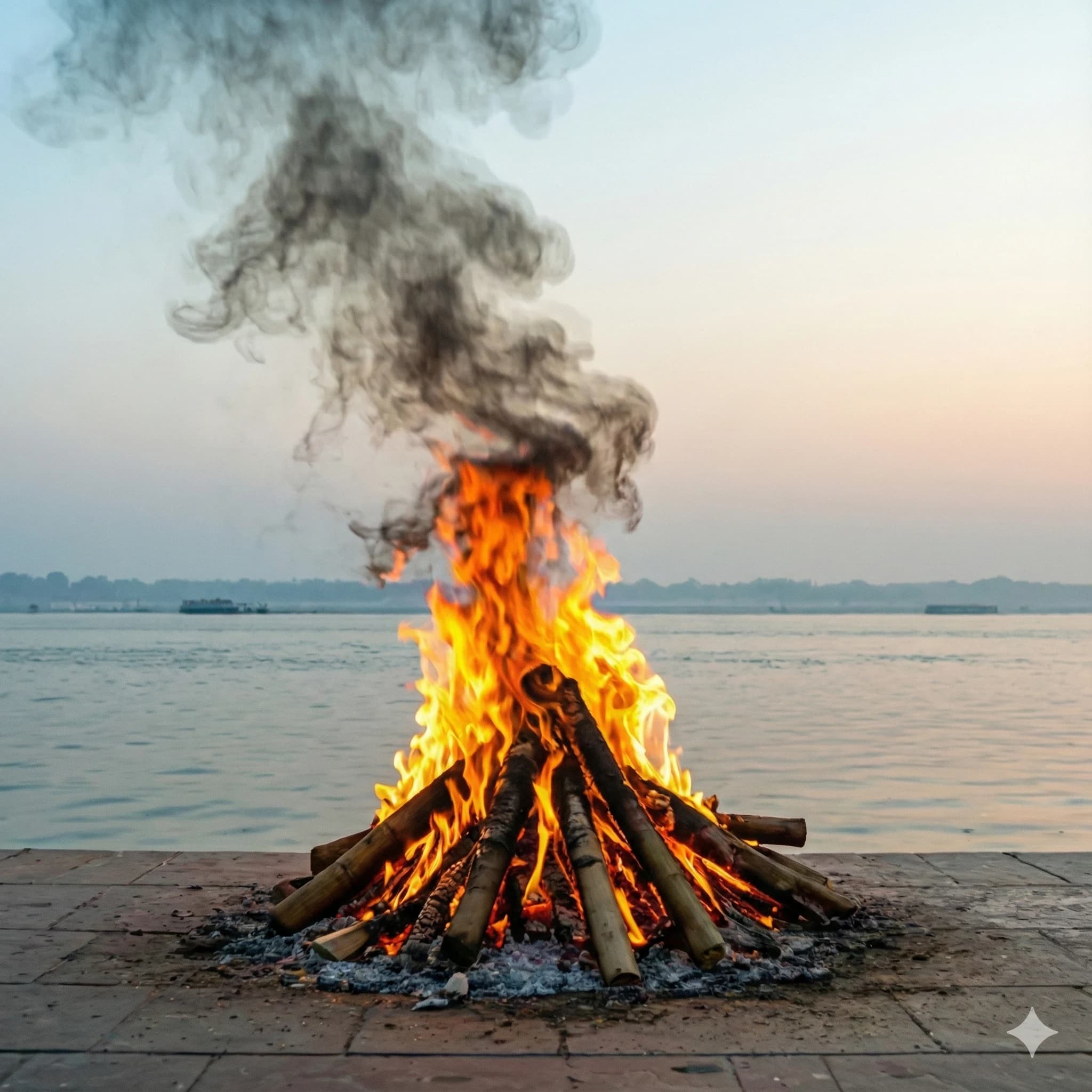
Manikarnika Ghat is perhaps the most confronting and profound site in Varanasi, known as the Mahashmashana, or the Great Cremation Ground. In Hindu philosophy, death is not an end but a transition, and dying in Kashi and being cremated at Manikarnika is the ultimate spiritual goal, guaranteeing 'Moksha'—liberation from the cycle of birth and death. The fires at this ghat are said to have burned continuously for centuries, never once extinguishing. Piles of wood line the shoreline, and the air is thick with smoke, incense, and the chants of "Ram Naam Satya Hai" (The name of Ram is the truth) as bodies are carried on bamboo stretchers to the pyres.
The ghat's name comes from a legend involving Lord Shiva and Goddess Parvati. It is said that while Shiva was performing a chaotic dance, his jeweled earring (Manikarnika) fell into a well here (now known as the Manikarnika Kund). Another legend suggests Goddess Parvati dropped her earring to keep Shiva from leaving. The site is technically a Shakti Peeth, adding a layer of feminine divine power to the masculine energy of Shiva's city. The custodial rights of the cremation fires are held by the Dom community, the 'Keepers of the Flame,' who are an integral part of the city's social and spiritual hierarchy.
Visually, the ghat is a scene of intense activity. At any given time, multiple pyres are burning. Family members (traditionally men) wait by the fire, ensuring the soul's transition is smooth. The atmosphere is surprisingly not one of morbid grief, but of solemn acceptance and duty. Tourists are allowed to watch from a distance (usually from boats or upper balconies of nearby buildings), but photography is strictly prohibited out of respect for the deceased and their families. It is a place that demands silence and reflection.
The architecture around the ghat is sinking due to the intense heat of the fires and the weight of the stone structures, giving the temples a tilted, surreal appearance. The Scindia Ghat nearby, with its partially submerged Shiva temple, adds to this ancient, sinking aesthetic. Walking through the narrow alleys leading to Manikarnika, one passes shops selling wood, shroud cloth, and ritual items, a stark reminder of the commerce of death.
A visit to Manikarnika is not for the faint-hearted, but it is essential for understanding the ethos of Varanasi. It forces a confrontation with mortality that is rare in the modern world. It serves as a reminder of the impermanence of the physical body and the endurance of the soul, a philosophy that is the bedrock of life in Kashi.
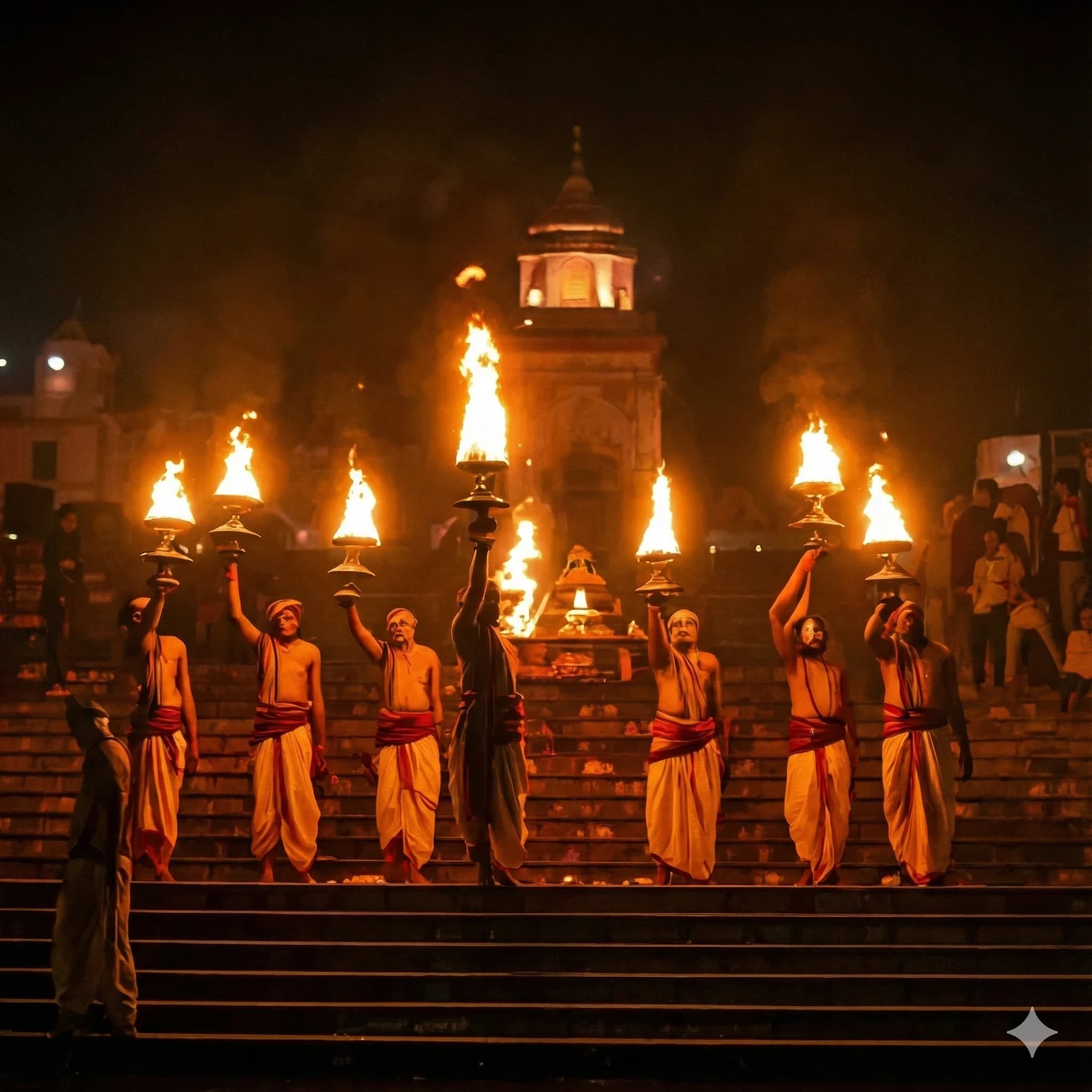
The most spectacular and bustling ghat in Varanasi, famous for the Agni Pooja (Ganga Aarti). Legend says Lord Brahma sacrificed ten horses here, making it a site of supreme cosmic power and vibrant daily devotion.
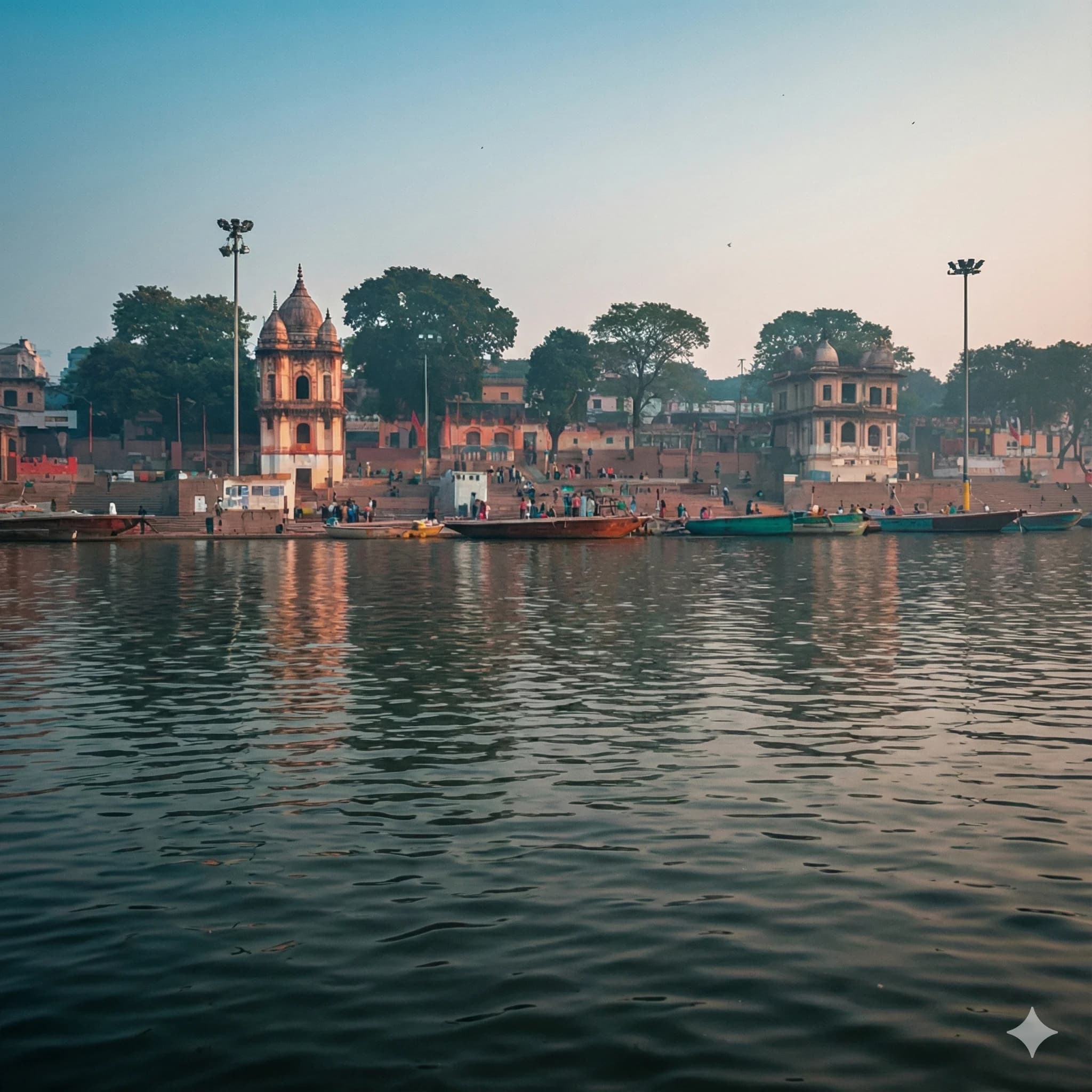
The southernmost ghat where the river Assi meets the Ganges. Famous for its 'Subah-e-Banaras' morning program, yoga sessions, long-term student residents, and a more tranquil, bohemian atmosphere.
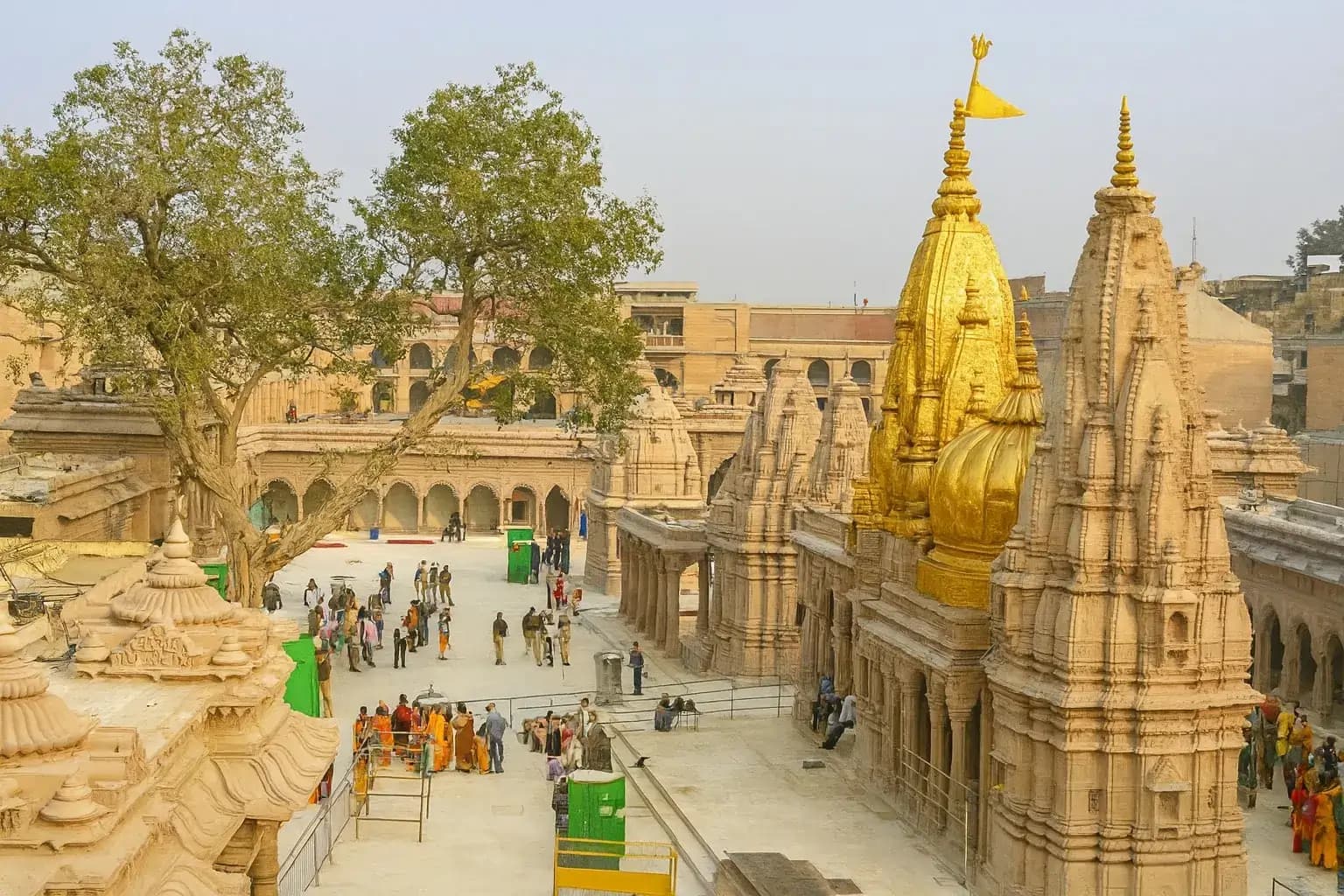
The 'Golden Temple' dedicated to Lord Shiva, one of the 12 Jyotirlingas. It is the spiritual axis of Varanasi, rebuilt by Rani Ahilyabai Holkar and plated with gold by Maharaja Ranjit Singh.