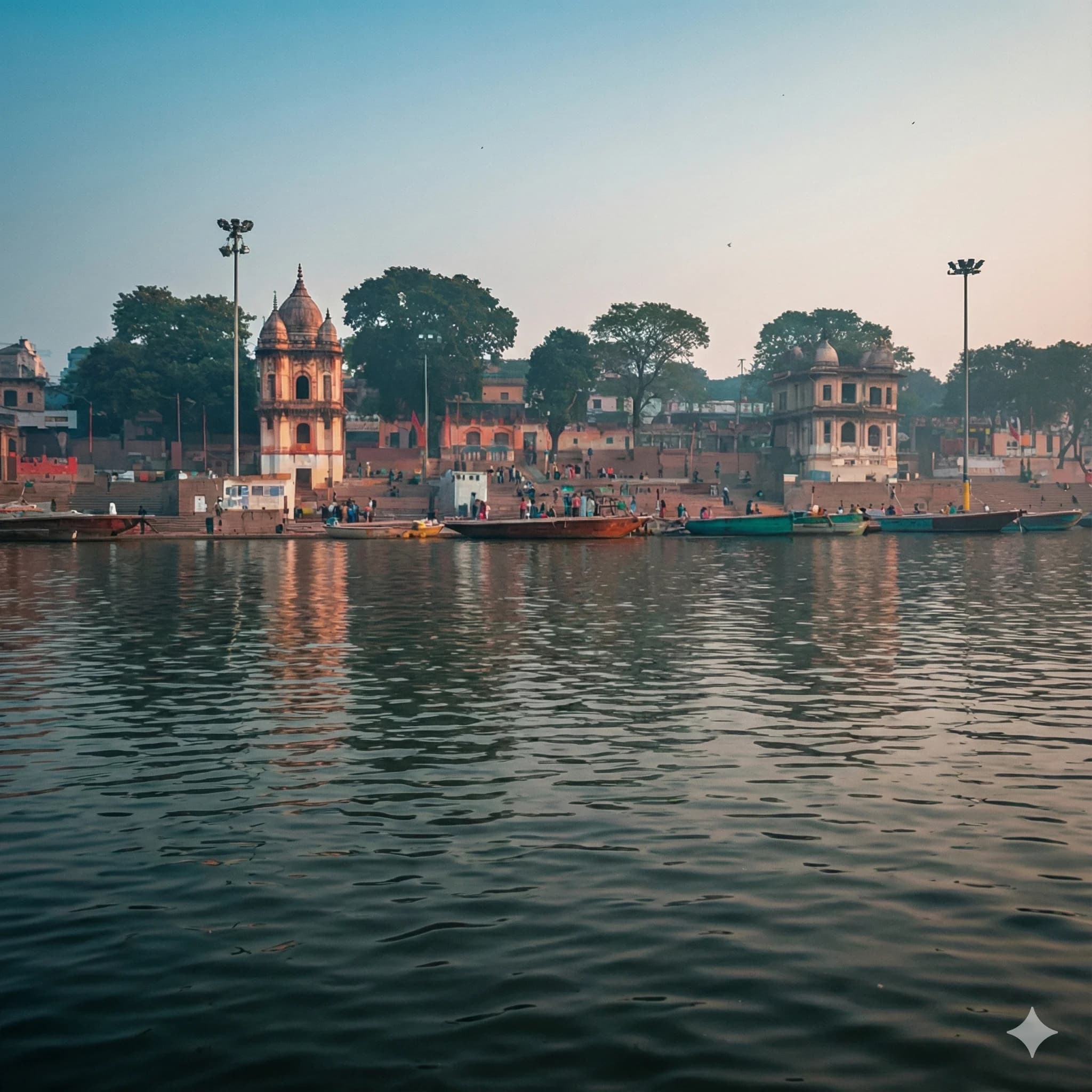
Assi Ghat, located at the southernmost tip of the main stretch of ghats, marks the confluence of the River Ganga and the small River Assi. Historically, this boundary defined the southern edge of the city. In recent years, Assi has evolved into the cultural and intellectual hub of Varanasi, popular among long-term foreign students, researchers, artists, and those seeking a quieter alternative to the chaos of the central ghats. The atmosphere here is distinctly bohemian, filled with cafes, bookstores, and yoga studios.
The ghat is most famous for 'Subah-e-Banaras,' a government initiative that celebrates the mornings of Varanasi. Before dawn, hundreds gather to witness a mesmerizing morning Aarti, followed by Vedic chanting and a mass yoga session as the sun rises over the river. This is often followed by classical music concerts featuring local maestros. Starting your day at Assi Ghat, watching the sunrise while holding a clay cup (kulhad) of lemon tea, is considered one of the quintessential Varanasi experiences.
Mythologically, Assi Ghat is significant. It is mentioned in the Puranas (ancient scriptures) as the place where Goddess Durga, after slaying the demons Shumbha and Nishumbha, threw her sword. The place where the sword fell resulted in the river Assi. Devotees bathe here particularly during solar and lunar eclipses and on festivals like Probodhoni Ekadashi, believing it washes away sins earned over a lifetime.
The ghat is spacious and tiered, making it a popular social gathering spot. In the evenings, unlike the frantic energy of Dashashwamedh, Assi remains relatively peaceful, with musicians strumming guitars, children playing cricket, and balloon sellers wandering about. It is also the starting point for many boat rides that take visitors all the way north to Manikarnika and back, offering a panoramic view of the city's crescent-shaped riverfront.
Assi is also the setting for Kashinath Singh's famous Hindi novel "Kashi Ka Assi," which satirizes and celebrates the localized culture of political debate, tea drinking, and leisure (masti) that happens on the steps of this ghat. For the traveler, Assi Ghat offers a perfect blend of spirituality, culture, and relaxation, serving as a gentle introduction to the intensity of Varanasi.
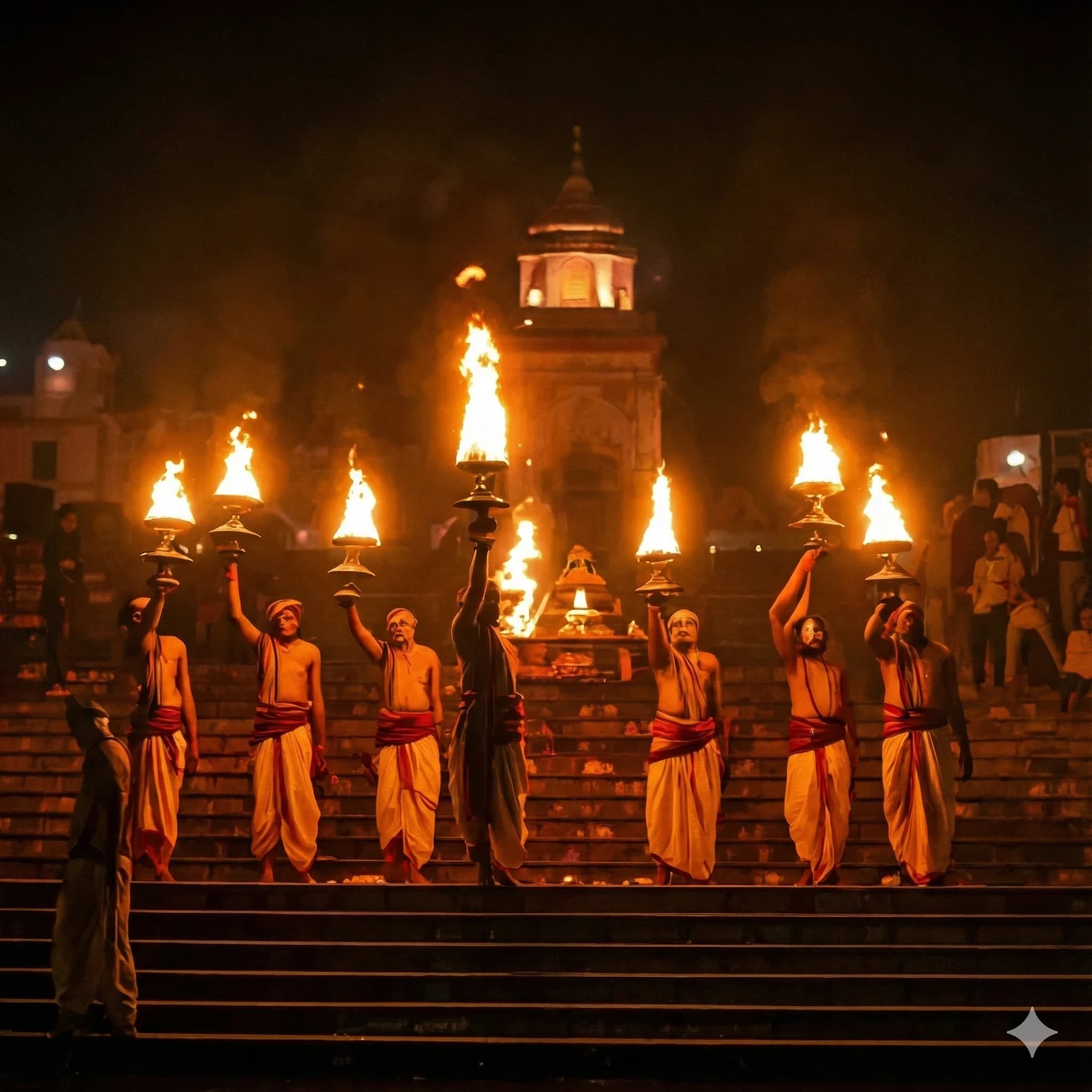
The most spectacular and bustling ghat in Varanasi, famous for the Agni Pooja (Ganga Aarti). Legend says Lord Brahma sacrificed ten horses here, making it a site of supreme cosmic power and vibrant daily devotion.
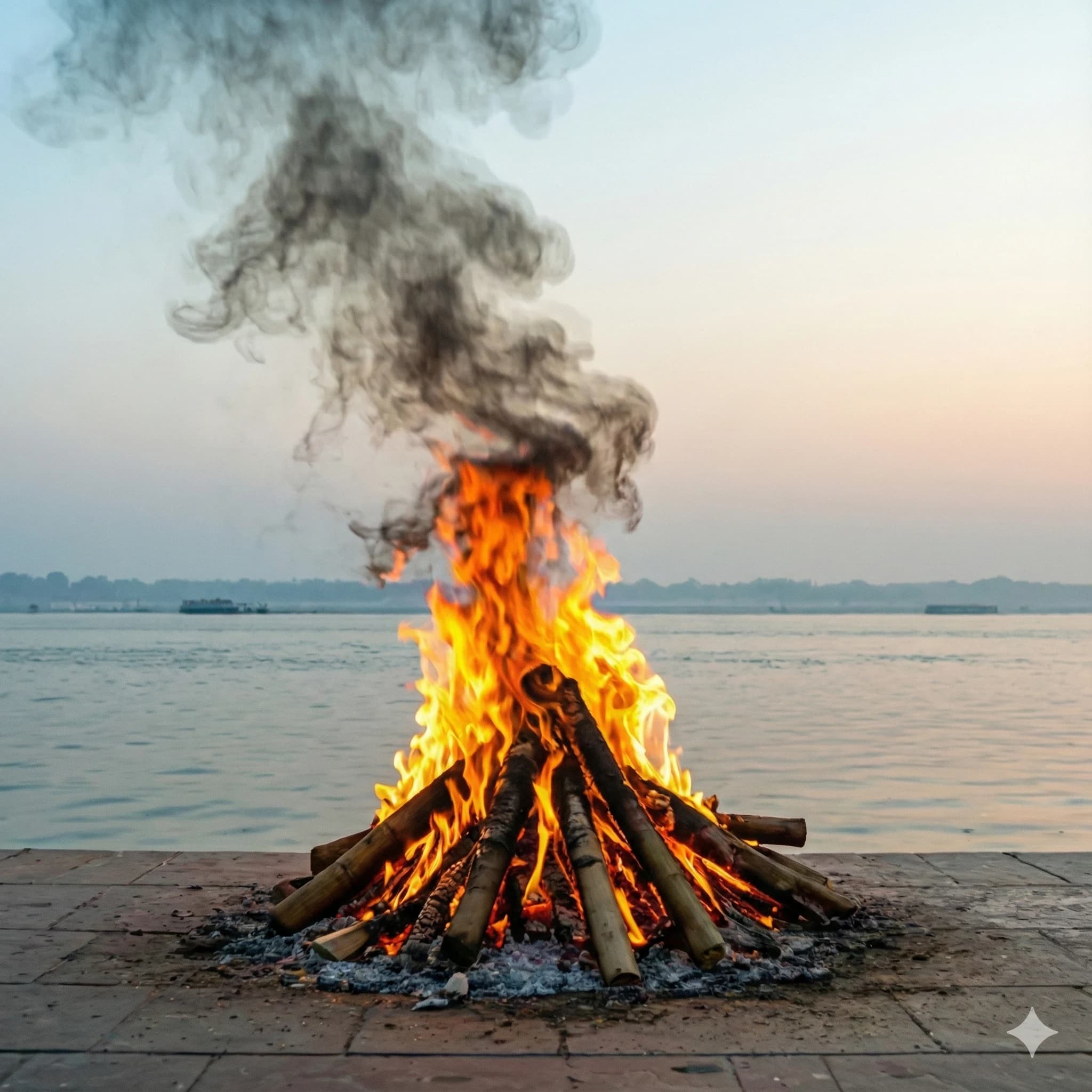
The Mahashmashana or 'Great Cremation Ground.' It is believed that the fires here have never gone out for centuries. Hindus believe cremation here grants immediate liberation (Moksha) from the cycle of rebirth.
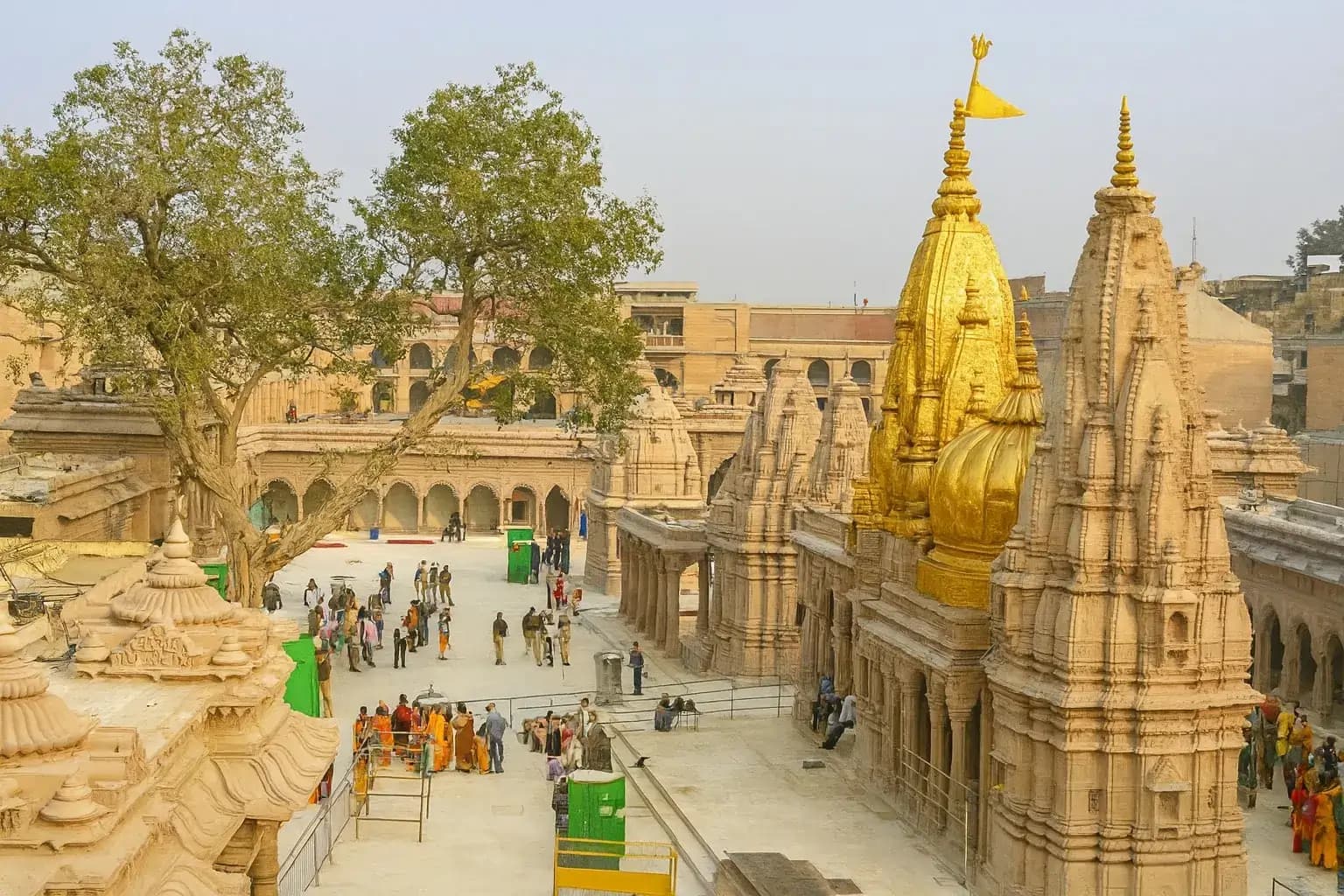
The 'Golden Temple' dedicated to Lord Shiva, one of the 12 Jyotirlingas. It is the spiritual axis of Varanasi, rebuilt by Rani Ahilyabai Holkar and plated with gold by Maharaja Ranjit Singh.