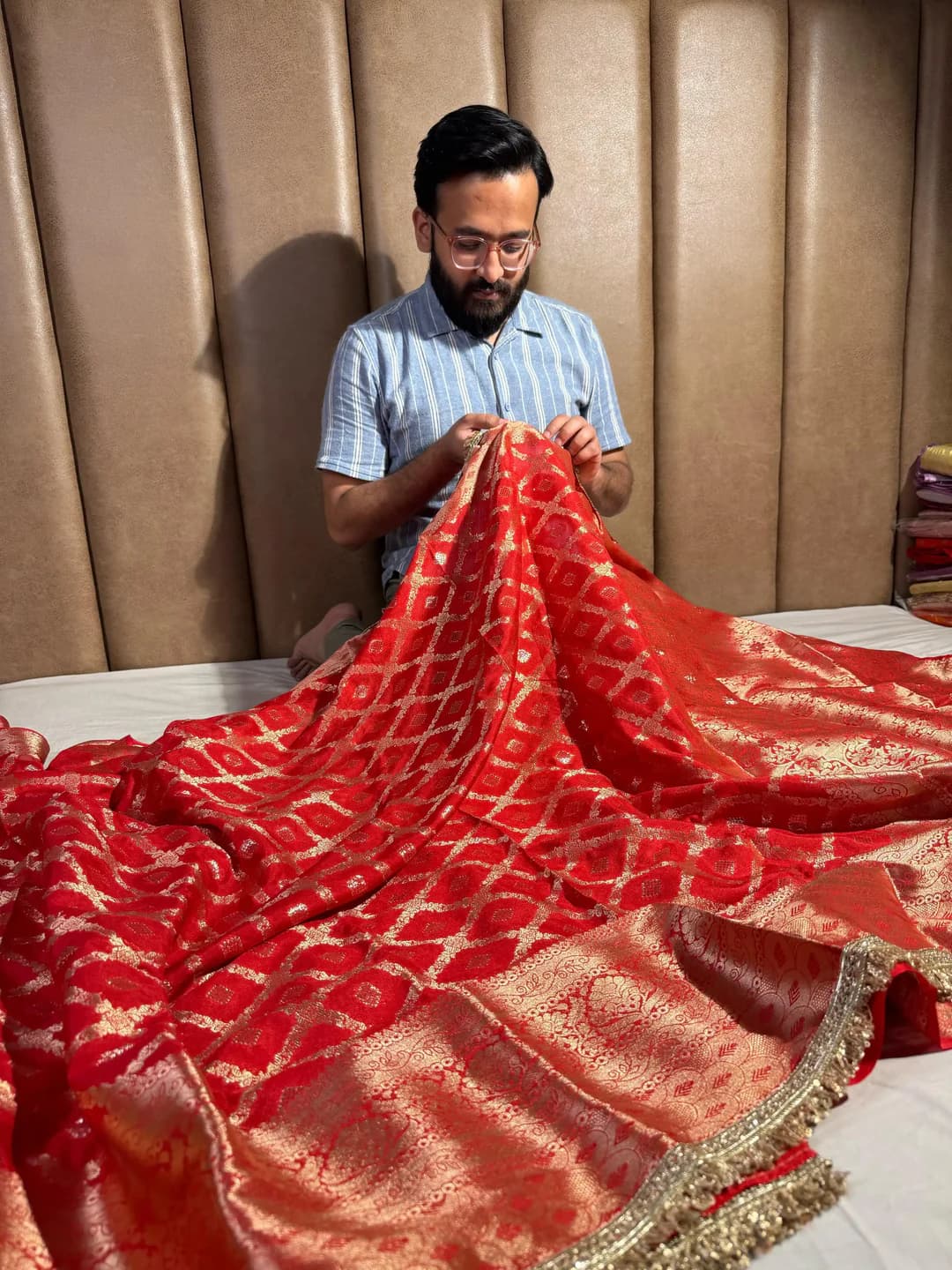
The Banarasi Silk Saree is the undisputed queen of Indian handlooms. Woven in the cottage industries of Varanasi (particularly in the Peeli Kothi and Madanpura areas), these saris are distinguished by their opulence. They feature heavy gold and silver brocade or Zari, fine silk, and magnificent embroidery.
The designs are often inspired by Mughal motifs, including intricate intertwining floral and foliate motifs (kalga and bel), and strings of upright leaves (jhallar) at the edge. There are four main varieties: Katan (pure silk), Organza (Kora) with Zari and silk, Georgette, and Shattir.
A genuine hand-loomed Banarasi saree can take anywhere from 15 days to six months to complete, depending on the complexity of the design. It is a vital part of an Indian bride's trousseau. Visitors can tour the weaver's colonies to see the rhythmic clacking of the Jacquard looms in action.
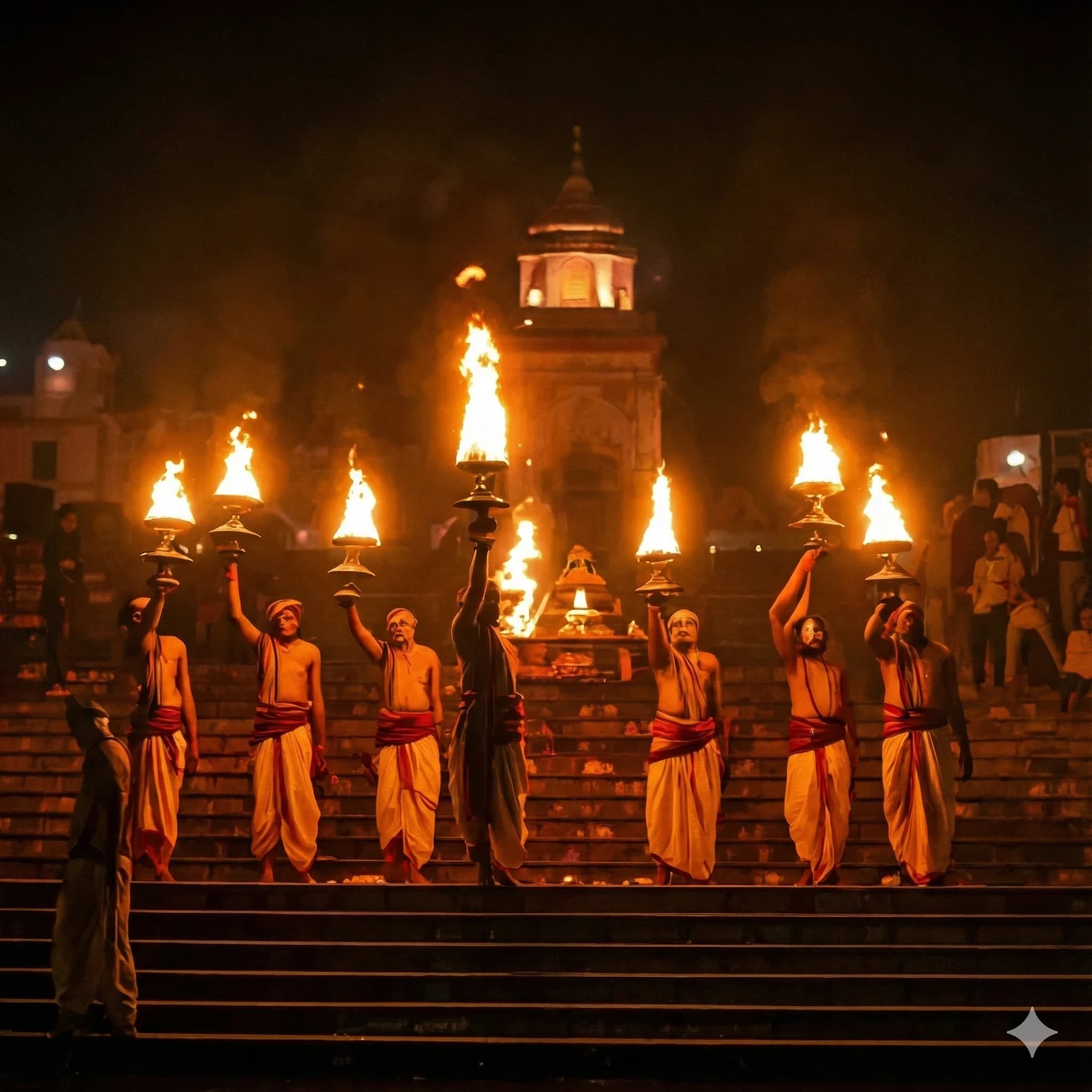
The most spectacular and bustling ghat in Varanasi, famous for the Agni Pooja (Ganga Aarti). Legend says Lord Brahma sacrificed ten horses here, making it a site of supreme cosmic power and vibrant daily devotion.
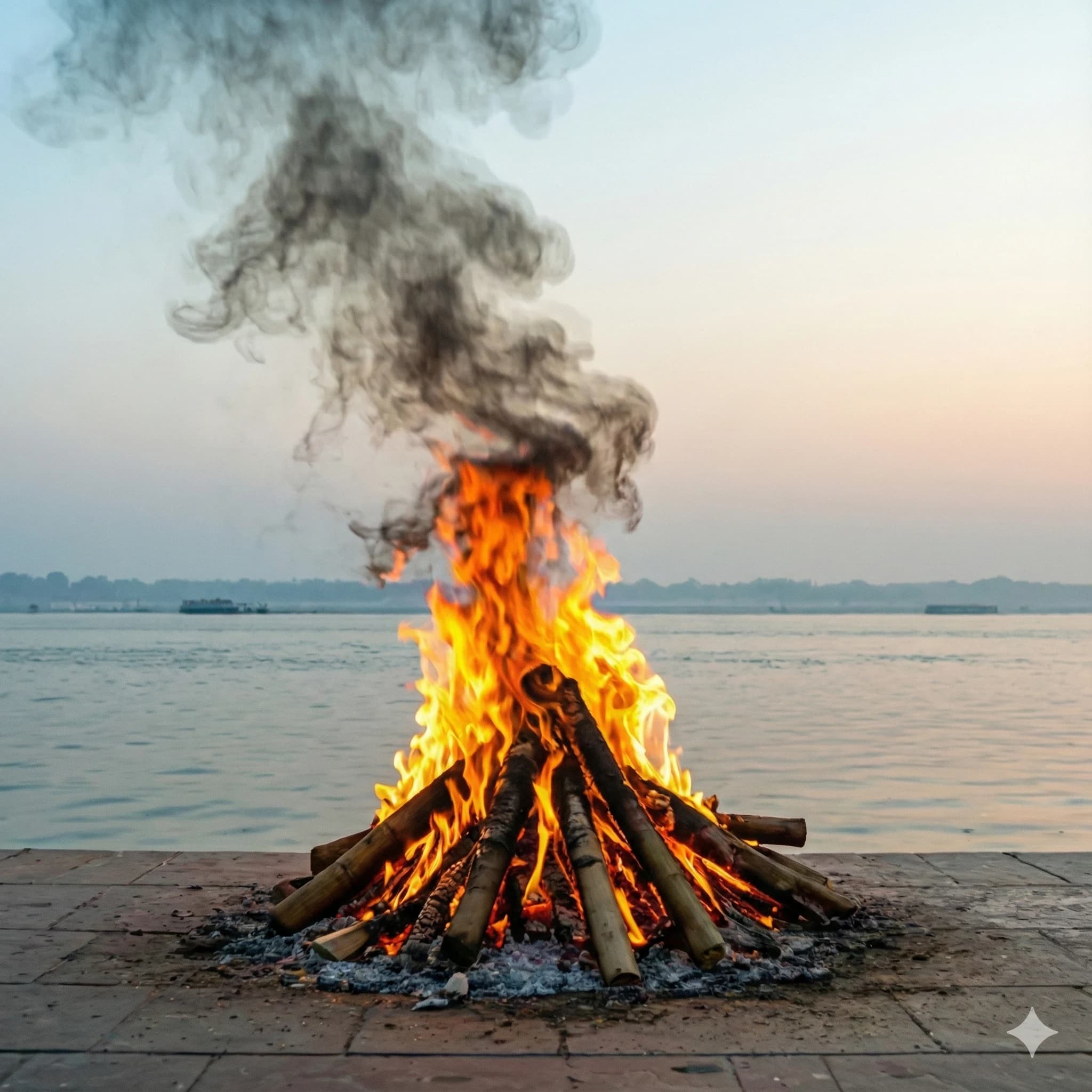
The Mahashmashana or 'Great Cremation Ground.' It is believed that the fires here have never gone out for centuries. Hindus believe cremation here grants immediate liberation (Moksha) from the cycle of rebirth.
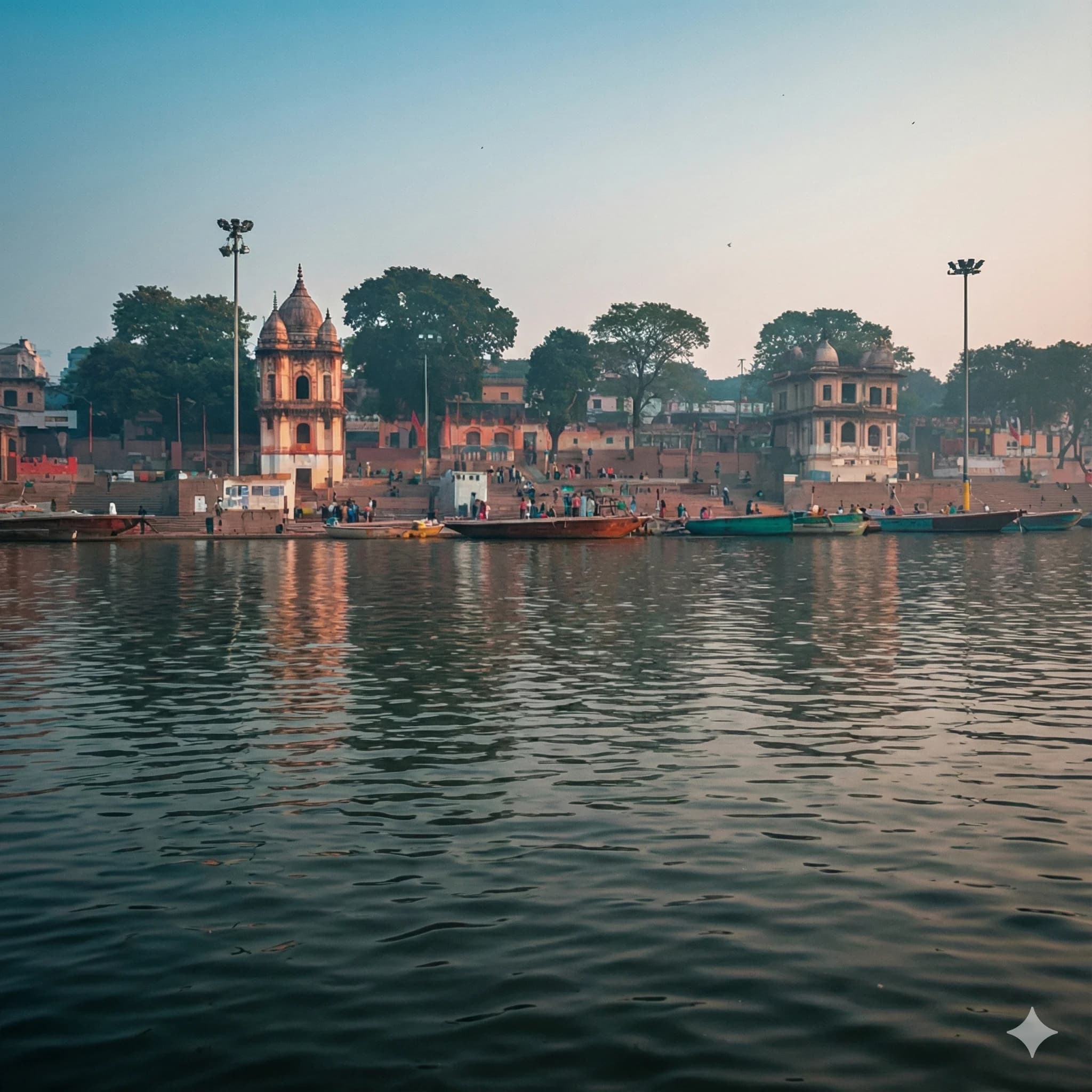
The southernmost ghat where the river Assi meets the Ganges. Famous for its 'Subah-e-Banaras' morning program, yoga sessions, long-term student residents, and a more tranquil, bohemian atmosphere.