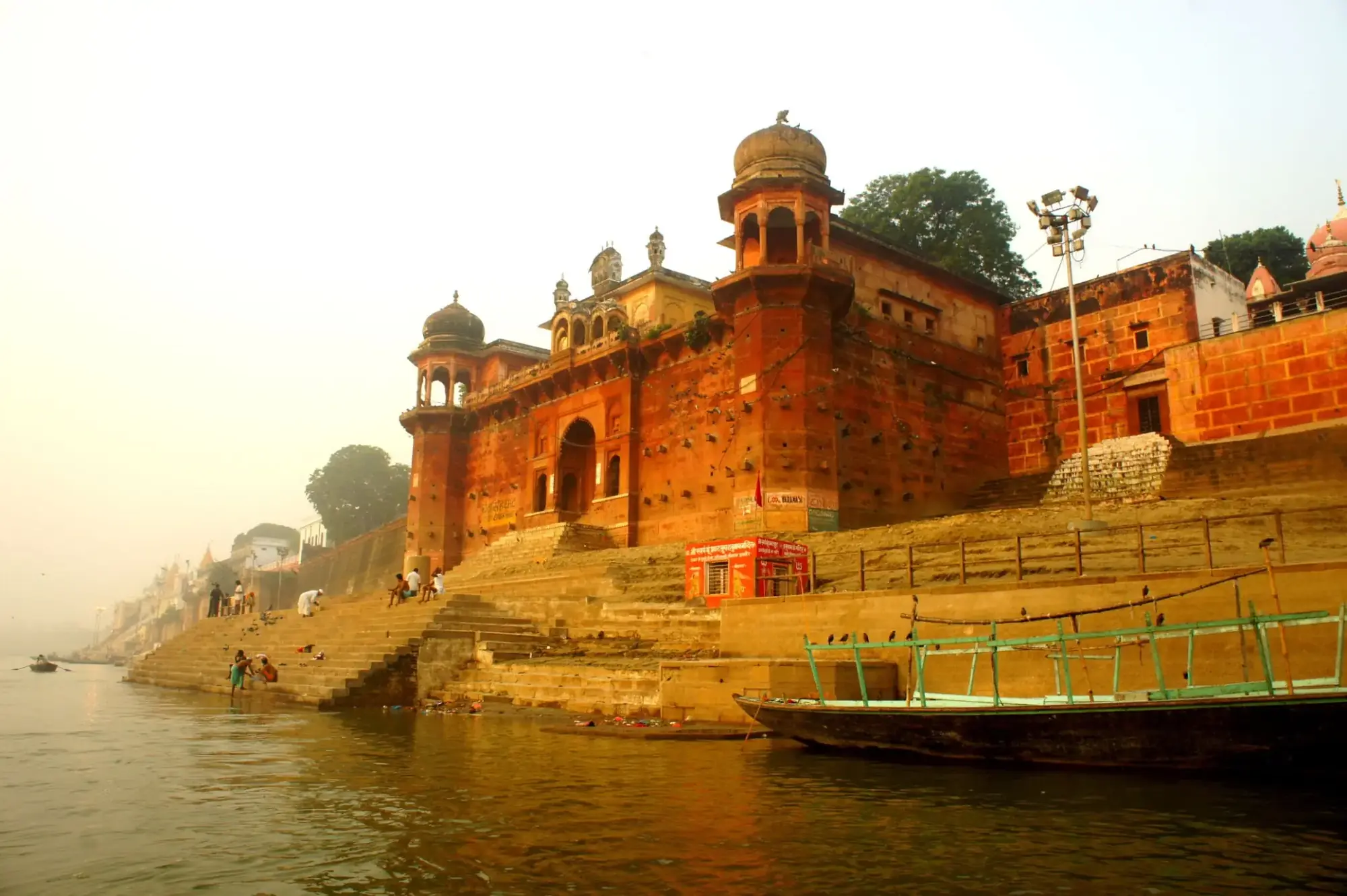
Chet Singh Ghat stands out immediately due to its military architecture. Unlike the religious openness of other ghats, this one is dominated by a massive fortress with turrets and high walls rising directly from the water. Built in the mid-18th century, it was the stronghold of Maharaja Chet Singh, the ruler of Benaras who famously rebelled against the British East India Company.
The ghat was the site of a historic battle in 1781 where British troops, under the orders of Warren Hastings, laid siege to the fort. The Maharaja made a daring escape using a rope made of turbans to lower himself to a boat on the river. The pockmarks of British musket balls can arguably still be imagined on the weathering stones.
Today, the fort is privately owned and not fully open to the public, but the ghat steps are accessible. It hosts the famous Budhwa Mangal festival (a floating musical festival) for seven days a year. The majestic backdrop makes it a favorite location for film shoots and history buffs interested in the colonial resistance of the region.
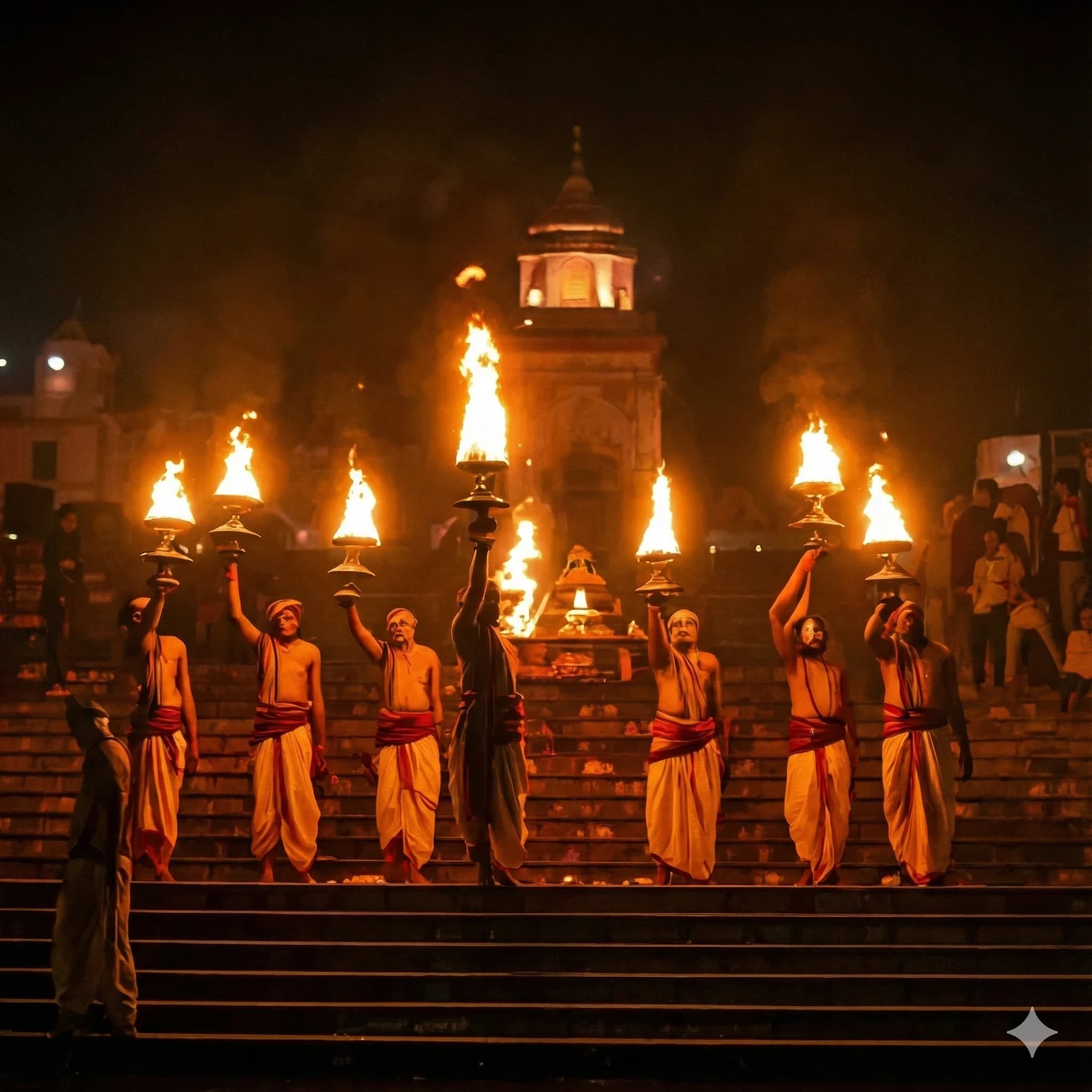
The most spectacular and bustling ghat in Varanasi, famous for the Agni Pooja (Ganga Aarti). Legend says Lord Brahma sacrificed ten horses here, making it a site of supreme cosmic power and vibrant daily devotion.
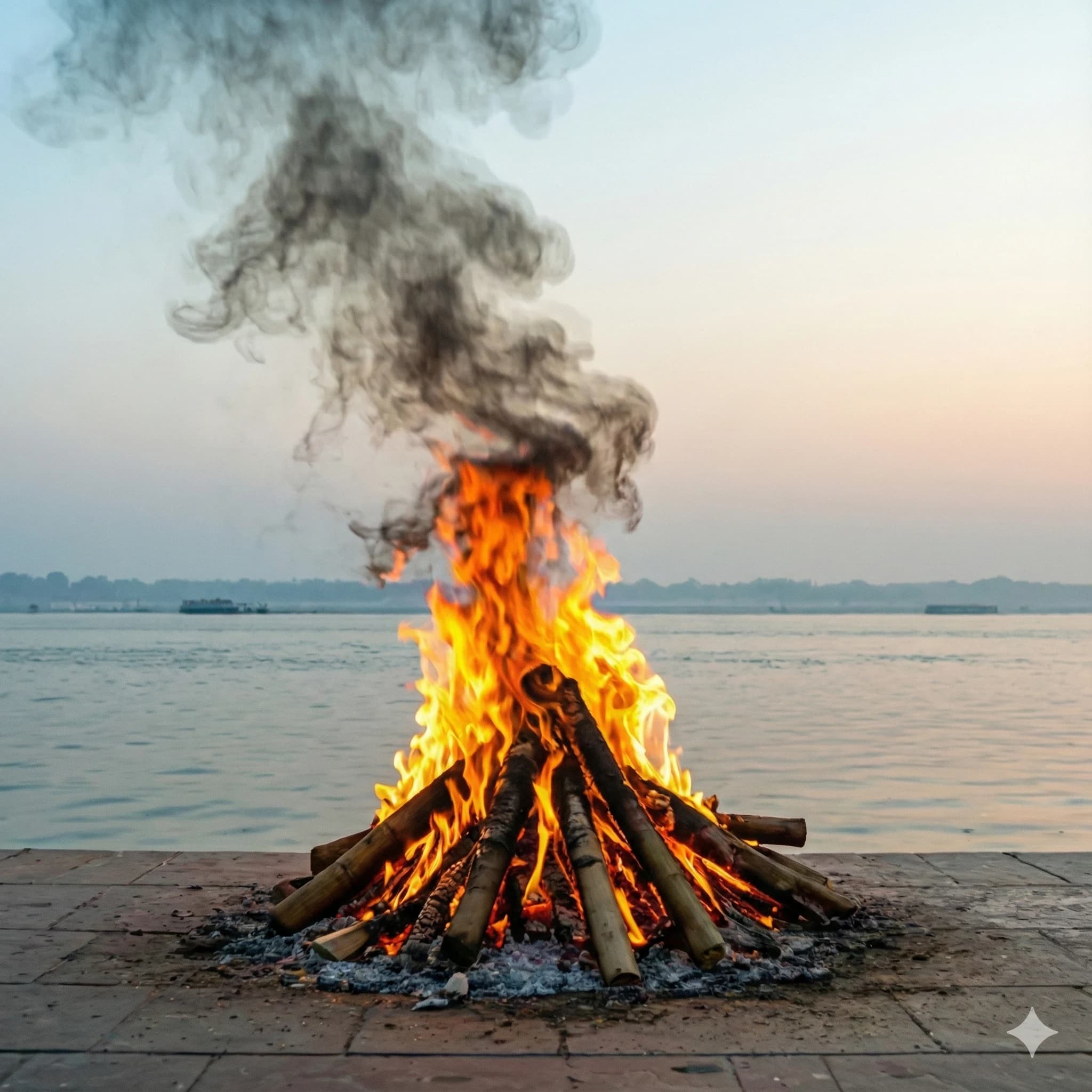
The Mahashmashana or 'Great Cremation Ground.' It is believed that the fires here have never gone out for centuries. Hindus believe cremation here grants immediate liberation (Moksha) from the cycle of rebirth.
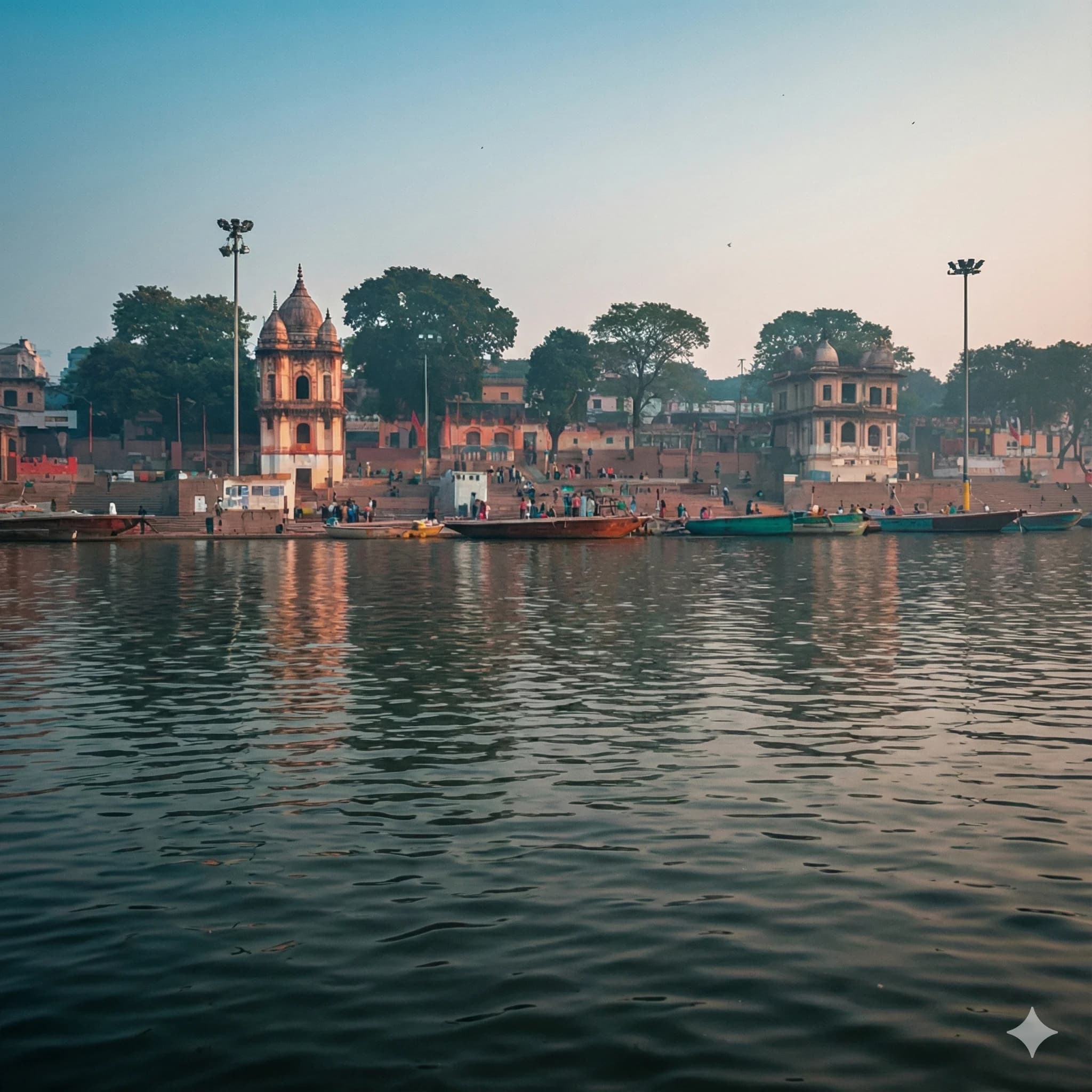
The southernmost ghat where the river Assi meets the Ganges. Famous for its 'Subah-e-Banaras' morning program, yoga sessions, long-term student residents, and a more tranquil, bohemian atmosphere.