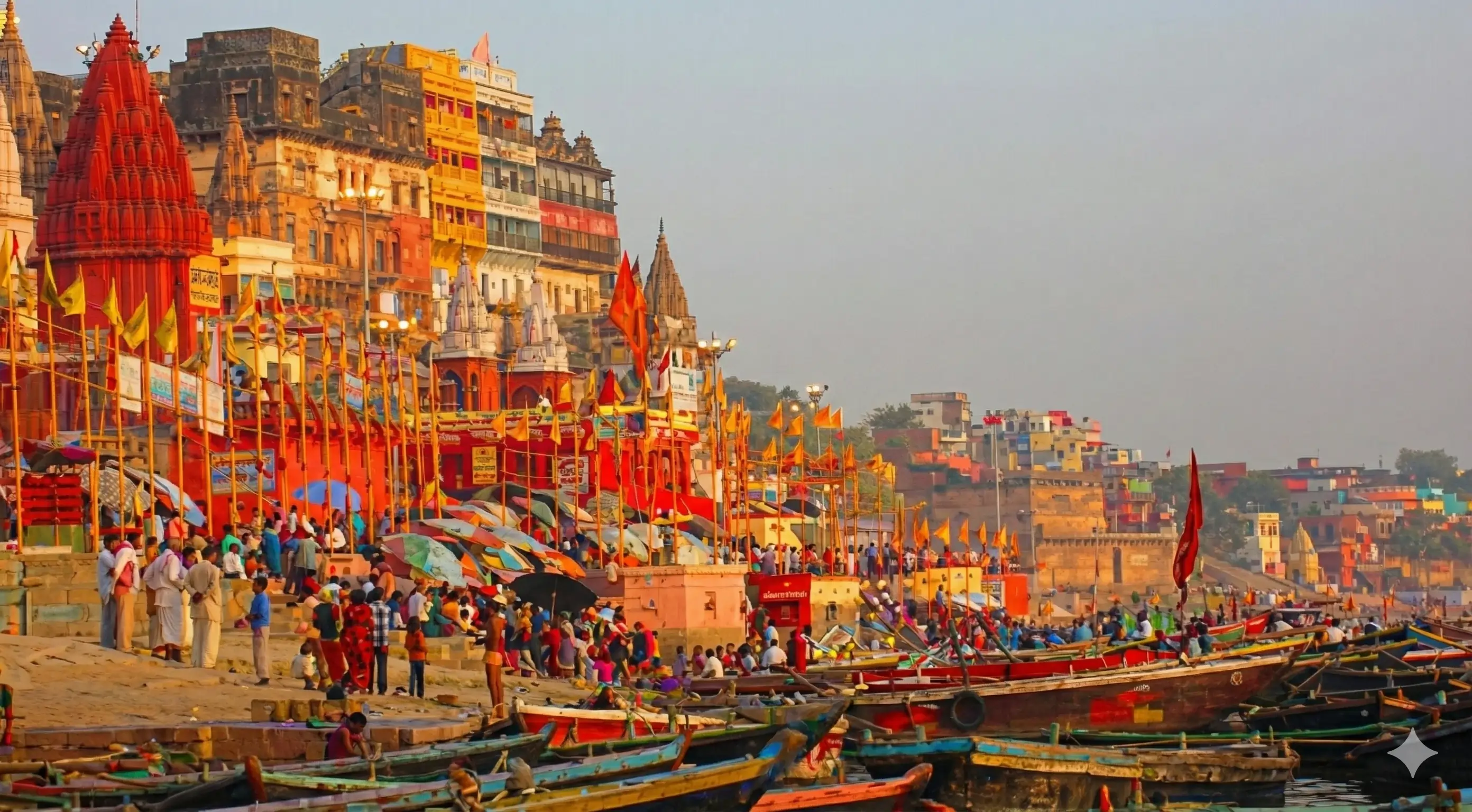
Chousatti Ghat is steep, dramatic, and steeped in tantric history. It is named after the temple of the Chousatti (64) Yoginis—female tantric deities—that sits atop the steep flight of steps. This temple is one of the few dedicated to Yoginis remaining in India, marking it as a significant spot for Shakta (Goddess) worship.
The ghat is historically famous as the residence of the great Sanskrit scholar Madhusudan Saraswati (16th century). Legend has it that despite being a staunch Advaita Vedantin (non-dualist), he was a devotee of Krishna. It is said that he once contemplated suicide here but was stopped by a vision of Lord Krishna.
Because of its steep steps, it is less frequented by casual tourists, providing a moody, atmospheric setting. The view from the top of the steps, looking down at the curve of the Ganges, is spectacular.
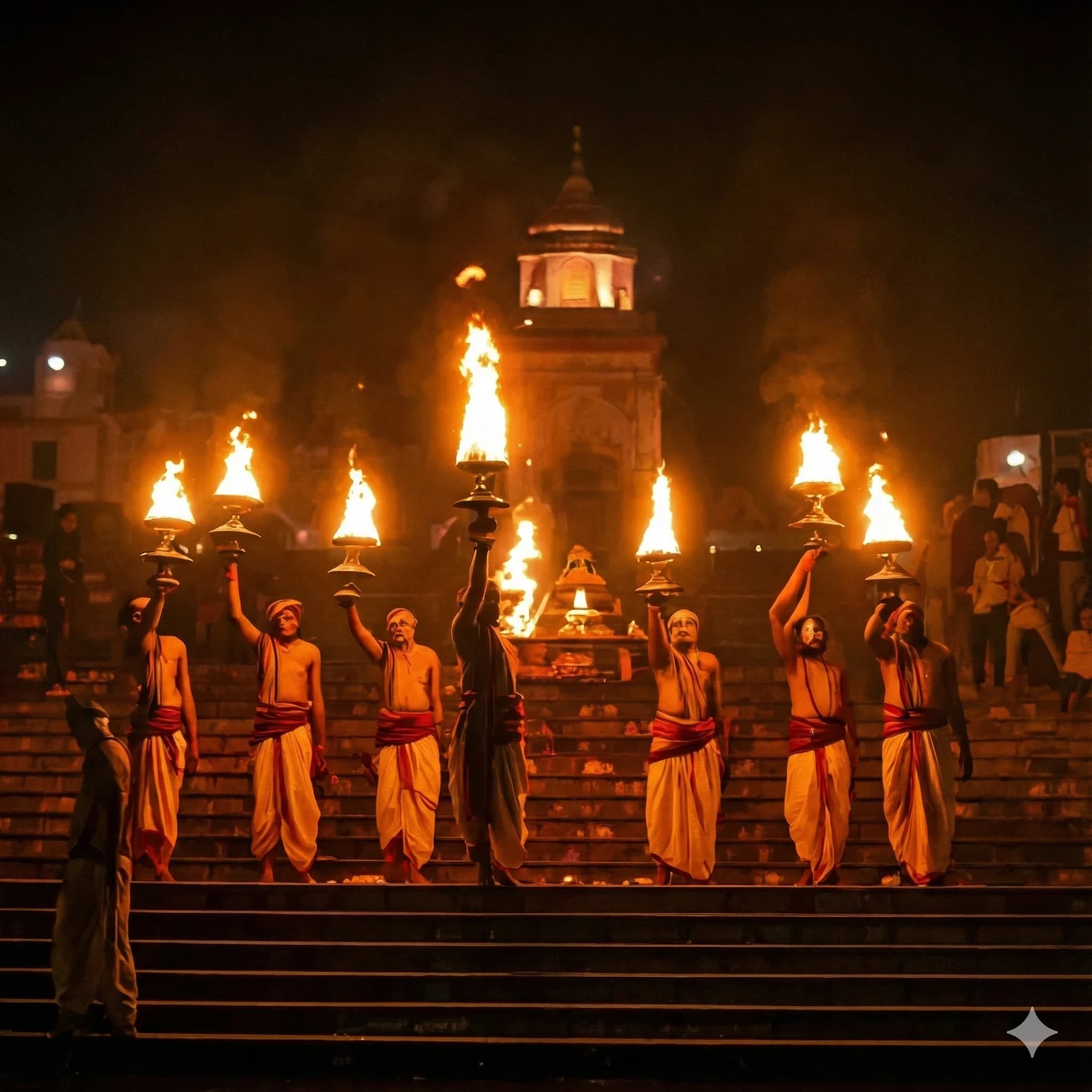
The most spectacular and bustling ghat in Varanasi, famous for the Agni Pooja (Ganga Aarti). Legend says Lord Brahma sacrificed ten horses here, making it a site of supreme cosmic power and vibrant daily devotion.
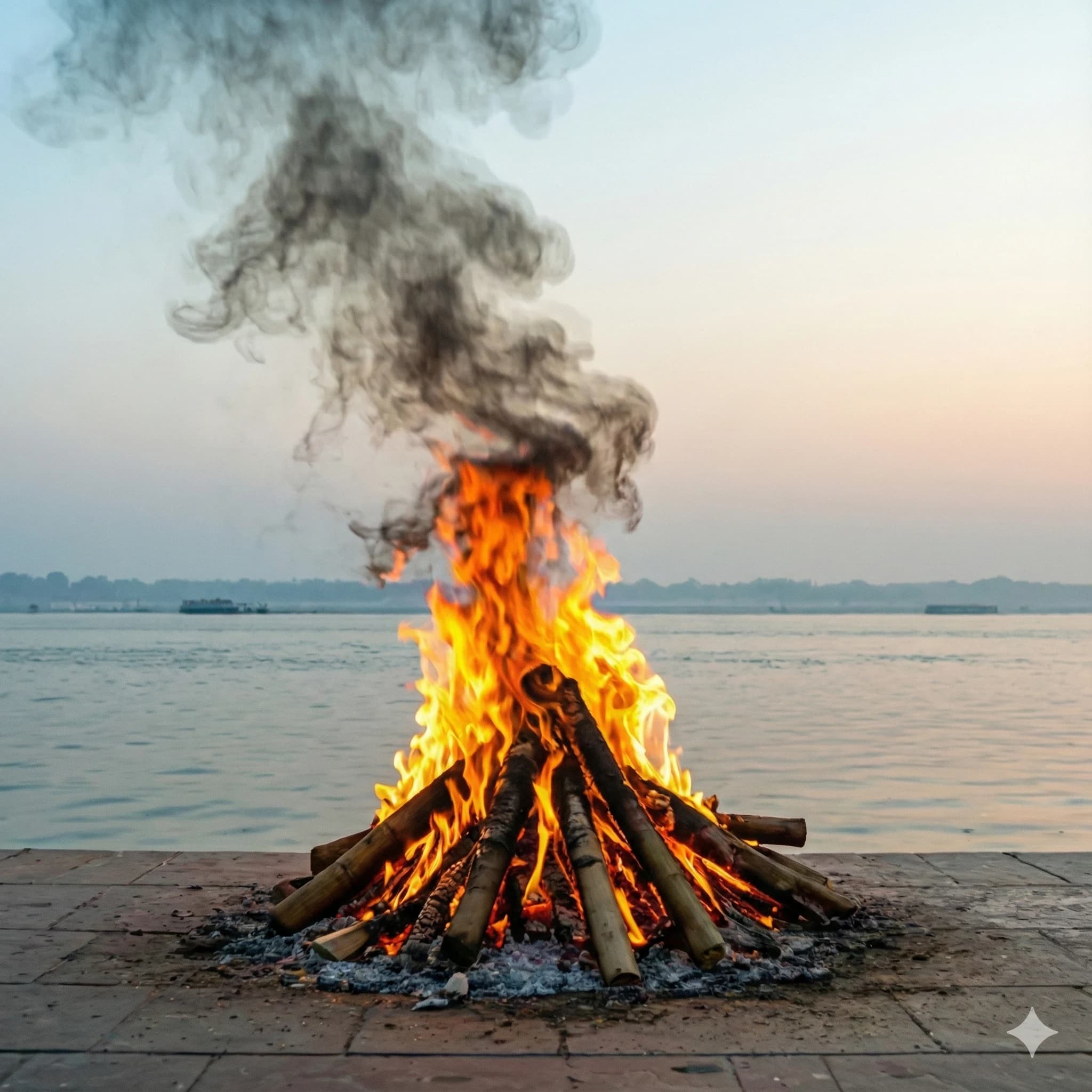
The Mahashmashana or 'Great Cremation Ground.' It is believed that the fires here have never gone out for centuries. Hindus believe cremation here grants immediate liberation (Moksha) from the cycle of rebirth.
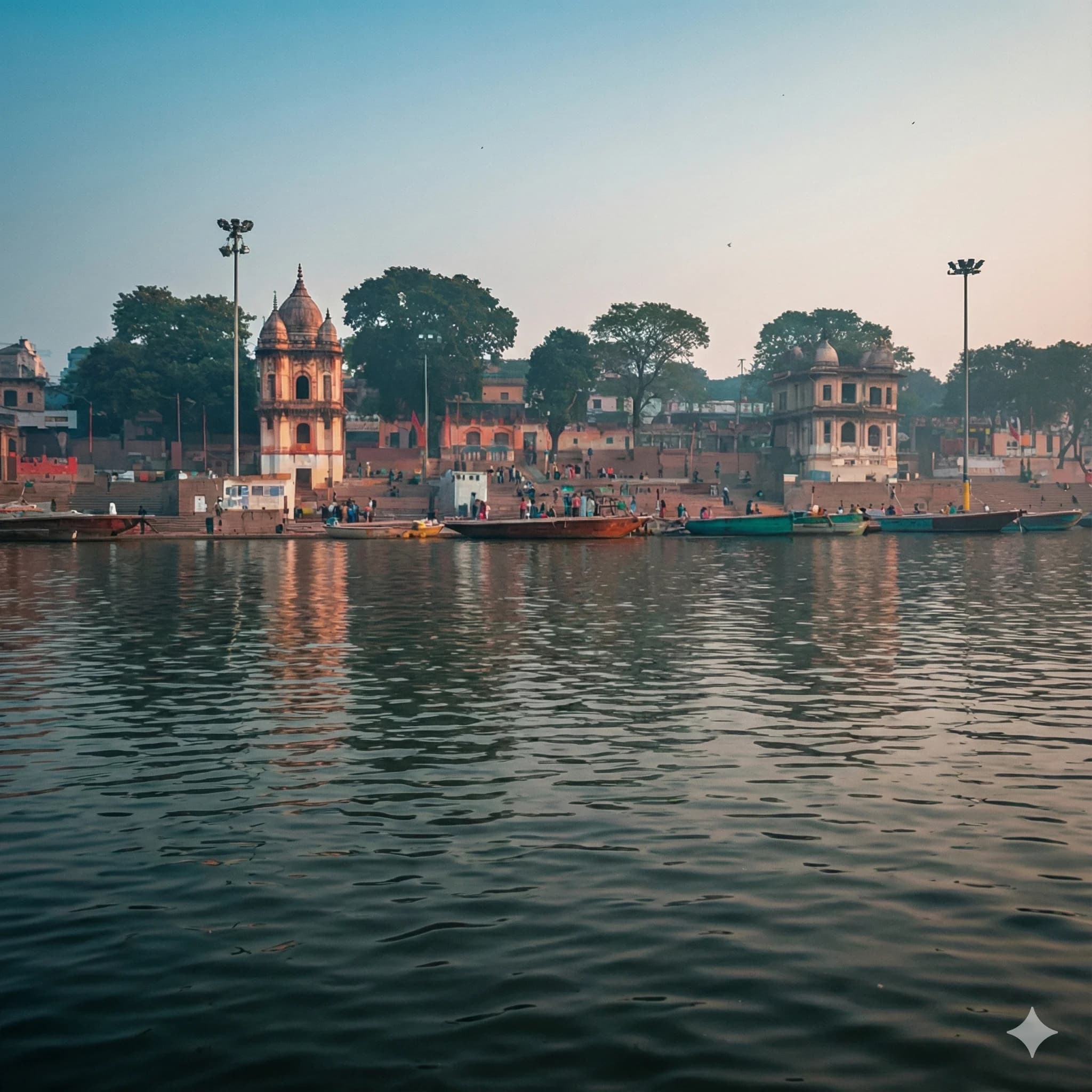
The southernmost ghat where the river Assi meets the Ganges. Famous for its 'Subah-e-Banaras' morning program, yoga sessions, long-term student residents, and a more tranquil, bohemian atmosphere.