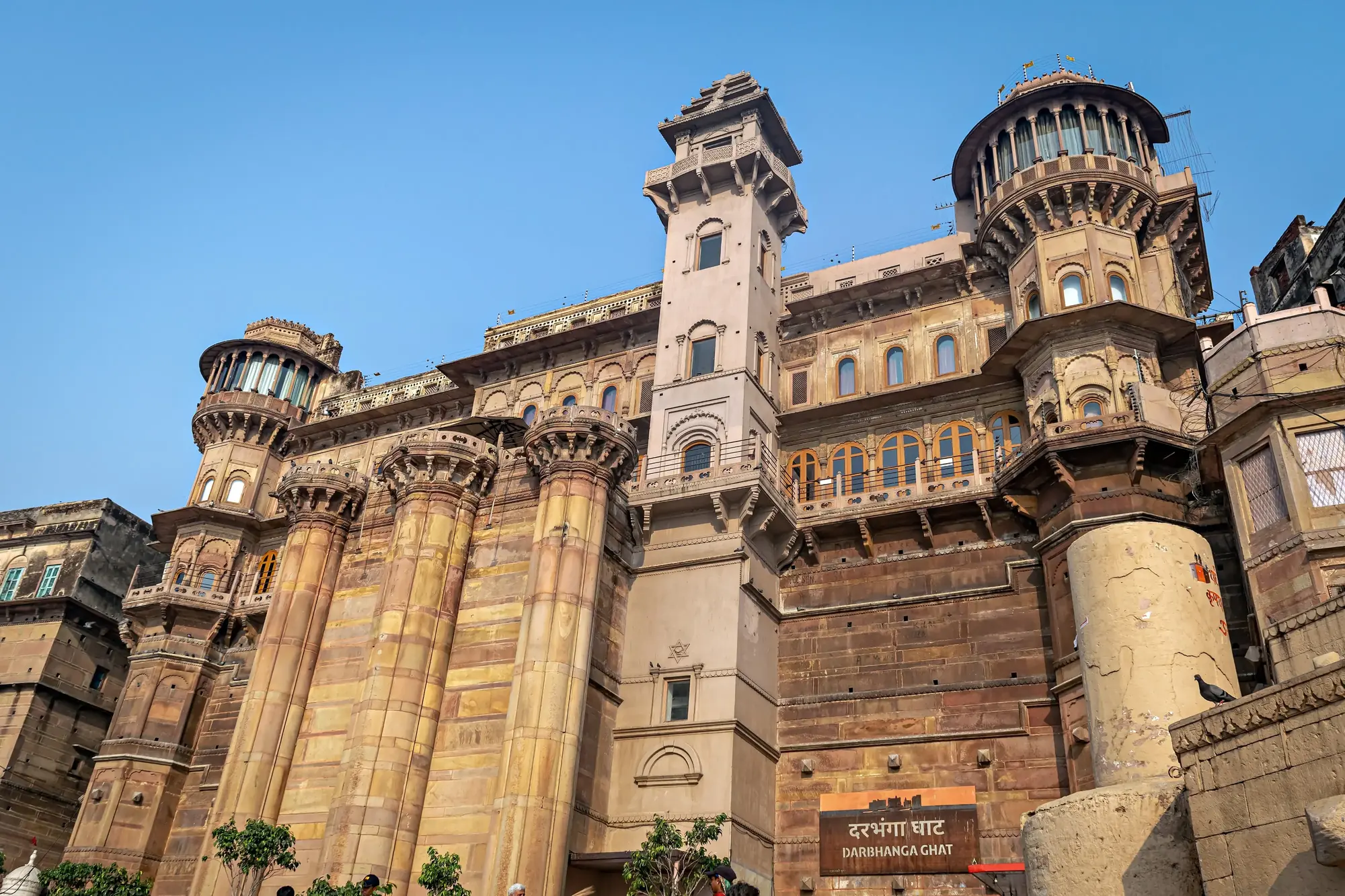
Darbhanga Ghat is arguably the most photogenic stretch of the riverfront, dominated by the magnificent 1900s palace built by the royal family of Darbhanga (Bihar). The structure, built of Chunar sandstone, features towering Greek pillars and ornate balconies, showcasing a fusion of Indian and European architectural styles. The palace has now been converted into a luxury heritage hotel (Brijrama Palace), one of the finest in the city.
Despite the luxury looming above, the ghat below remains a public space. It is noticeably cleaner and more organized than others. A small Shiva temple sits between the palace towers, and the steps are steep and dramatic. The view from a boat looking up at the Darbhanga palace at sunset, when the sandstone glows gold, is iconic.
Because of the hotel, there is a lift installed near the ghat (a rarity in Varanasi) for guests, but the general public uses the steps. It is a prime example of how royal heritage is being preserved and repurposed in modern Varanasi.
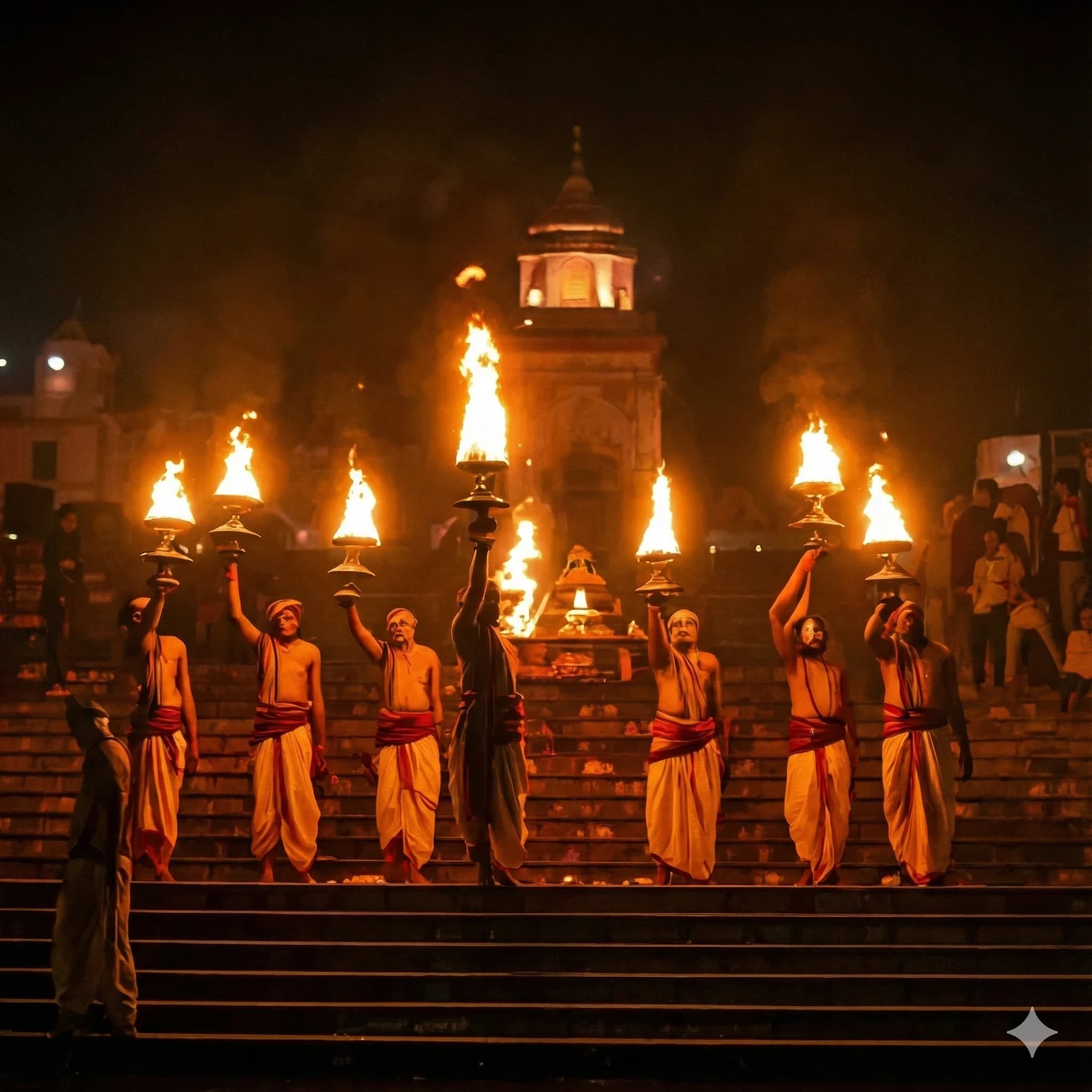
The most spectacular and bustling ghat in Varanasi, famous for the Agni Pooja (Ganga Aarti). Legend says Lord Brahma sacrificed ten horses here, making it a site of supreme cosmic power and vibrant daily devotion.
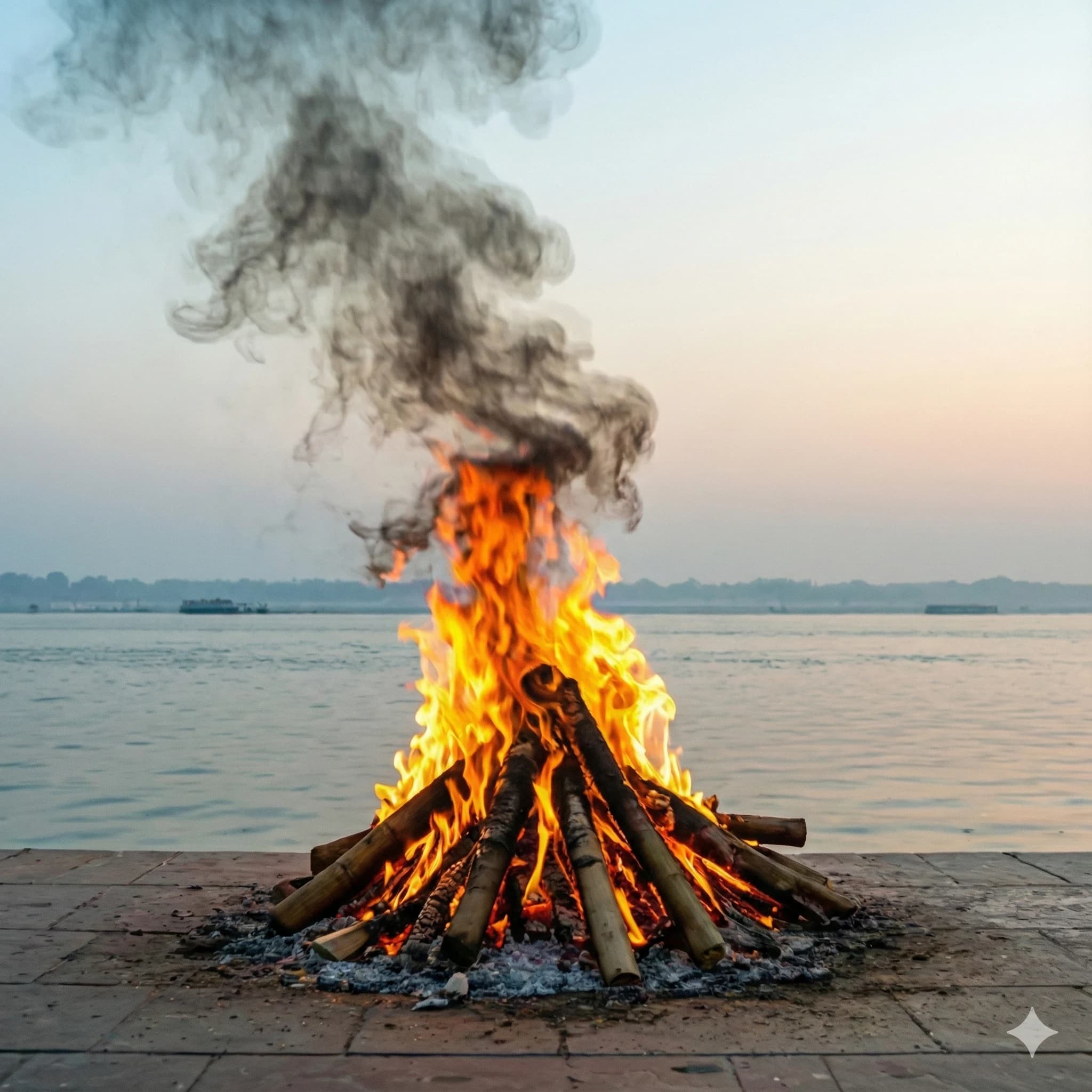
The Mahashmashana or 'Great Cremation Ground.' It is believed that the fires here have never gone out for centuries. Hindus believe cremation here grants immediate liberation (Moksha) from the cycle of rebirth.
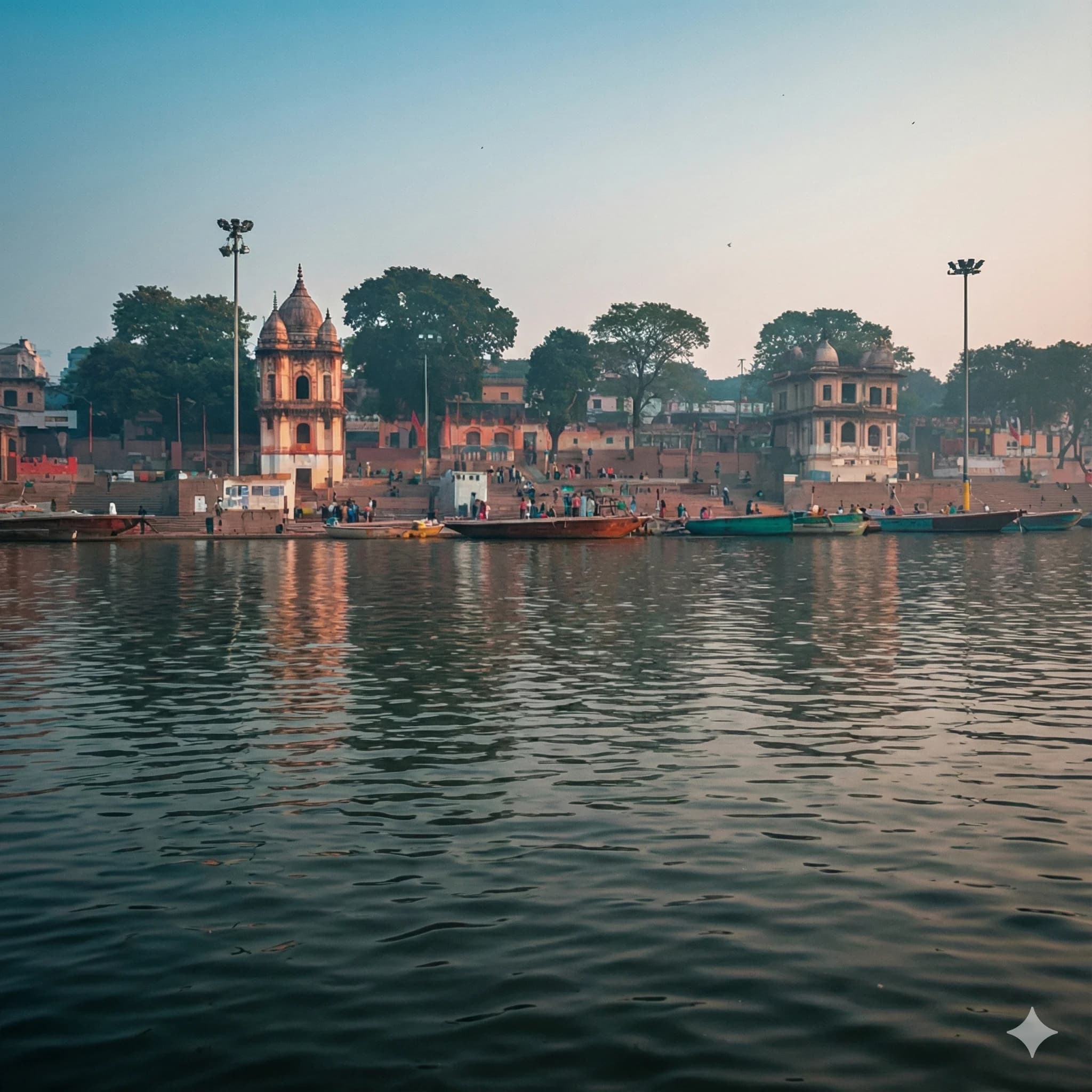
The southernmost ghat where the river Assi meets the Ganges. Famous for its 'Subah-e-Banaras' morning program, yoga sessions, long-term student residents, and a more tranquil, bohemian atmosphere.