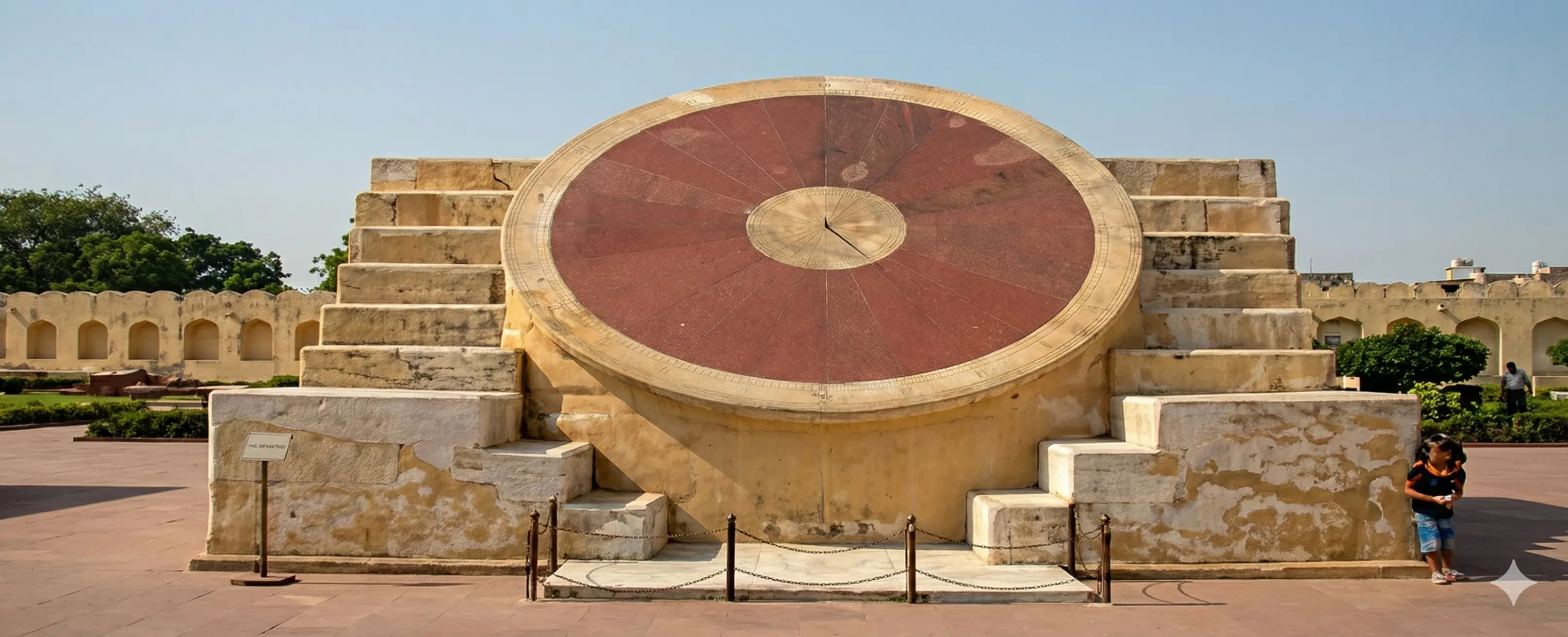
The Jantar Mantar in Varanasi is one of five observatories built by Maharaja Jai Singh II of Jaipur, a keen astronomer. Constructed in 1737 atop the Man Mandir Ghat, it was designed to measure local time, altitude of the sun, and the declination of stars and planets.
While less famous than its counterparts in Jaipur and Delhi, it is significant because it sits high above the Ganges. The main instruments include the Samrat Yantra (a giant sundial) and the Chakra Yantra. It is a fascinating stop for those interested in the history of science.
The site has recently been restored by the Archaeological Survey of India (ASI). It offers some of the best photographic vantage points of the river and the city skyline.
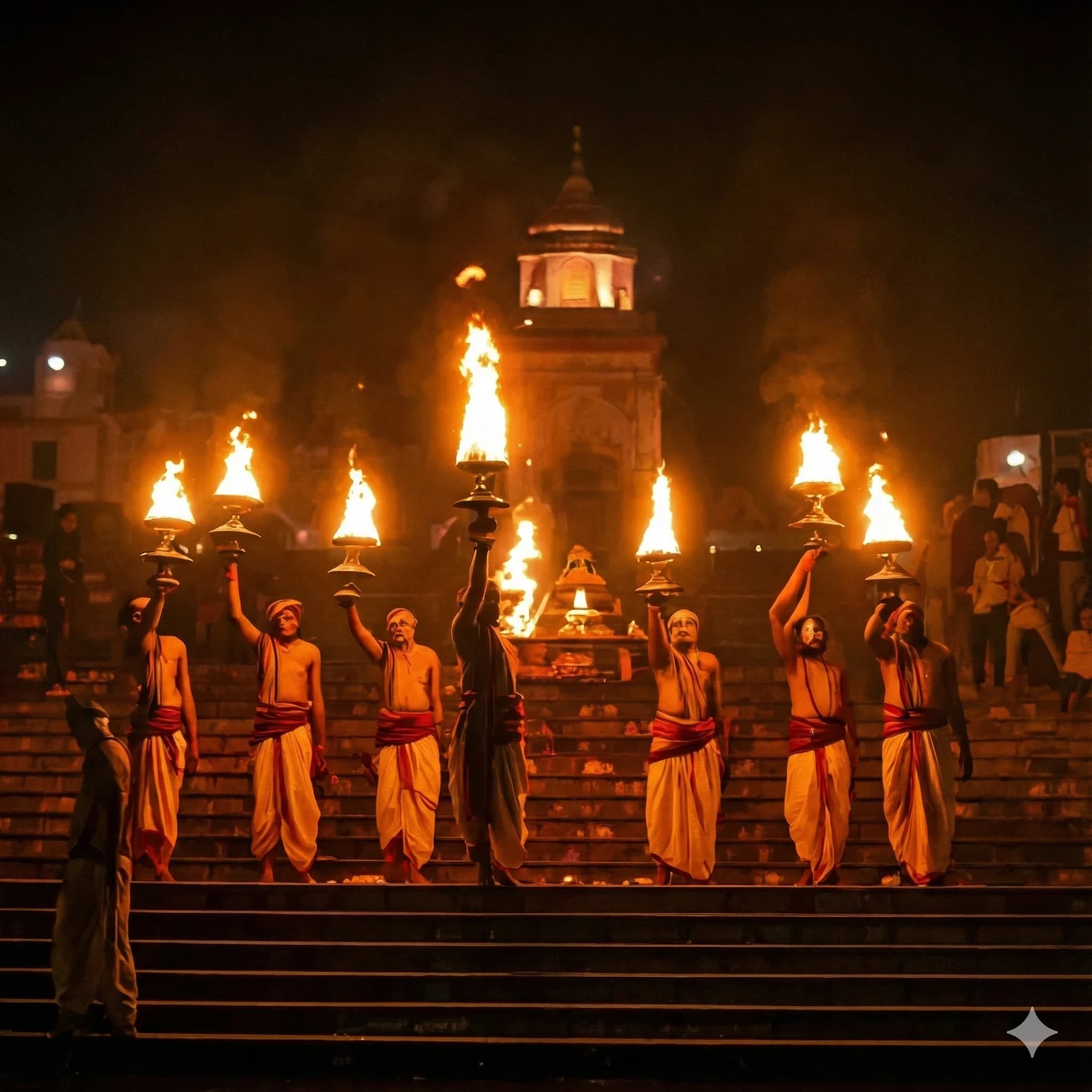
The most spectacular and bustling ghat in Varanasi, famous for the Agni Pooja (Ganga Aarti). Legend says Lord Brahma sacrificed ten horses here, making it a site of supreme cosmic power and vibrant daily devotion.
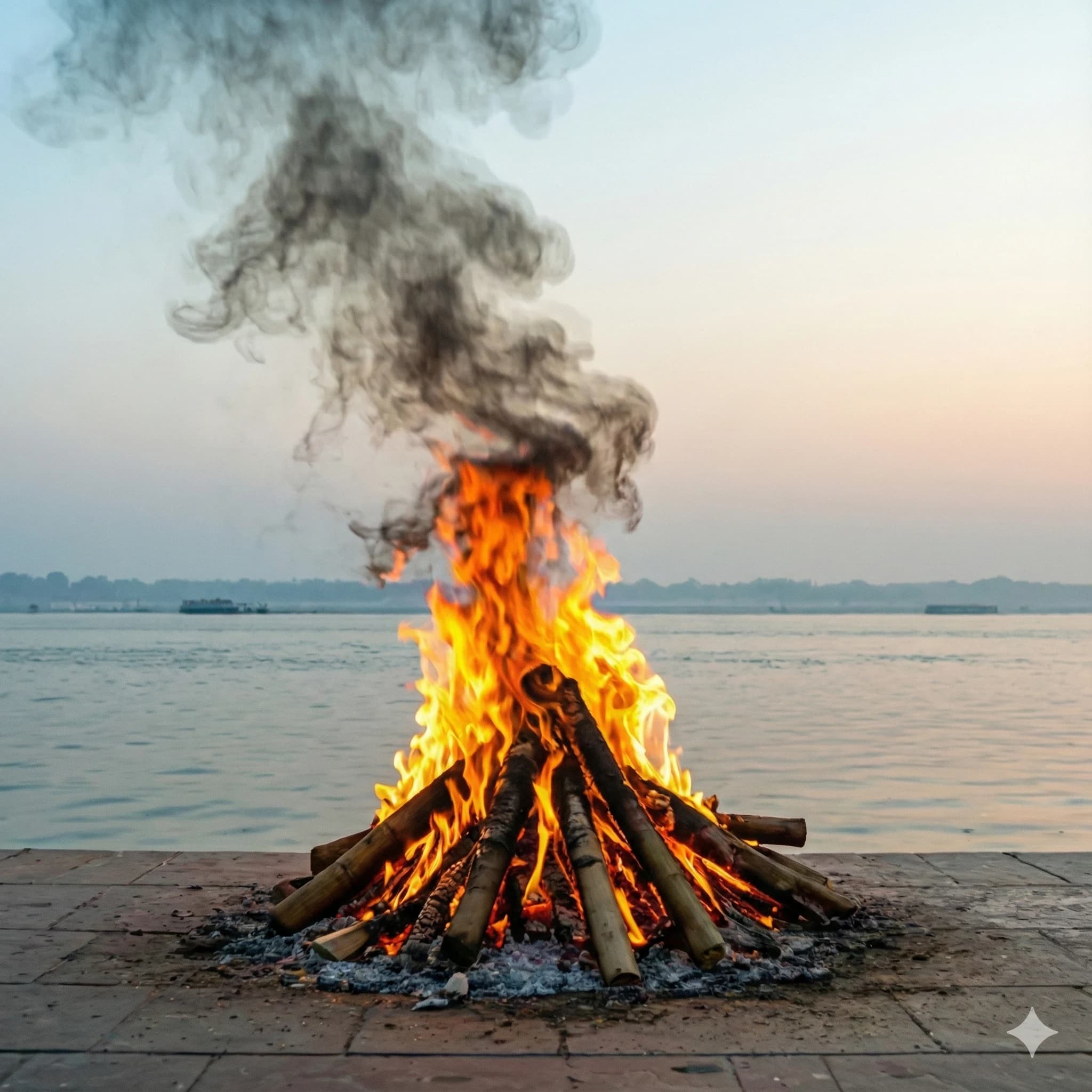
The Mahashmashana or 'Great Cremation Ground.' It is believed that the fires here have never gone out for centuries. Hindus believe cremation here grants immediate liberation (Moksha) from the cycle of rebirth.
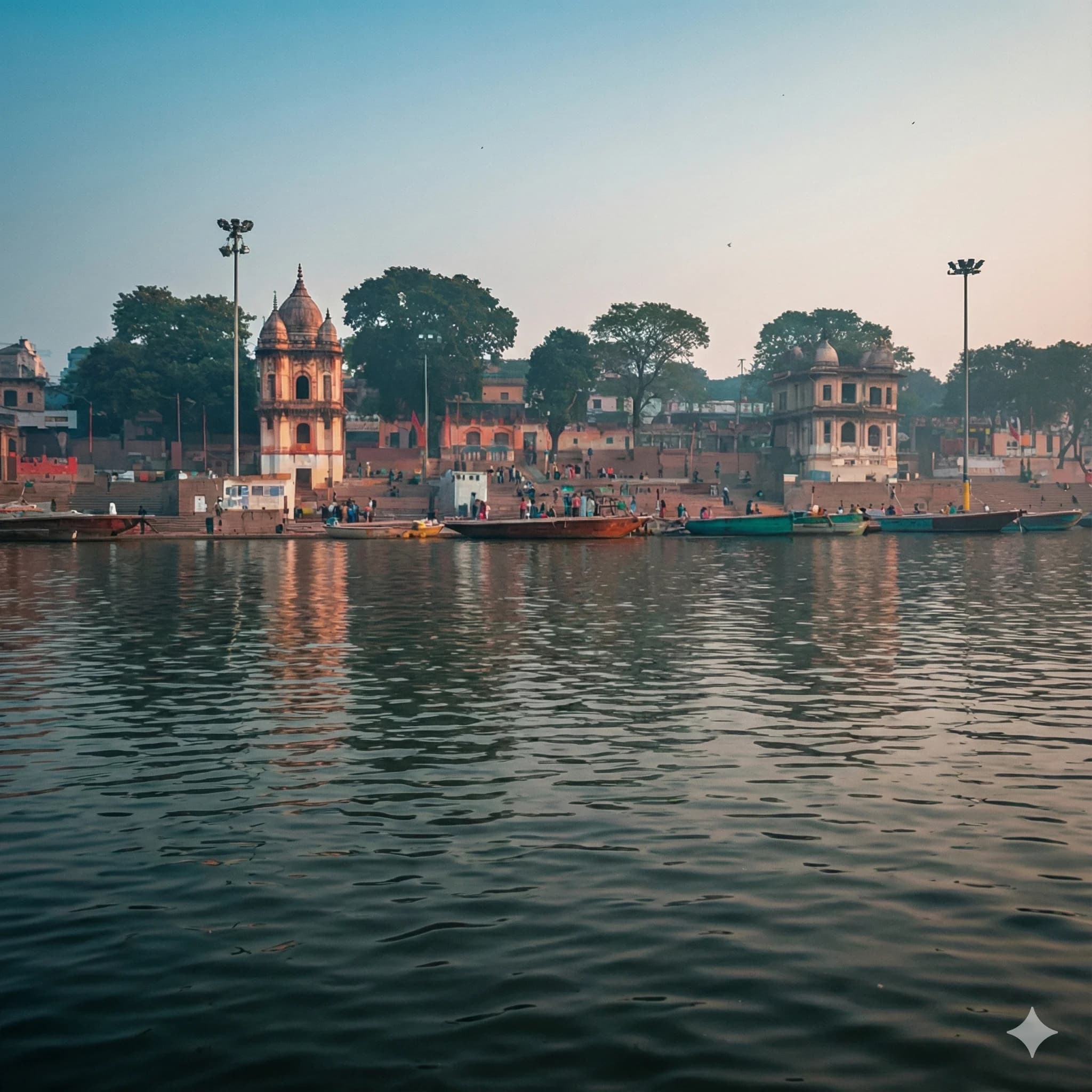
The southernmost ghat where the river Assi meets the Ganges. Famous for its 'Subah-e-Banaras' morning program, yoga sessions, long-term student residents, and a more tranquil, bohemian atmosphere.