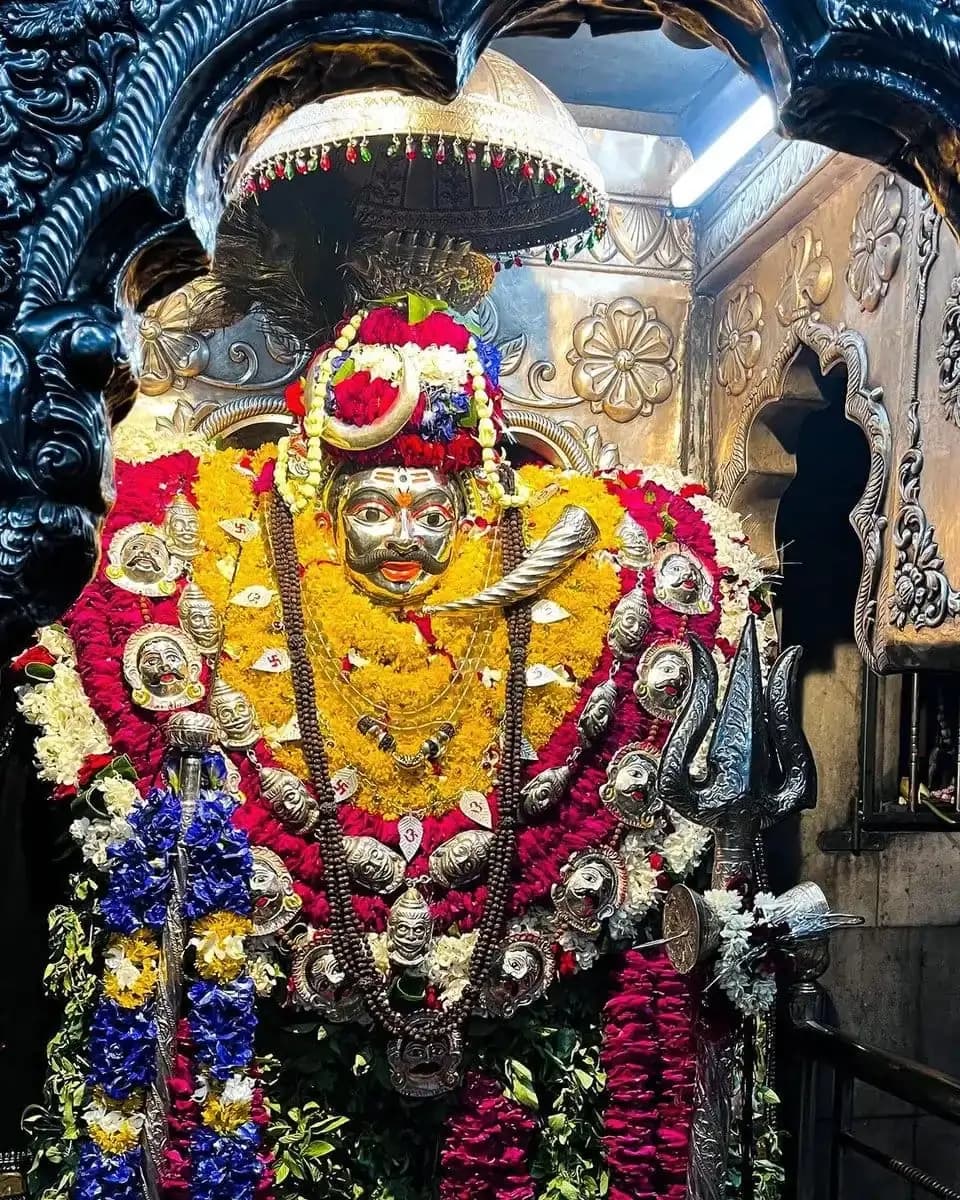
Kaal Bhairav is the fiercest form of Lord Shiva and is traditionally considered the 'Kotwal' or Sheriff of Varanasi. Folklore states that while Vishwanath is the King, Kaal Bhairav is the administrator who keeps the records of everyone's deeds. It is customary for devotees to visit this temple first to ask for permission to stay in the city, or last to ask for permission to leave.
The deity is depicted with a silver face, garlanded with flowers, and seated on a dog (his vehicle). The atmosphere here is raw and slightly intimidating. Priests tap devotees with a bundle of peacock feathers to ward off evil spirits and confusion. The sacred thread (Kaal Bhairav Dhaga) sold here is worn by millions for protection.
Alcohol is traditionally offered to the deity here, a rare practice in mainstream Hindu temples. The narrow lane leading to the temple is lined with shops selling black threads, mustard oil, and liquor for offerings.
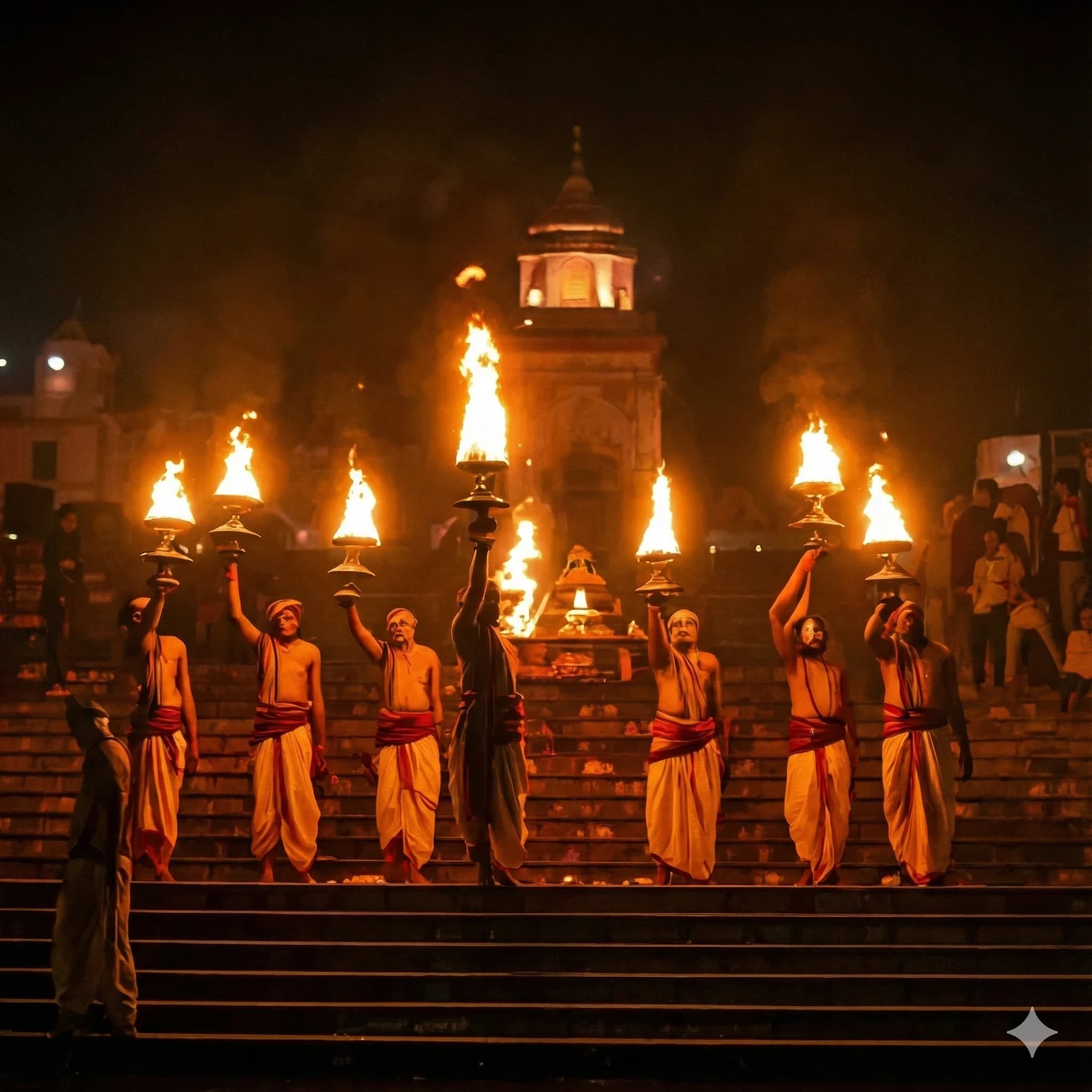
The most spectacular and bustling ghat in Varanasi, famous for the Agni Pooja (Ganga Aarti). Legend says Lord Brahma sacrificed ten horses here, making it a site of supreme cosmic power and vibrant daily devotion.
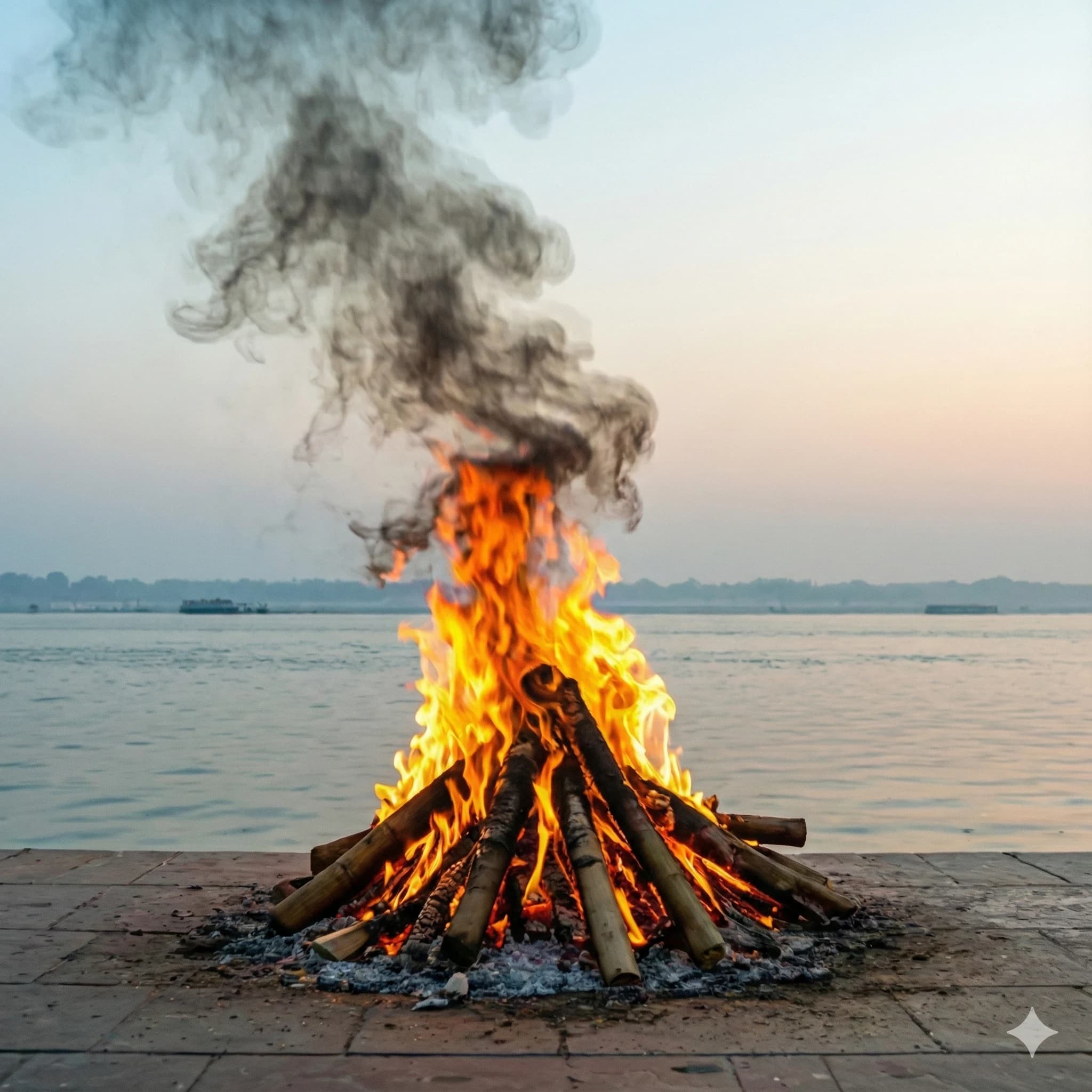
The Mahashmashana or 'Great Cremation Ground.' It is believed that the fires here have never gone out for centuries. Hindus believe cremation here grants immediate liberation (Moksha) from the cycle of rebirth.
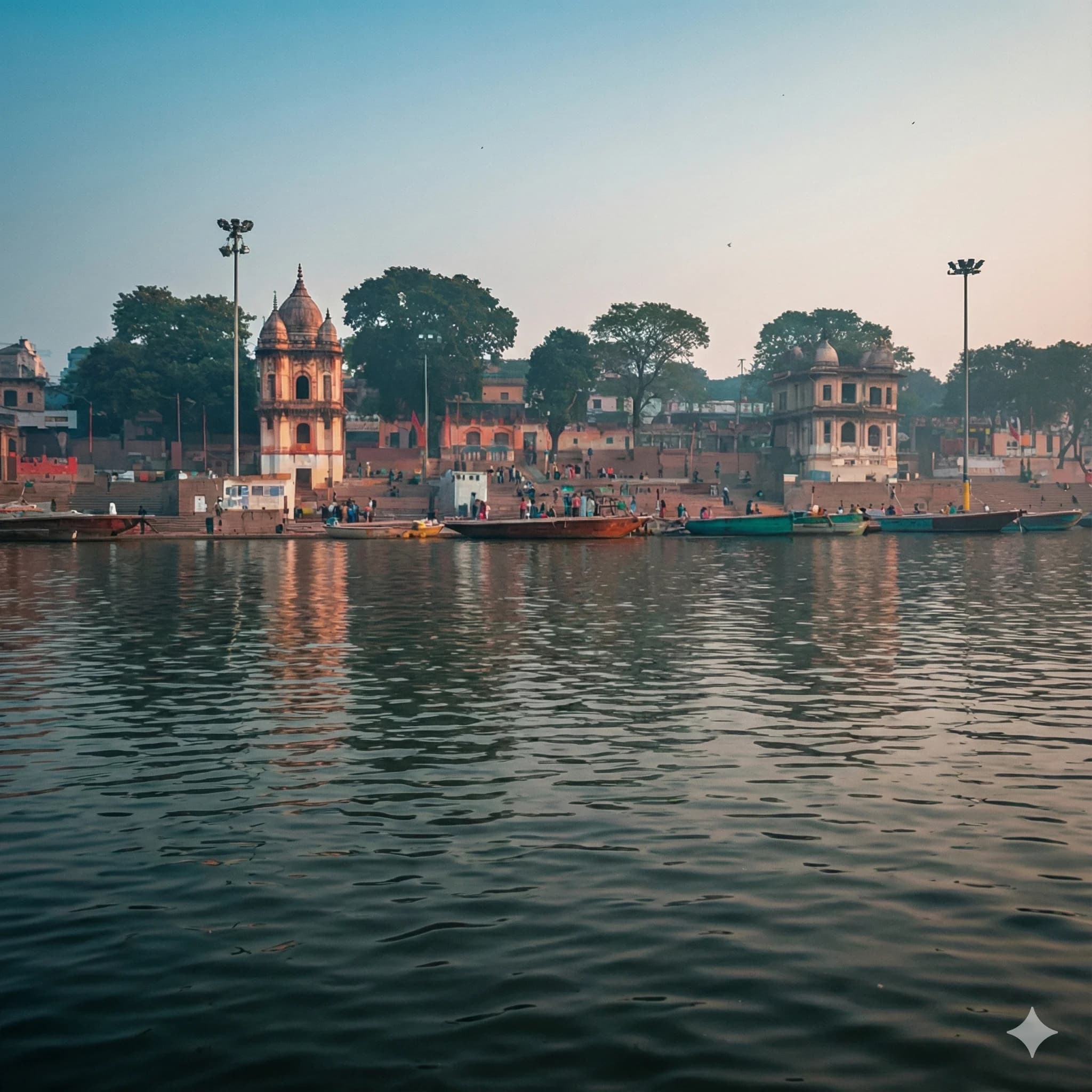
The southernmost ghat where the river Assi meets the Ganges. Famous for its 'Subah-e-Banaras' morning program, yoga sessions, long-term student residents, and a more tranquil, bohemian atmosphere.