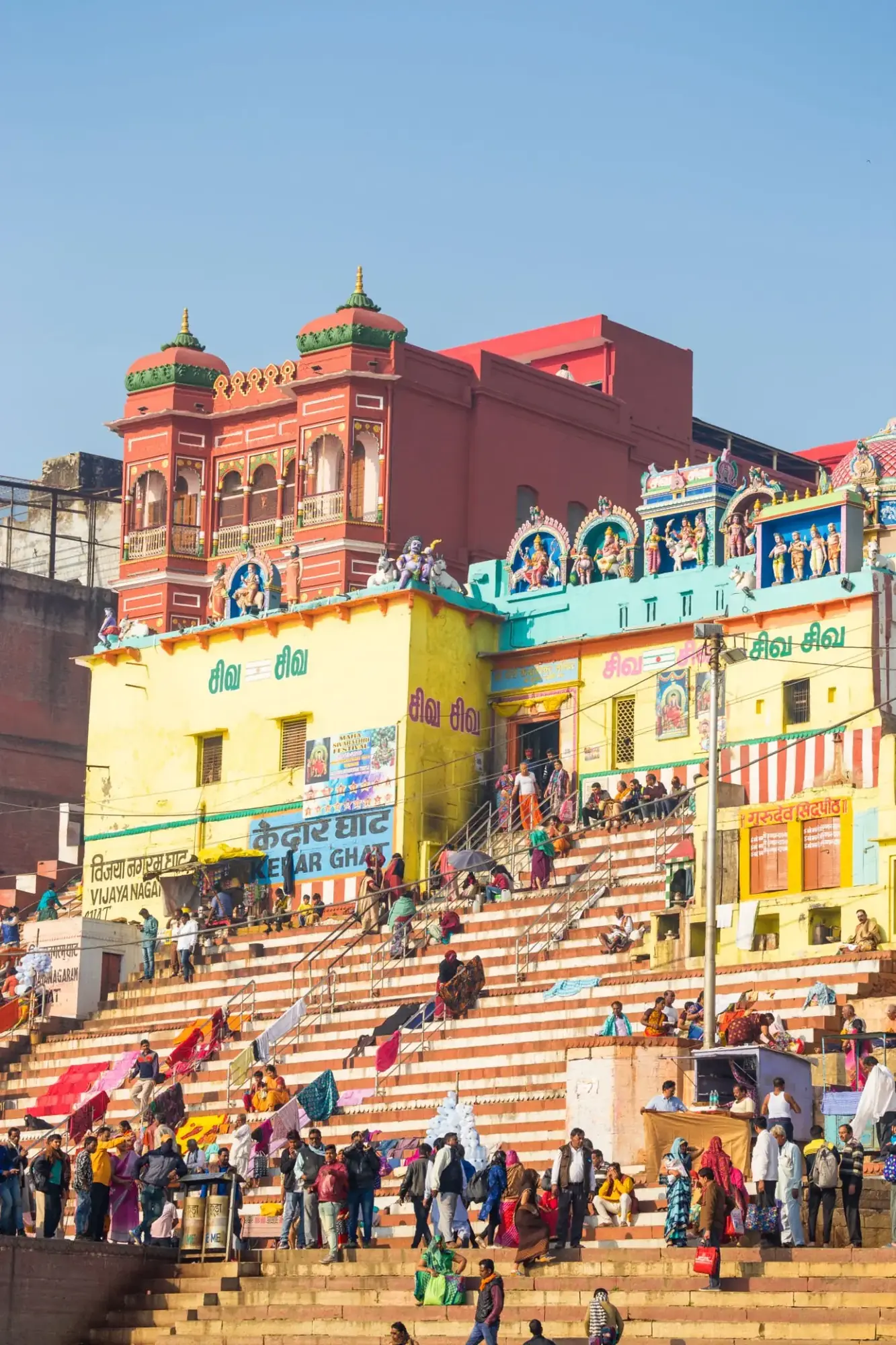
Kedar Ghat is the spiritual headquarters of the southern sector of Varanasi. It is dominated by the Kedareshwar Temple, which houses a self-manifested (Swayambhu) Shiva Lingam made of stone, not installed by human hands. It is believed that a visit here yields the same spiritual merit as visiting the famous Kedarnath Temple in the Himalayas.
The ghat is visually distinct due to its steep steps painted in broad red and white stripes, a style typical of South Indian temples. The vibe here is noticeably different, teeming with South Indian and Bengali pilgrims taking holy dips. The ghat is meticulously clean compared to others and has a large 'Kund' (tank) called the Gauri Kund, believed to have healing properties.
During the month of Shravan (monsoon), this ghat becomes a hive of activity. It is a community hub where locals sit for hours, and the evening Aarti performed here is intimate and deeply devotional, lacking the performative flair of Dashashwamedh but overflowing with sincerity.
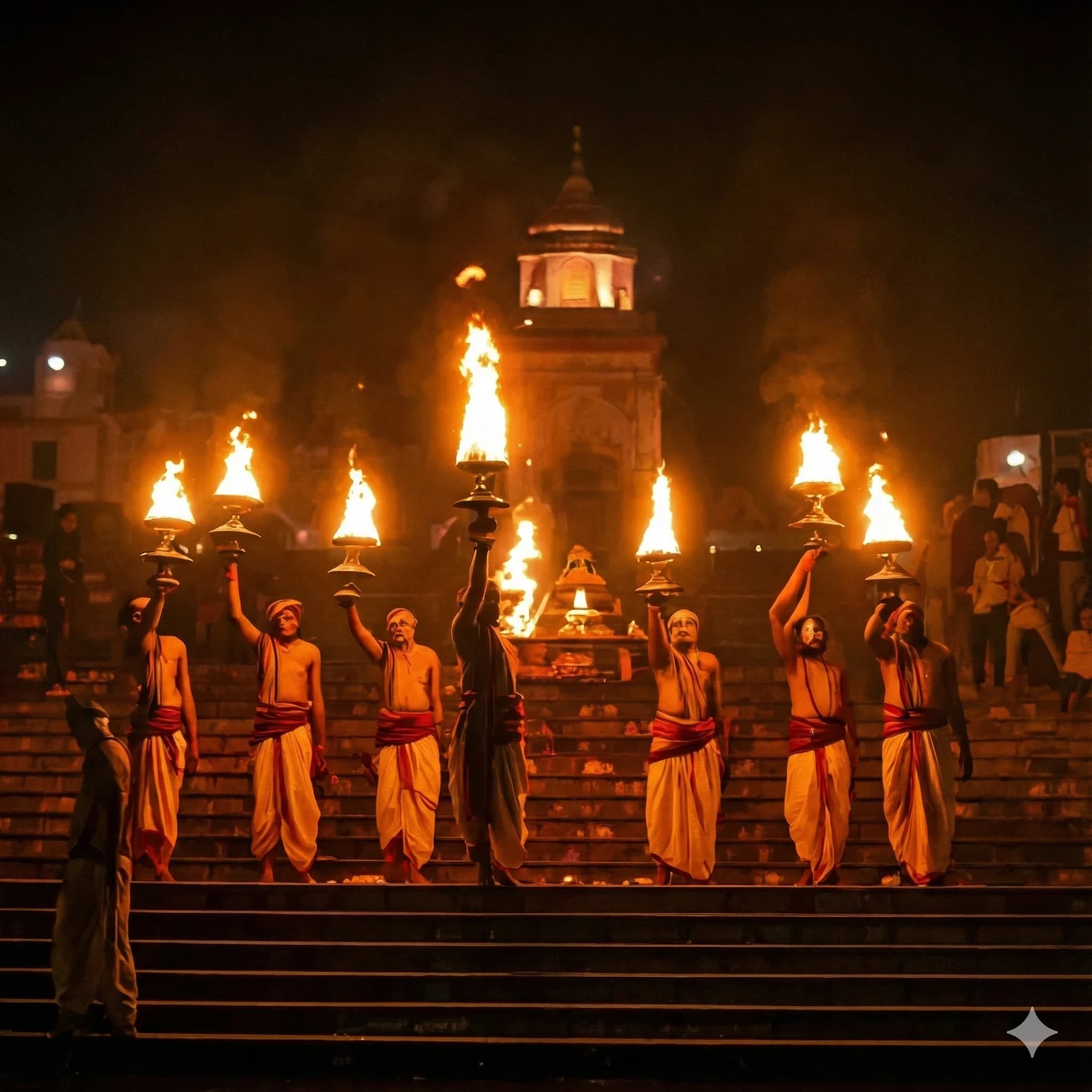
The most spectacular and bustling ghat in Varanasi, famous for the Agni Pooja (Ganga Aarti). Legend says Lord Brahma sacrificed ten horses here, making it a site of supreme cosmic power and vibrant daily devotion.
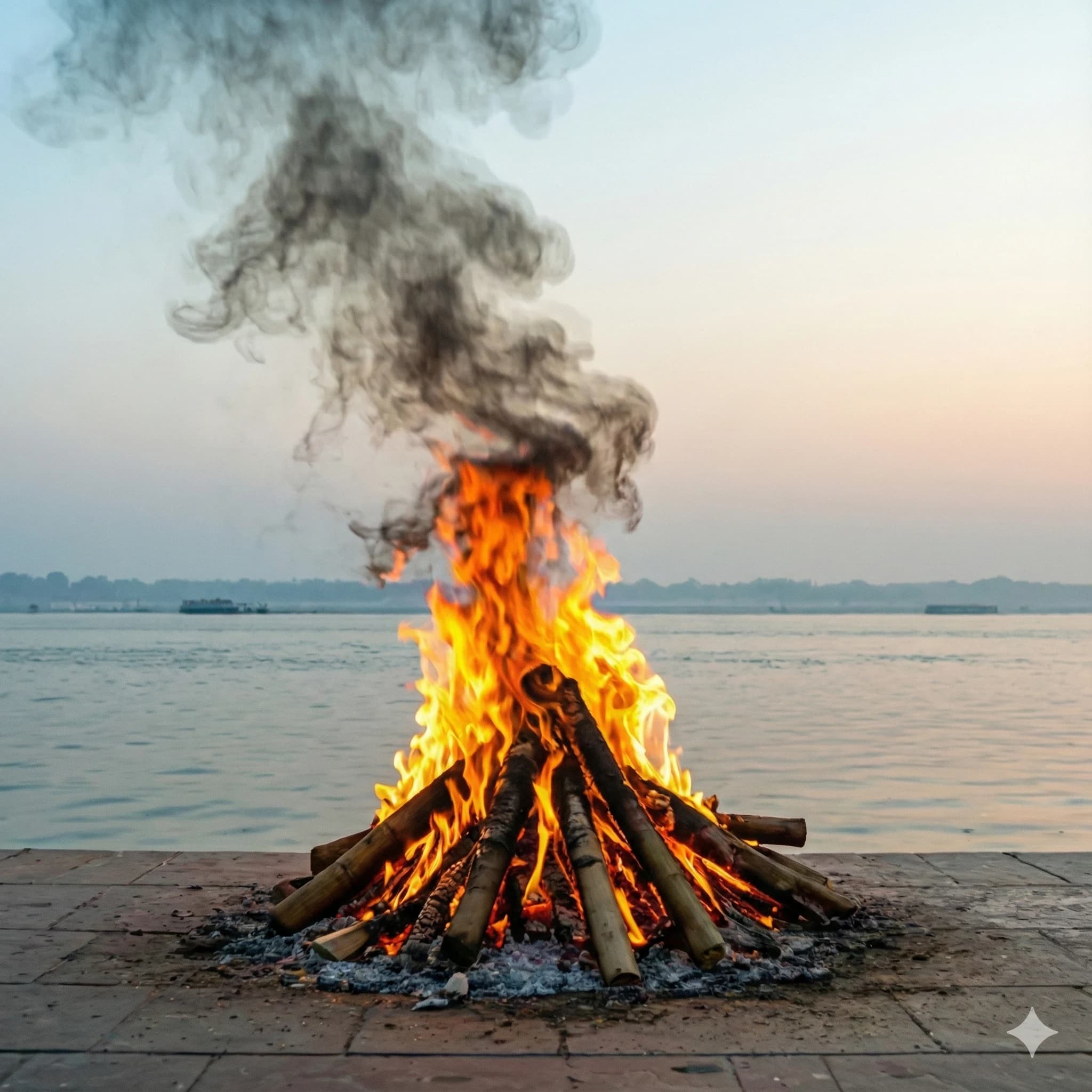
The Mahashmashana or 'Great Cremation Ground.' It is believed that the fires here have never gone out for centuries. Hindus believe cremation here grants immediate liberation (Moksha) from the cycle of rebirth.
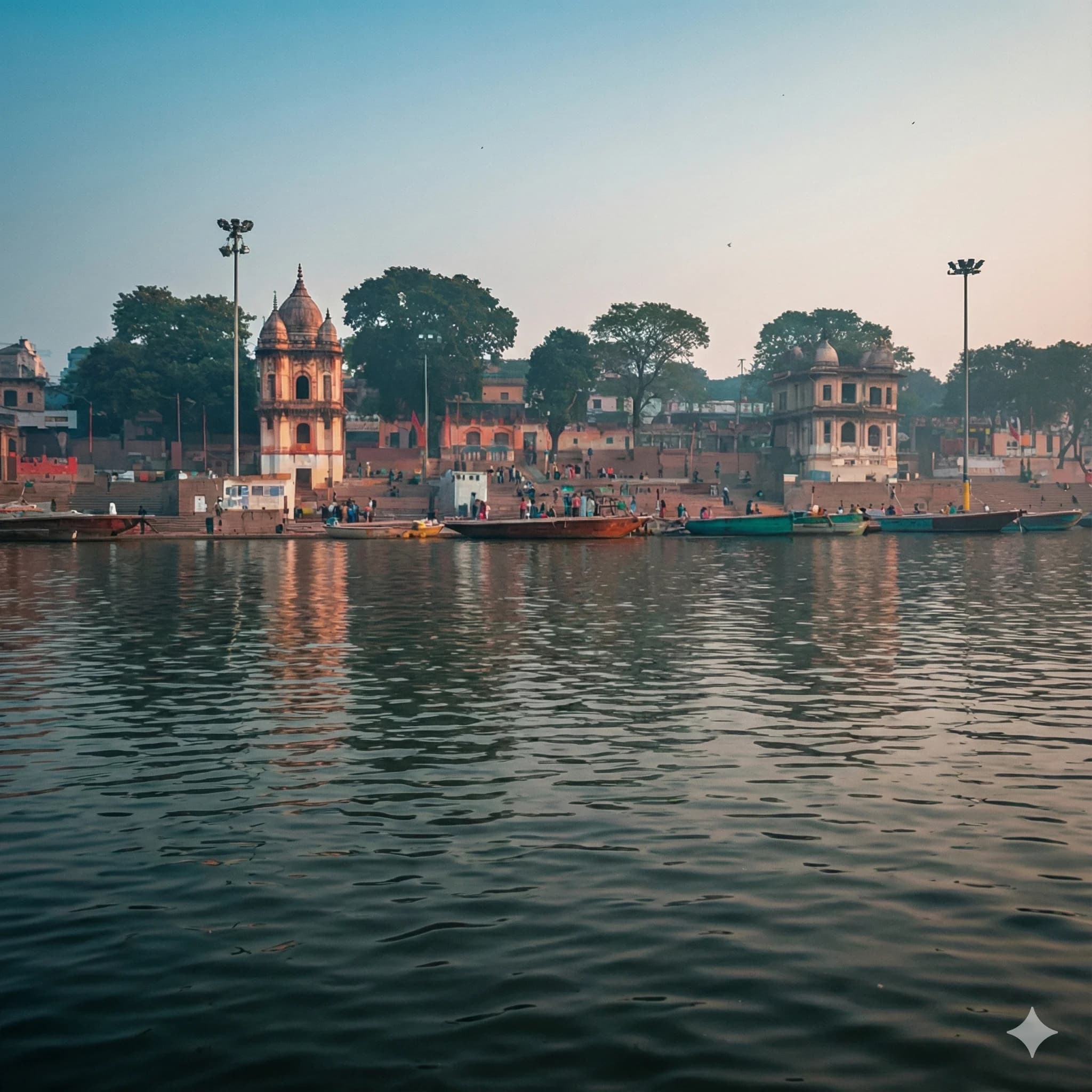
The southernmost ghat where the river Assi meets the Ganges. Famous for its 'Subah-e-Banaras' morning program, yoga sessions, long-term student residents, and a more tranquil, bohemian atmosphere.