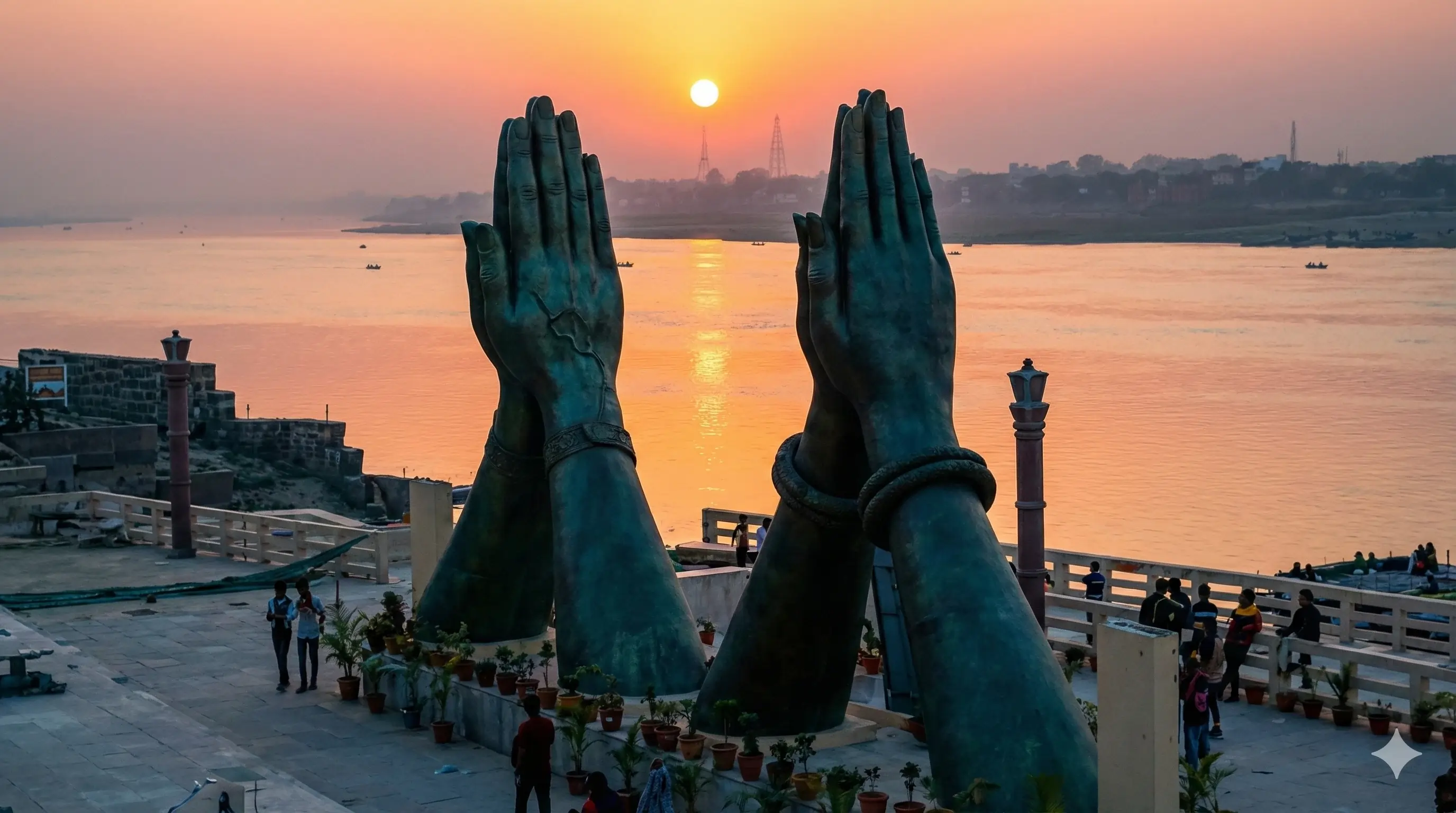
Namo Ghat (formerly Khidkiya Ghat) represents the new, modernized face of ancient Kashi. Recently redeveloped, it is the first ghat in Varanasi to be accessible by land via car and has been designed as a model "smart ghat." It is instantly recognizable by the massive metal sculpture of hands folded in a 'Namaste' gesture, which has become a new selfie landmark for the city.
Unlike the congested ancient ghats, Namo Ghat features wide promenades, food courts, an open-air amphitheater, and floating CNG stations for boats. It is designed to host cultural events and manage tourist overflow. It also offers water sports and recreational activities, a departure from the strictly ritualistic nature of other ghats.
While purists may argue it lacks the gritty antiquity of the old city, it offers a clean, accessible, and family-friendly way to enjoy the riverfront. It is particularly beautiful at sunset when the Namaste sculptures are illuminated.
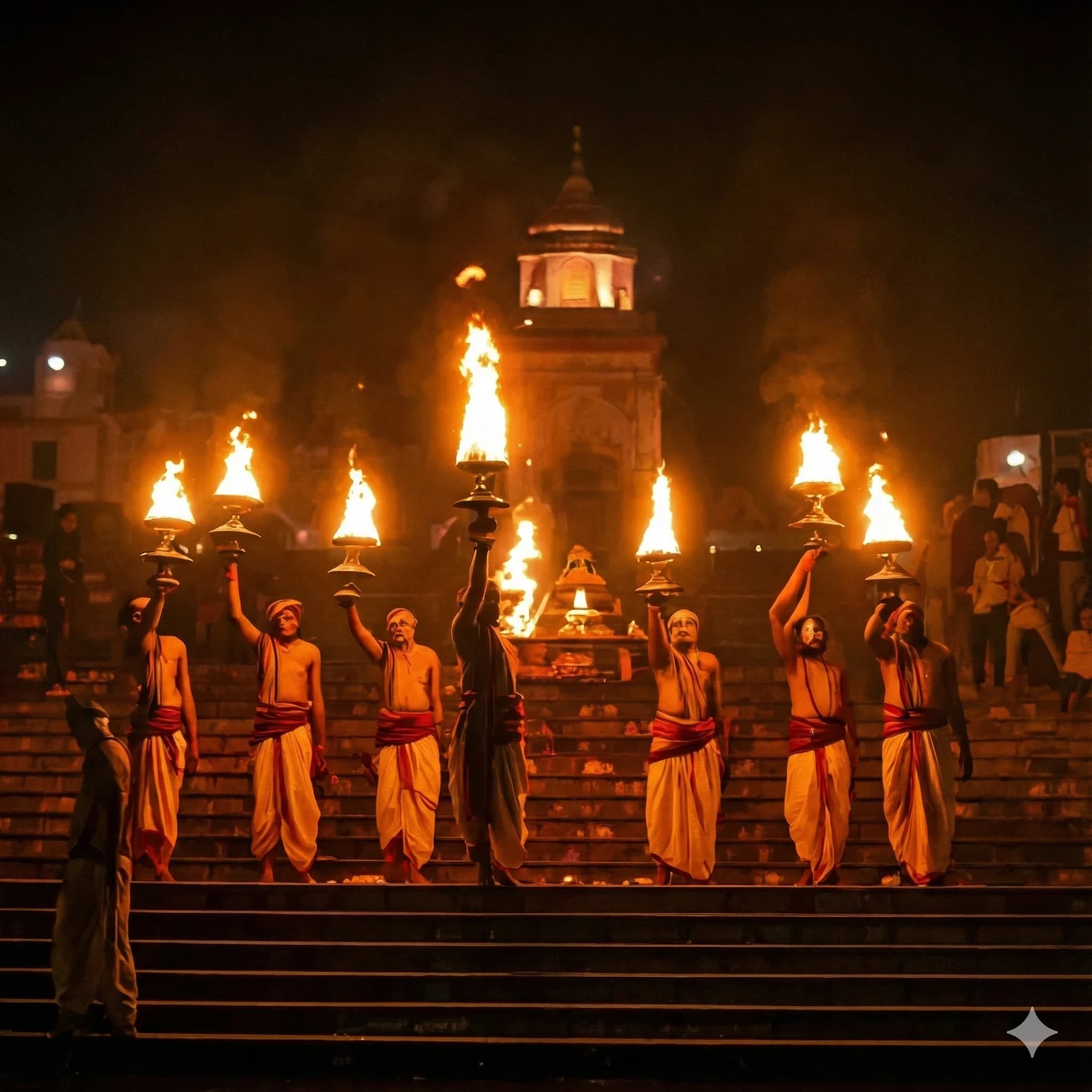
The most spectacular and bustling ghat in Varanasi, famous for the Agni Pooja (Ganga Aarti). Legend says Lord Brahma sacrificed ten horses here, making it a site of supreme cosmic power and vibrant daily devotion.
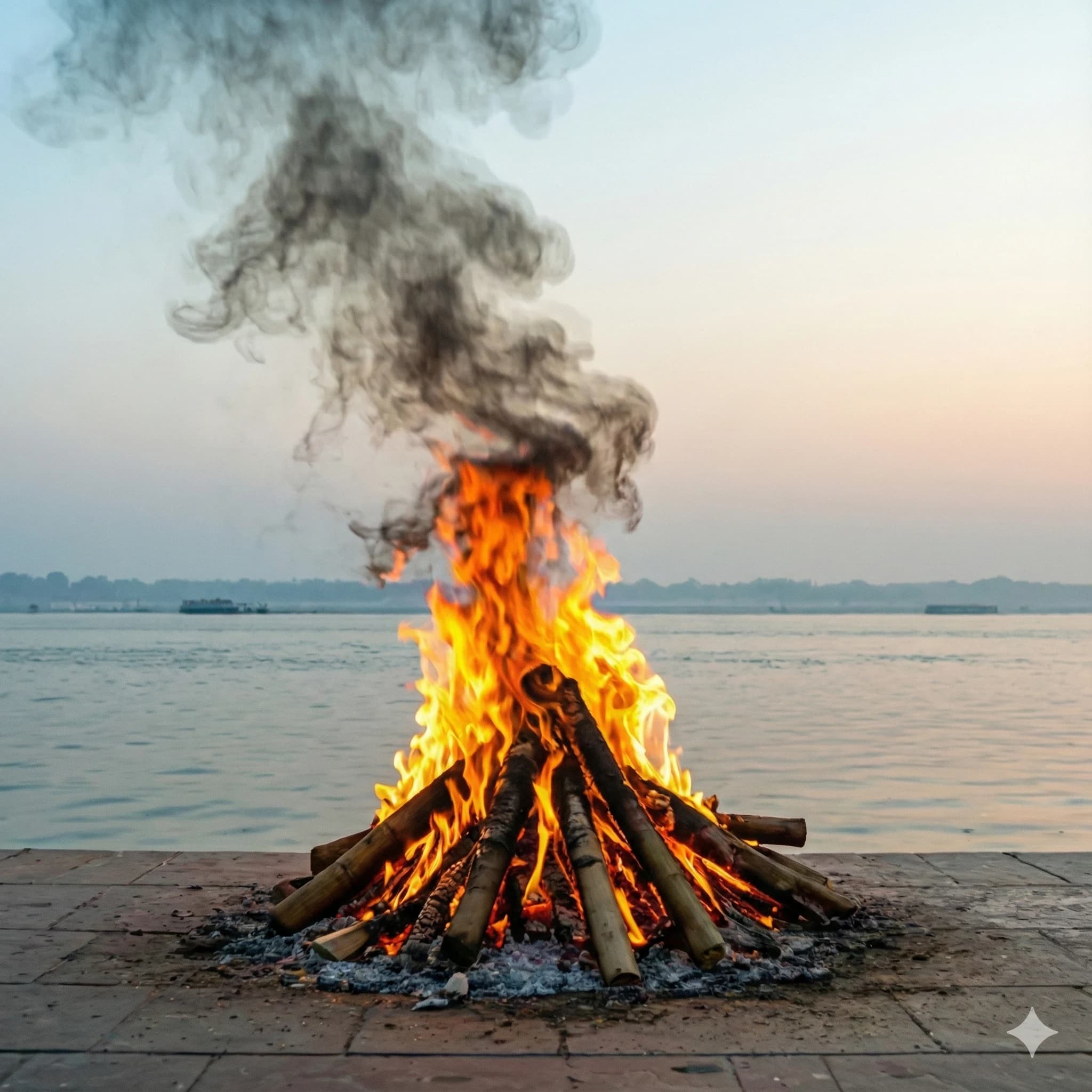
The Mahashmashana or 'Great Cremation Ground.' It is believed that the fires here have never gone out for centuries. Hindus believe cremation here grants immediate liberation (Moksha) from the cycle of rebirth.
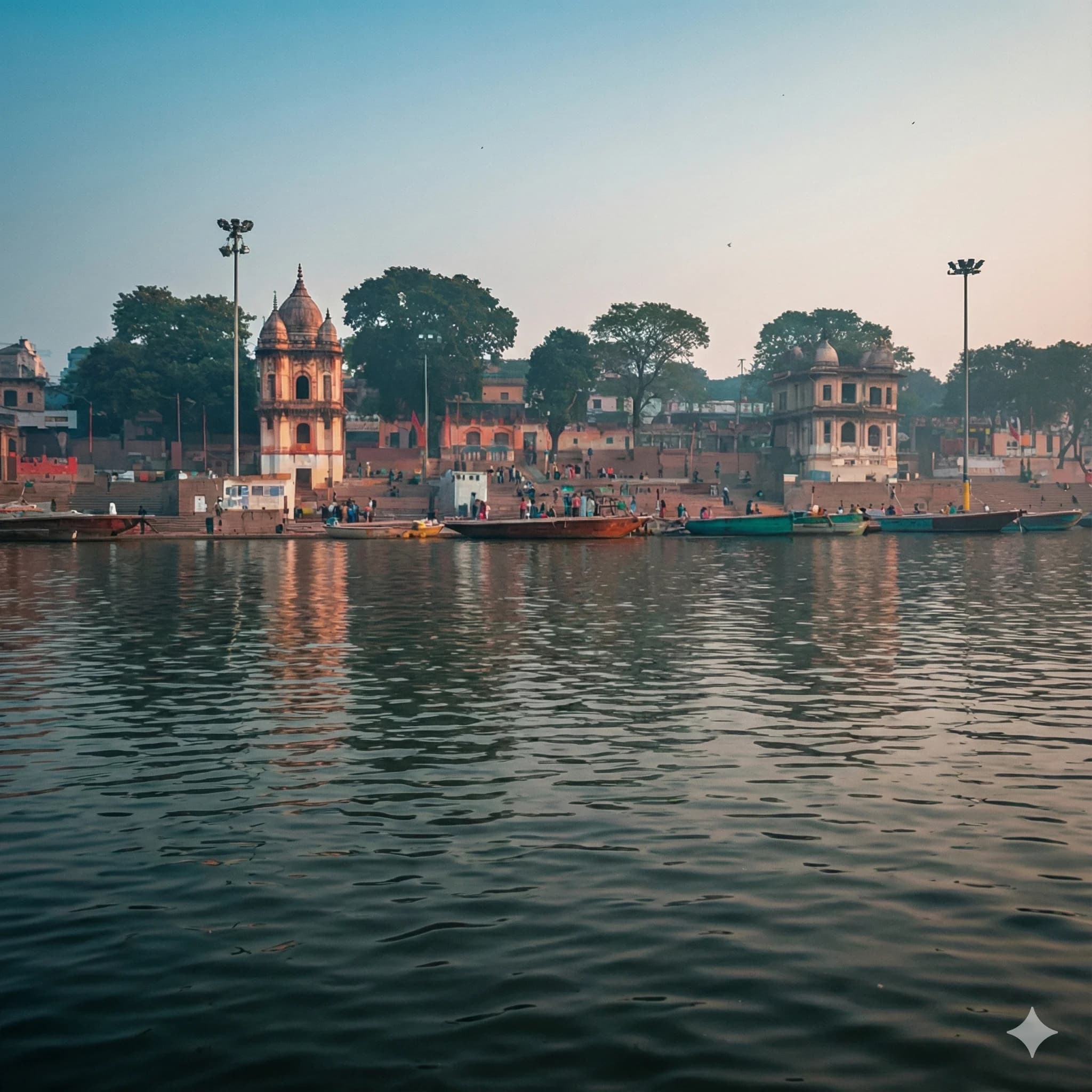
The southernmost ghat where the river Assi meets the Ganges. Famous for its 'Subah-e-Banaras' morning program, yoga sessions, long-term student residents, and a more tranquil, bohemian atmosphere.