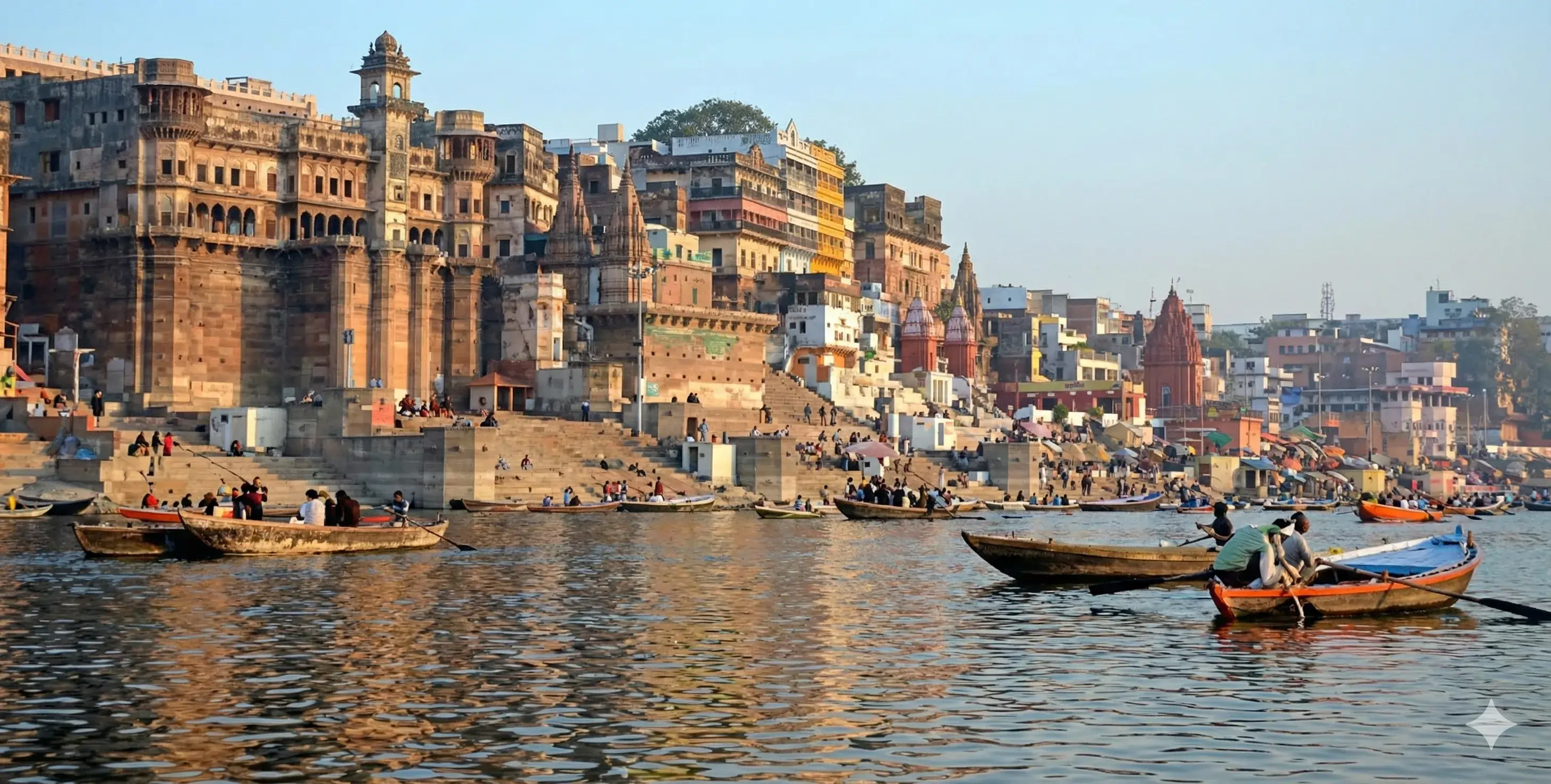
Panchganga Ghat is a site of mythical confluence. The name 'Panchganga' implies the meeting of five rivers: the visible Ganga, and the mythical/subterranean Yamuna, Saraswati, Kirana, and Dhutpapa. Due to this pentad confluence, it is considered a powerhouse of spiritual merit, second only to Dashashwamedh and Manikarnika.
The skyline of this ghat is dominated by the imposing Alamgir Mosque (also known as Beni Madhav Ka Darera), built by the Mughal Emperor Aurangzeb on the site of a destroyed Vishnu temple. The fusion of the Hindu ghat steps and the Islamic minarets looming above creates one of the most defining silhouettes of Varanasi.
This ghat was also the spiritual teacher Ramananda's base, where he accepted saint Kabir as his disciple. During the month of Kartik (October-November), devotees install tall bamboo poles with wicker lamps (Akash Deeps) here to guide ancestral spirits, creating a breathtaking sight of hundreds of floating lights in the sky.
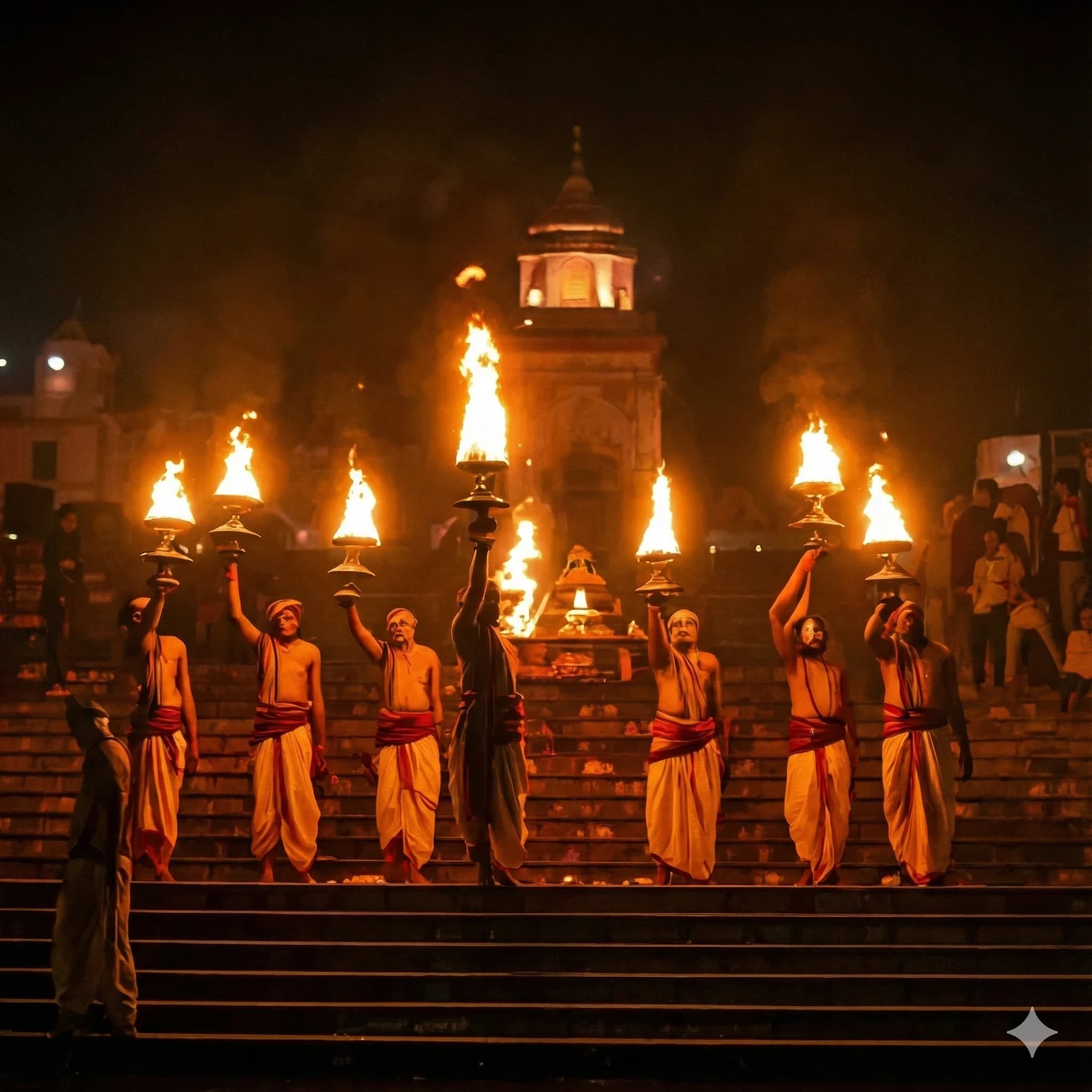
The most spectacular and bustling ghat in Varanasi, famous for the Agni Pooja (Ganga Aarti). Legend says Lord Brahma sacrificed ten horses here, making it a site of supreme cosmic power and vibrant daily devotion.
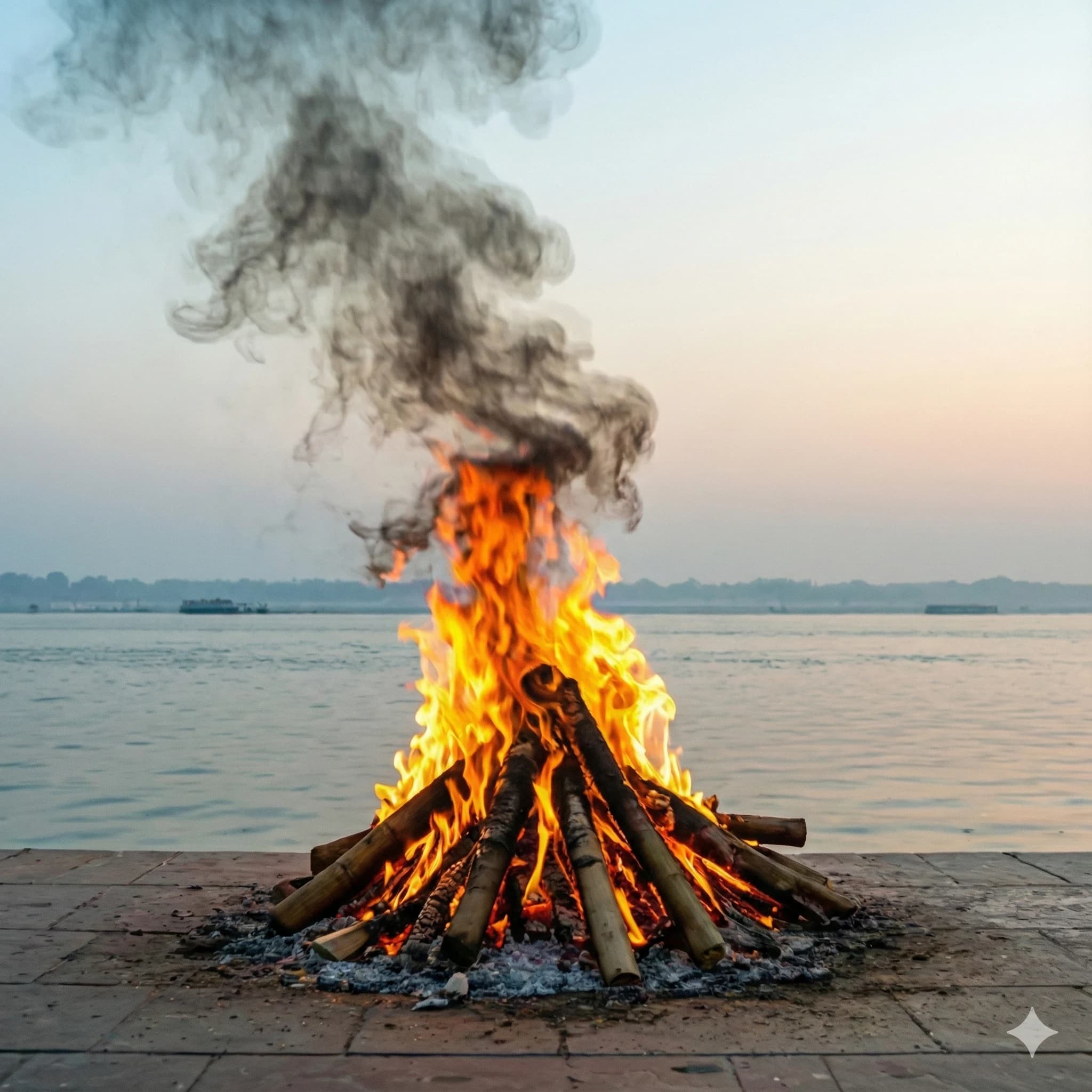
The Mahashmashana or 'Great Cremation Ground.' It is believed that the fires here have never gone out for centuries. Hindus believe cremation here grants immediate liberation (Moksha) from the cycle of rebirth.
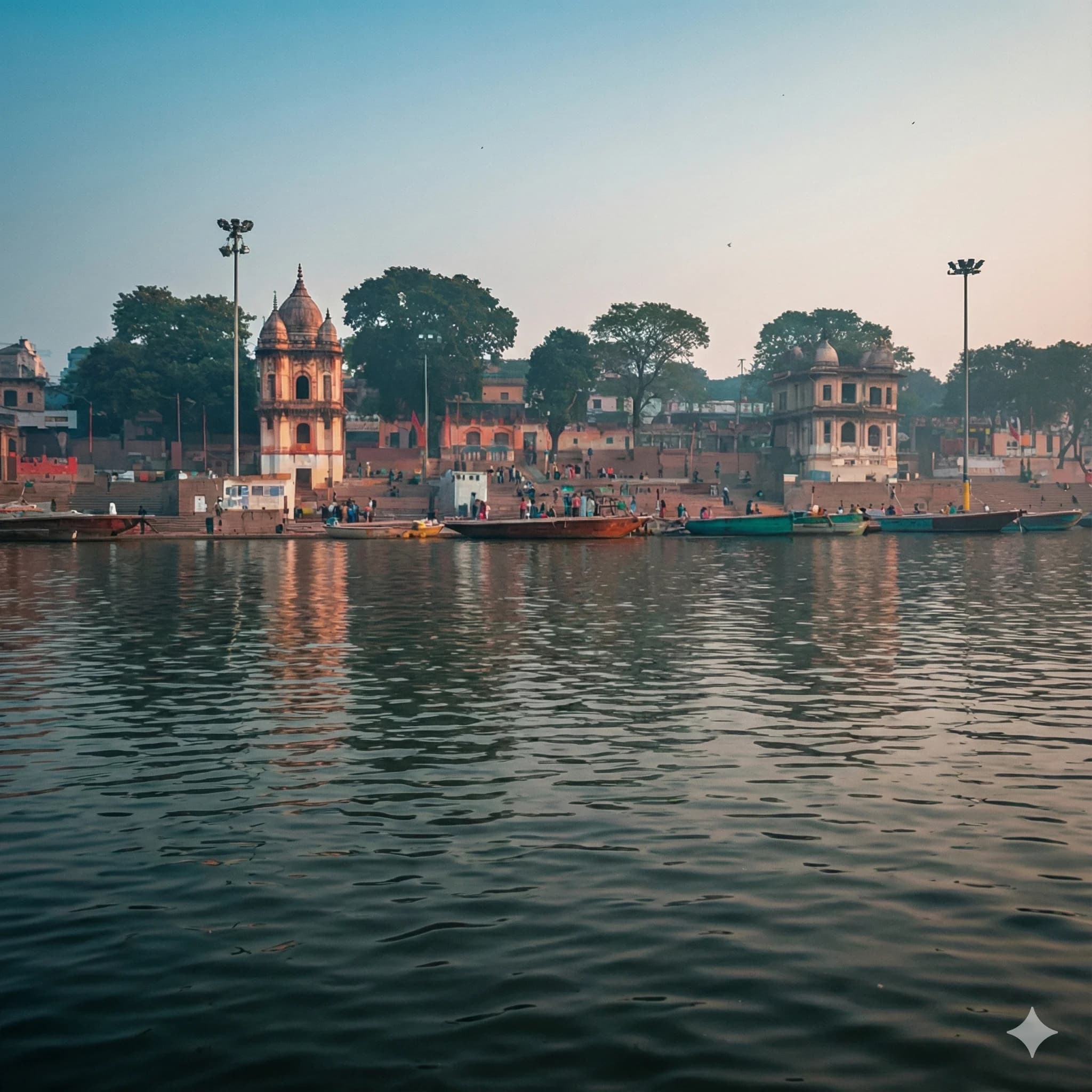
The southernmost ghat where the river Assi meets the Ganges. Famous for its 'Subah-e-Banaras' morning program, yoga sessions, long-term student residents, and a more tranquil, bohemian atmosphere.