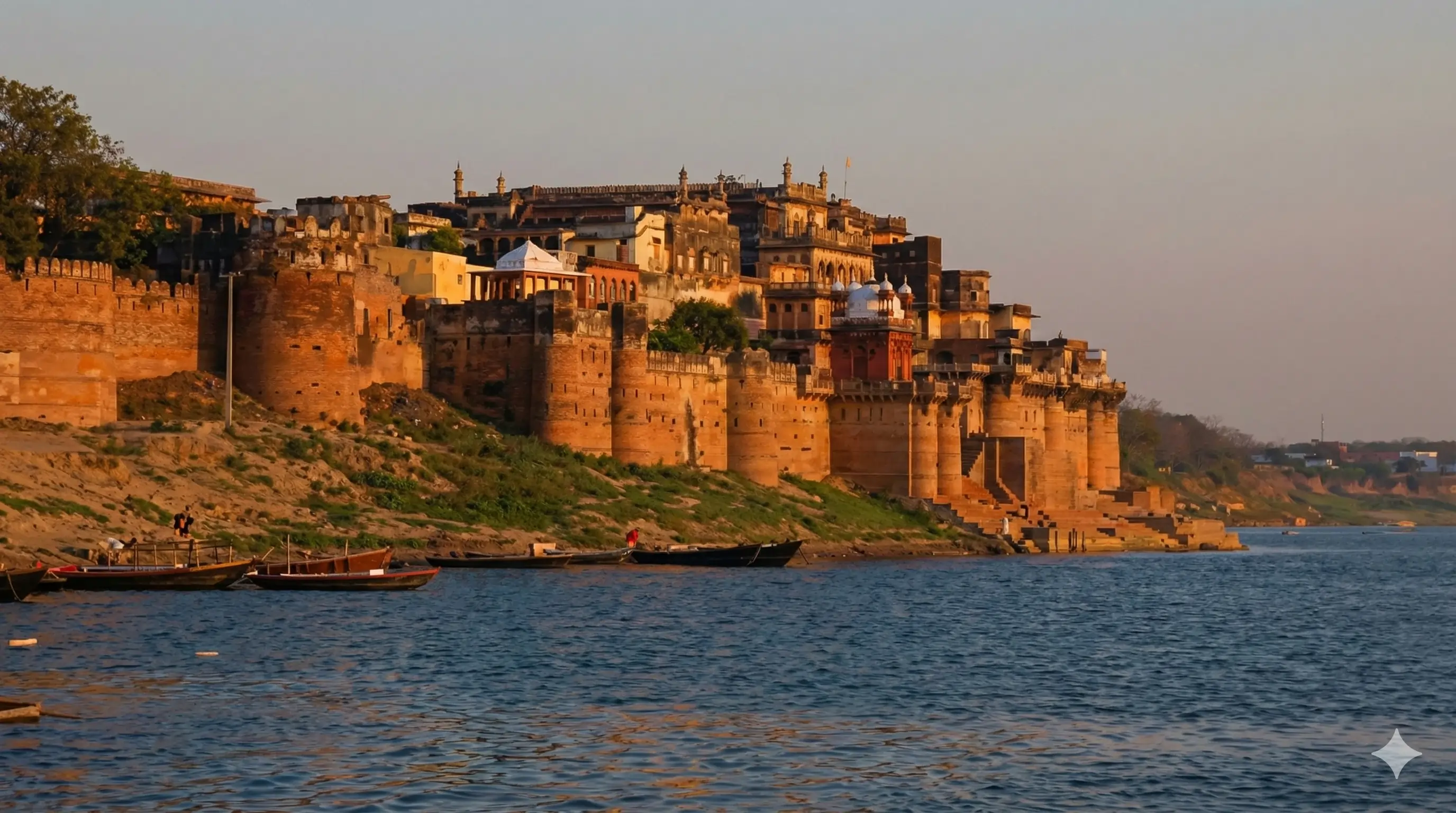
Located on the eastern bank of the Ganges, opposite the main ghats, Ramnagar Fort is the ancestral residence of the Kashi Naresh (the Maharaja of Varanasi). Built in 1750 using creamy Chunar sandstone, the fort is a classic example of Mughal-style architecture with carved balconies, open courtyards, and pavilions.
While the current Maharaja still lives in a private wing, the rest of the fort is a museum. It houses an eccentric and fascinating collection: vintage American cars, jewel-encrusted sedan chairs, ivory works, and an armory filled with swords and guns. The collection is dusty and time-worn, adding to the feeling of fading royal glory.
The fort is also famous for hosting the world's oldest Ramlila (a month-long enactment of the Ramayana) performed in the open fields behind the fort without microphones or electric lights. Taking a boat across the river to the fort at sunset offers a stunning panoramic view of the crescent-shaped ghats of Varanasi.
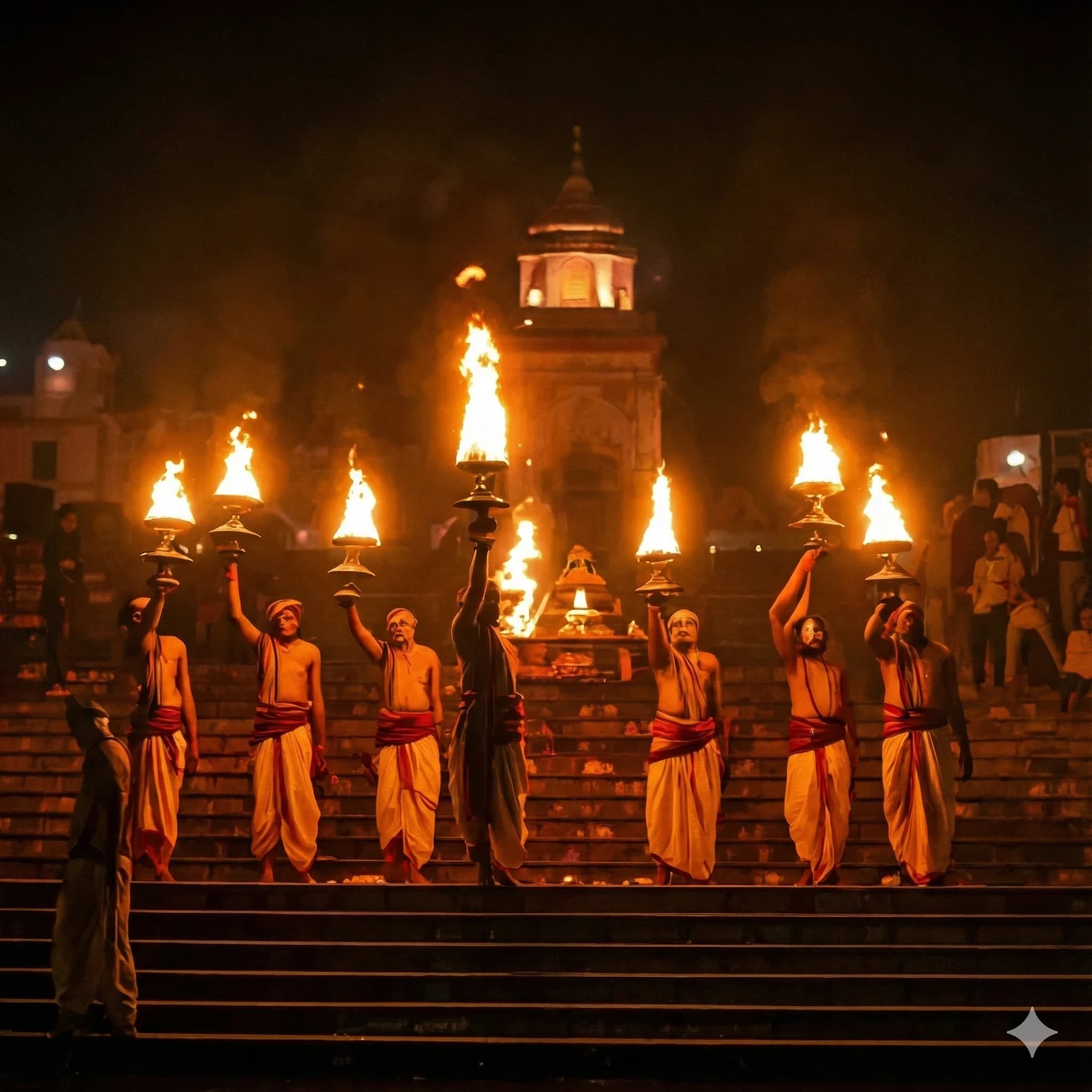
The most spectacular and bustling ghat in Varanasi, famous for the Agni Pooja (Ganga Aarti). Legend says Lord Brahma sacrificed ten horses here, making it a site of supreme cosmic power and vibrant daily devotion.
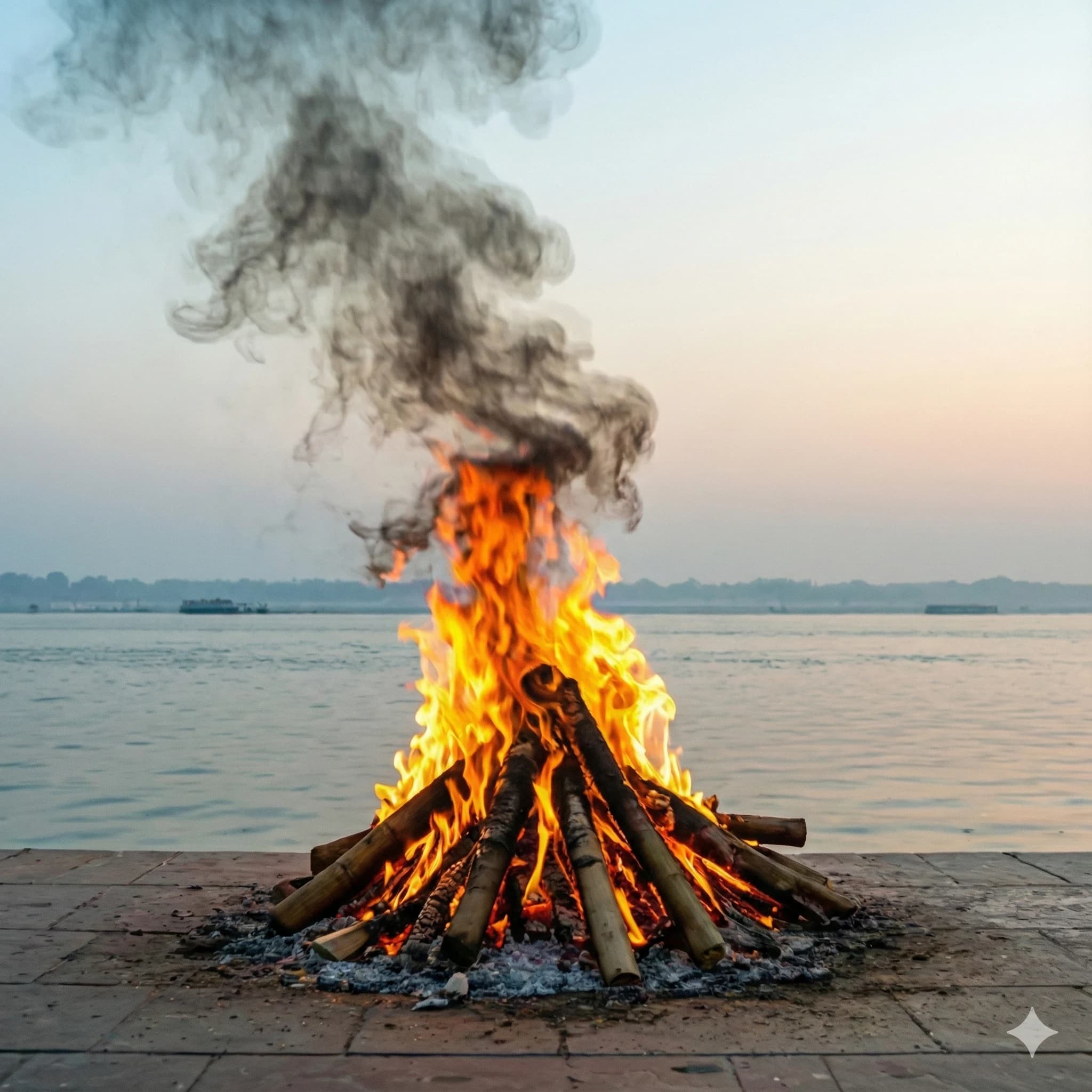
The Mahashmashana or 'Great Cremation Ground.' It is believed that the fires here have never gone out for centuries. Hindus believe cremation here grants immediate liberation (Moksha) from the cycle of rebirth.
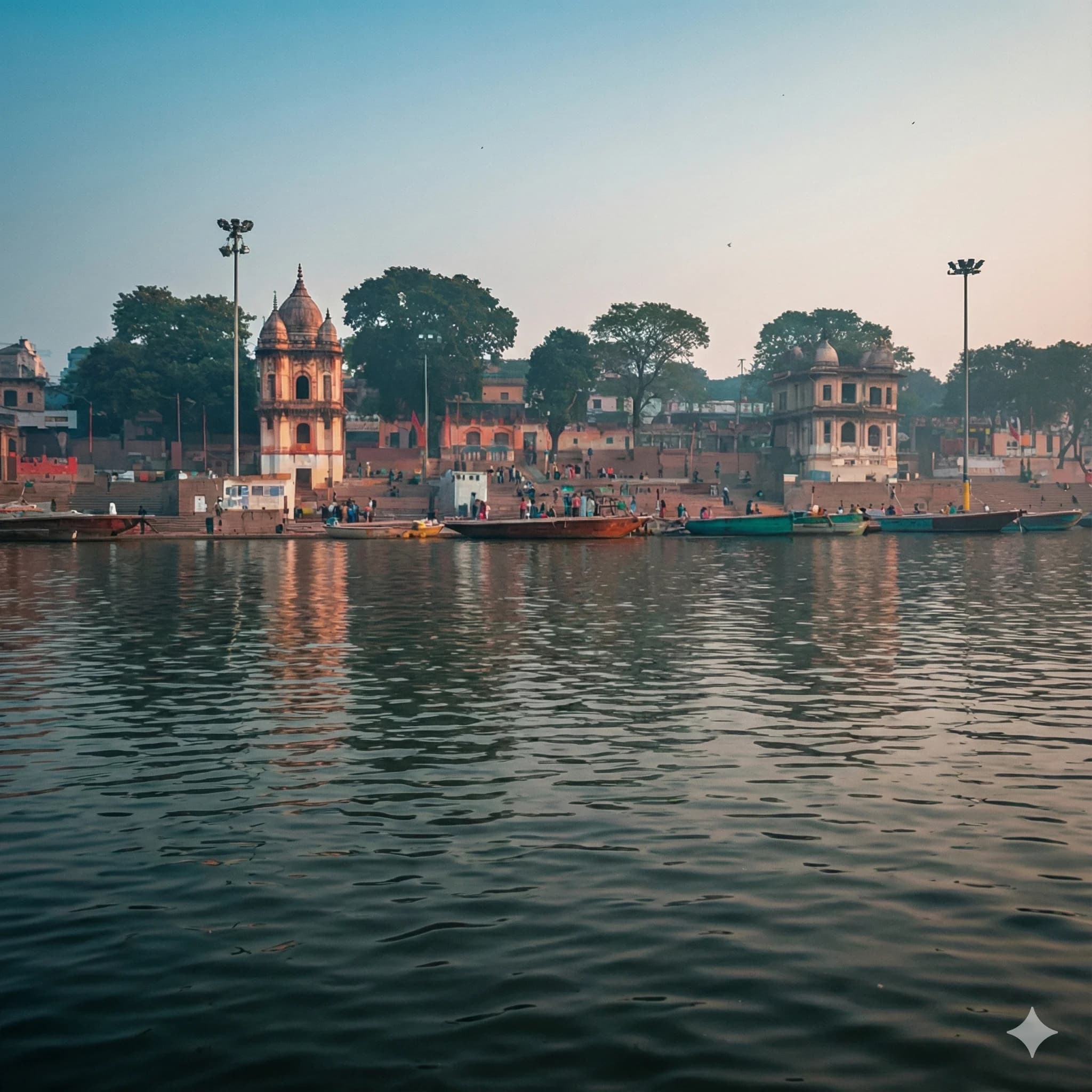
The southernmost ghat where the river Assi meets the Ganges. Famous for its 'Subah-e-Banaras' morning program, yoga sessions, long-term student residents, and a more tranquil, bohemian atmosphere.