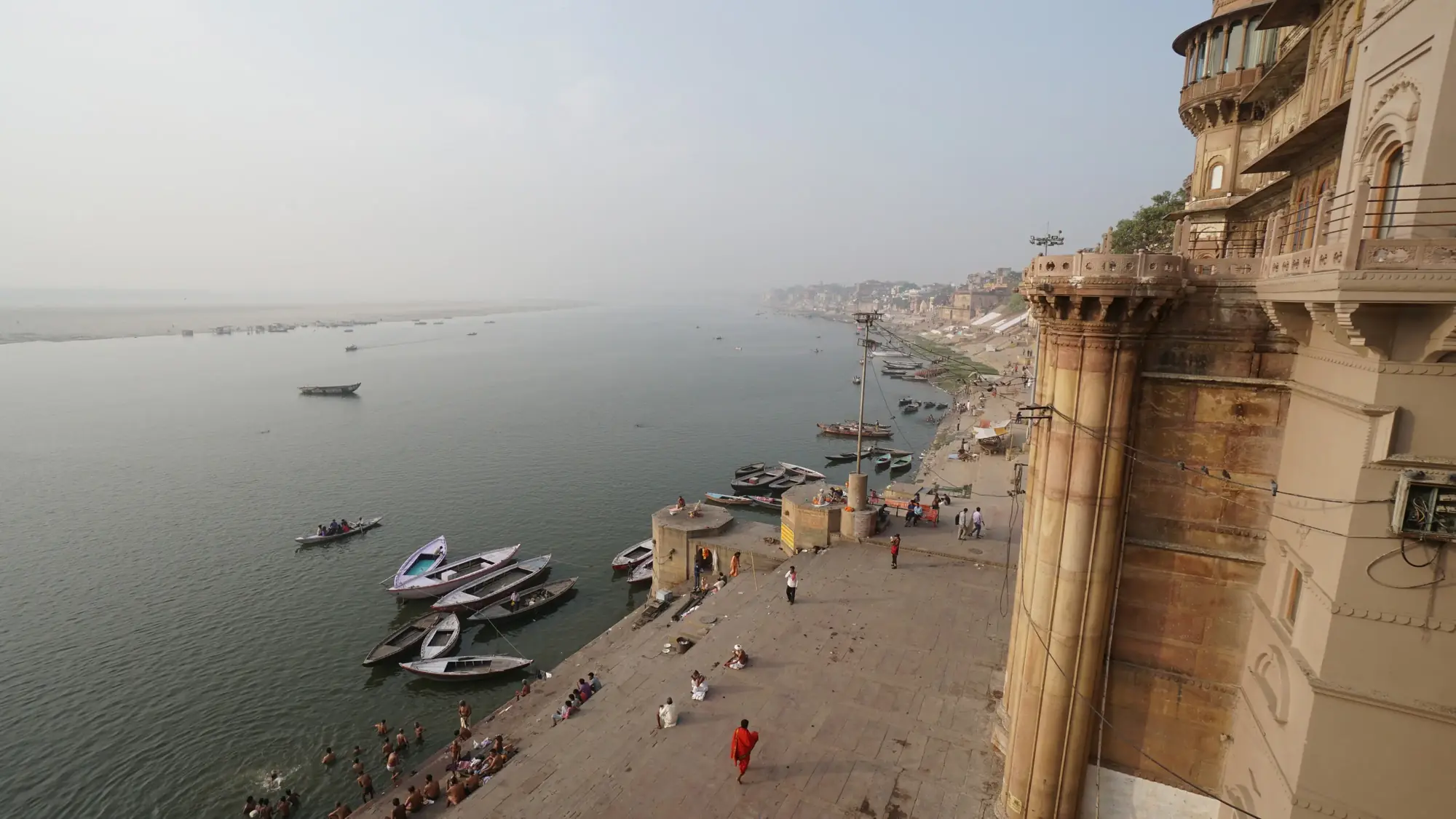
Scindia Ghat (or Shinde Ghat) is visually one of the most striking locations on the riverfront due to the presence of the Ratneshwar Mahadev Temple. This massive stone temple leans precariously at about 9 degrees (more than the Tower of Pisa) and is partially submerged in the Ganges for much of the year. Built by the Scindia dynasty of Gwalior in the 19th century, the heavy structure collapsed into the soft riverbed almost immediately after construction, creating a poetic symbol of human ambition bowing to nature.
Bordering the intense Manikarnika Ghat, Scindia offers a strange pocket of serenity next to the burning grounds. It is a favorite spot for early morning meditation and for photographers capturing the misty, surreal landscape of the sunken temple. Legend says this is the birthplace of Agni, the God of Fire, adding a layer of primal sanctity to the location.
The ghat is intimately connected to the labyrinth of alleys known as Siddha Kshetra, an area filled with hidden shrines and old hermitages. It is less crowded than its neighbors, making it an excellent place to sit and observe the river's flow without the constant interruption of hawkers.
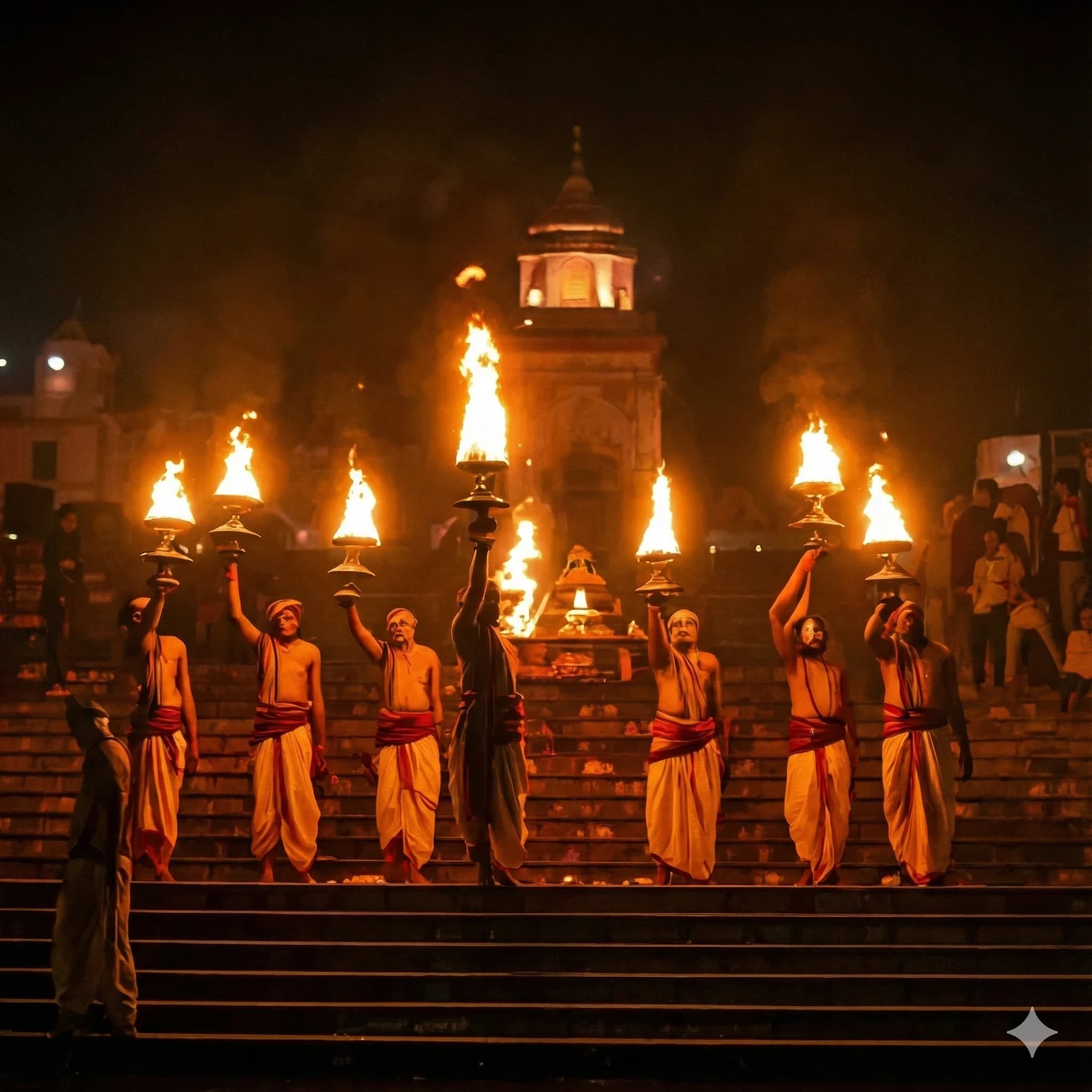
The most spectacular and bustling ghat in Varanasi, famous for the Agni Pooja (Ganga Aarti). Legend says Lord Brahma sacrificed ten horses here, making it a site of supreme cosmic power and vibrant daily devotion.
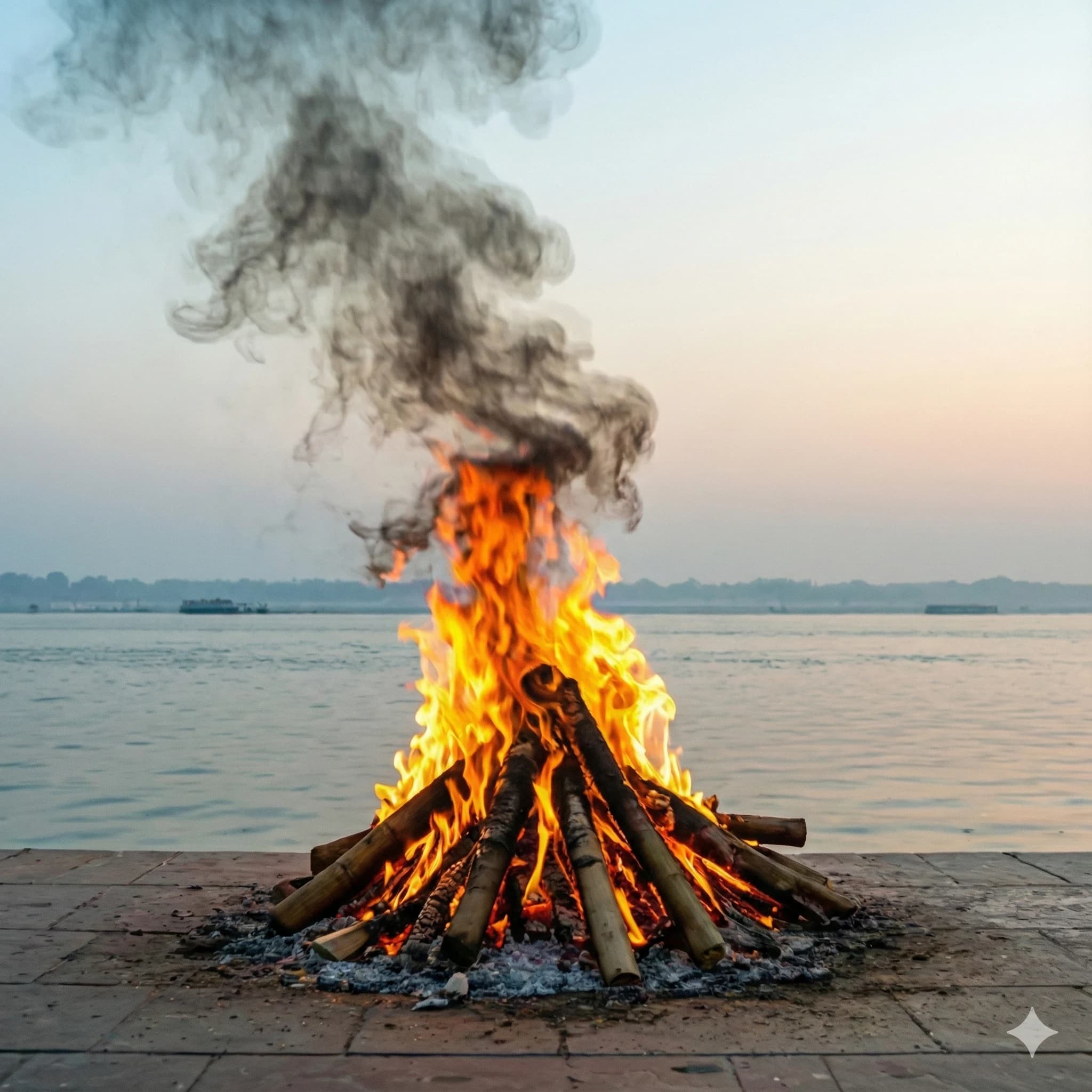
The Mahashmashana or 'Great Cremation Ground.' It is believed that the fires here have never gone out for centuries. Hindus believe cremation here grants immediate liberation (Moksha) from the cycle of rebirth.
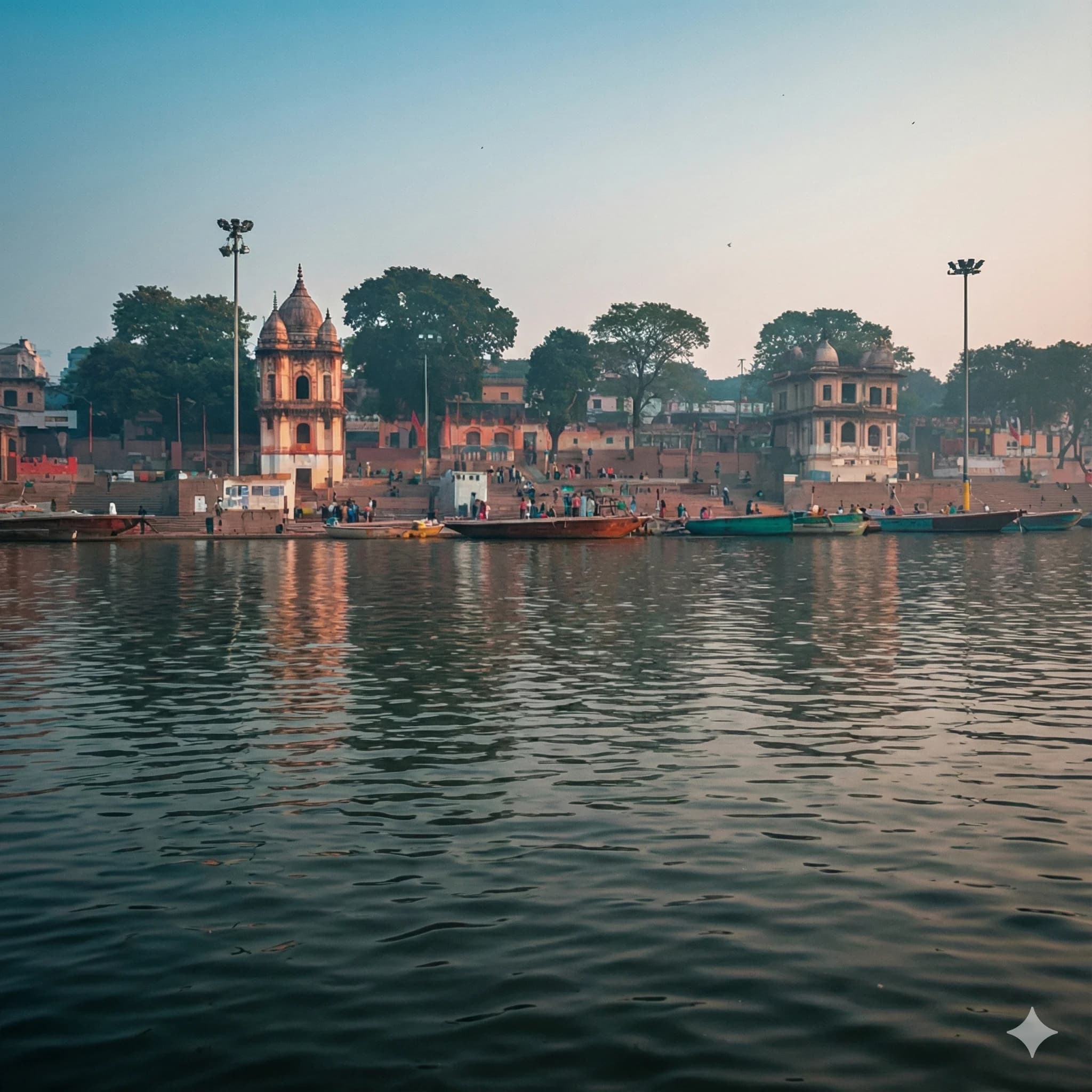
The southernmost ghat where the river Assi meets the Ganges. Famous for its 'Subah-e-Banaras' morning program, yoga sessions, long-term student residents, and a more tranquil, bohemian atmosphere.