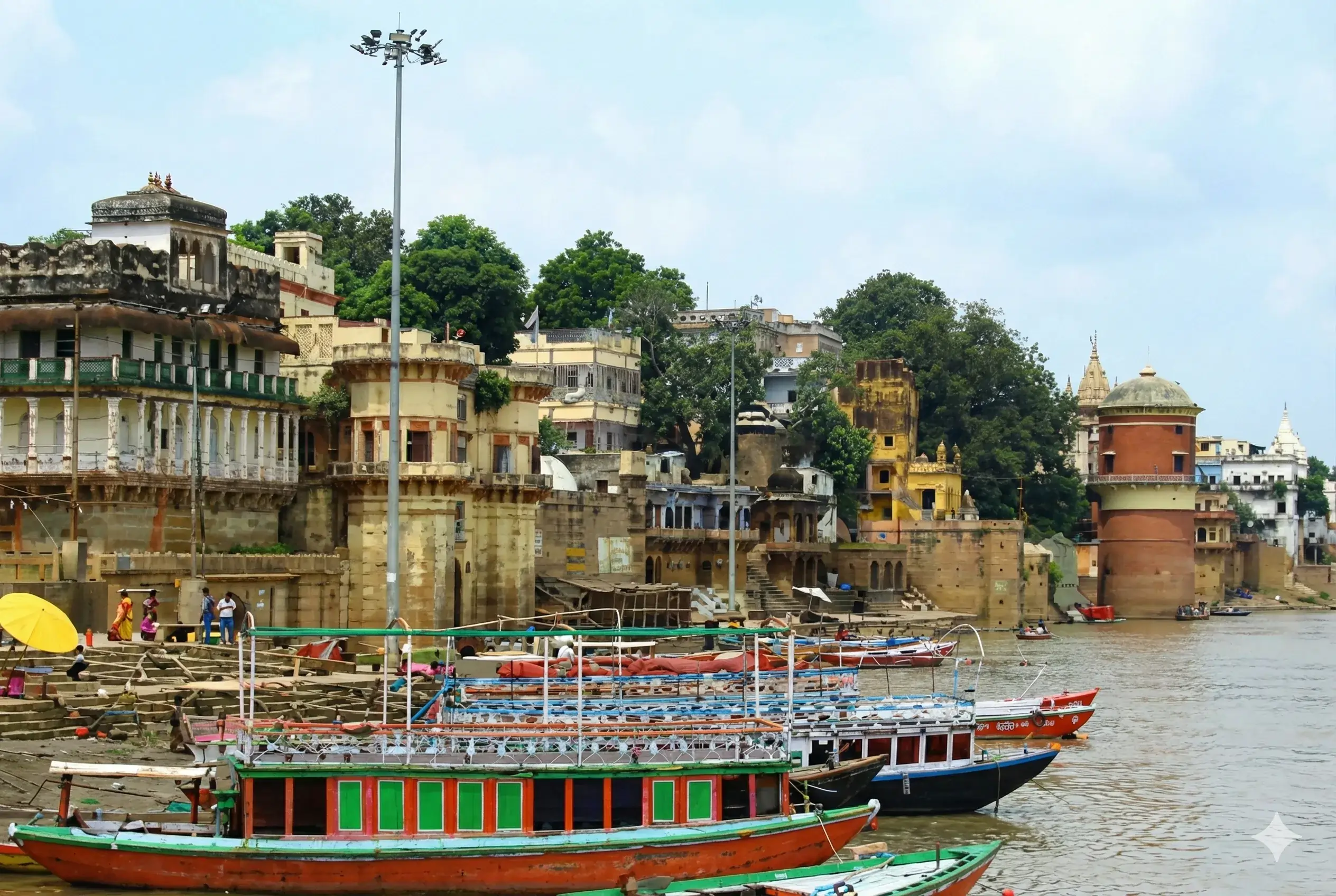
Tulsi Ghat is a site of immense literary and cultural importance. It is named after Goswami Tulsidas, the 16th-century poet-saint who translated the Ramayana from elite Sanskrit into the vernacular Awadhi (Ramcharitmanas), making the epic accessible to the common masses. It is believed that Tulsidas lived on this ghat and composed large parts of his magnum opus here.
The ghat houses a small temple containing the wooden sandals (paduka) worn by the saint and a small idol of Lord Hanuman, which Tulsidas is said to have consecrated himself. This makes it a pilgrimage site for literature lovers and devotees alike.
Tulsi Ghat is also the starting point of the famous 'Nag Nathaiya' festival, a dramatic re-enactment of Lord Krishna subduing the serpent Kaliya. During this festival, a large branch of a Kadamba tree is planted on the river bank, and a young boy dressed as Krishna jumps from it into the river, watched by thousands. It is also one of the few ghats that hosts traditional wrestling matches (Dangals) in the mud pits (Akhadas) nearby.
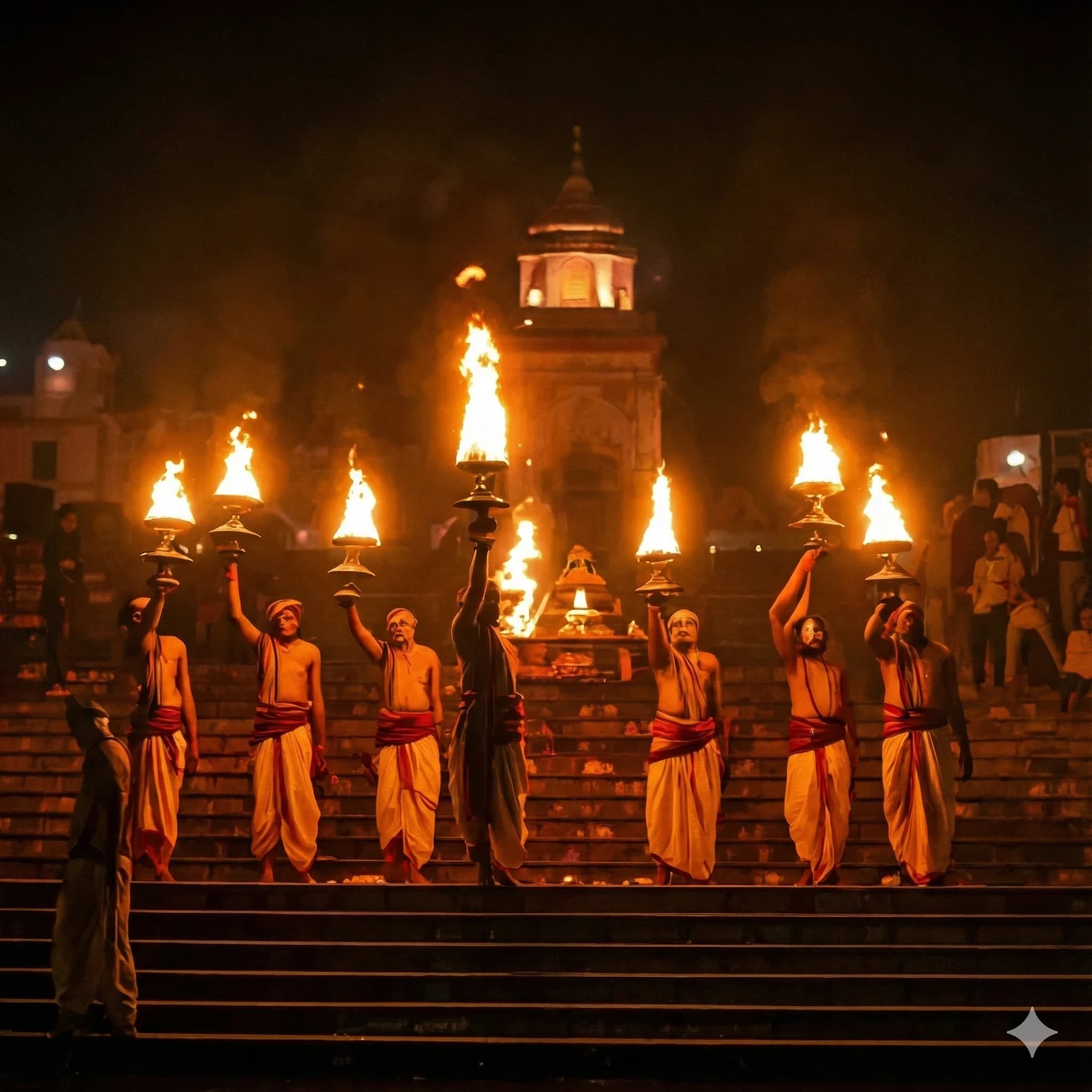
The most spectacular and bustling ghat in Varanasi, famous for the Agni Pooja (Ganga Aarti). Legend says Lord Brahma sacrificed ten horses here, making it a site of supreme cosmic power and vibrant daily devotion.
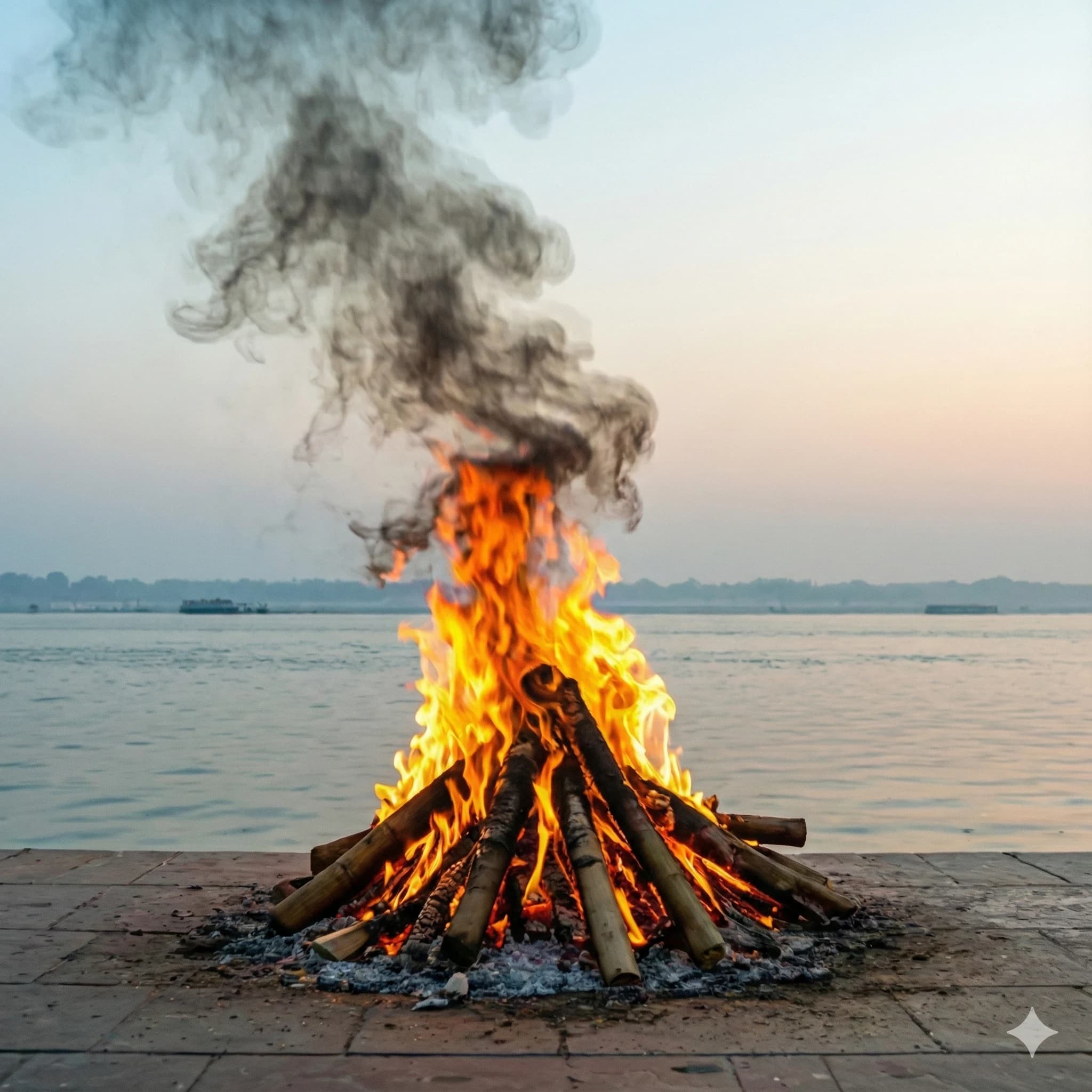
The Mahashmashana or 'Great Cremation Ground.' It is believed that the fires here have never gone out for centuries. Hindus believe cremation here grants immediate liberation (Moksha) from the cycle of rebirth.
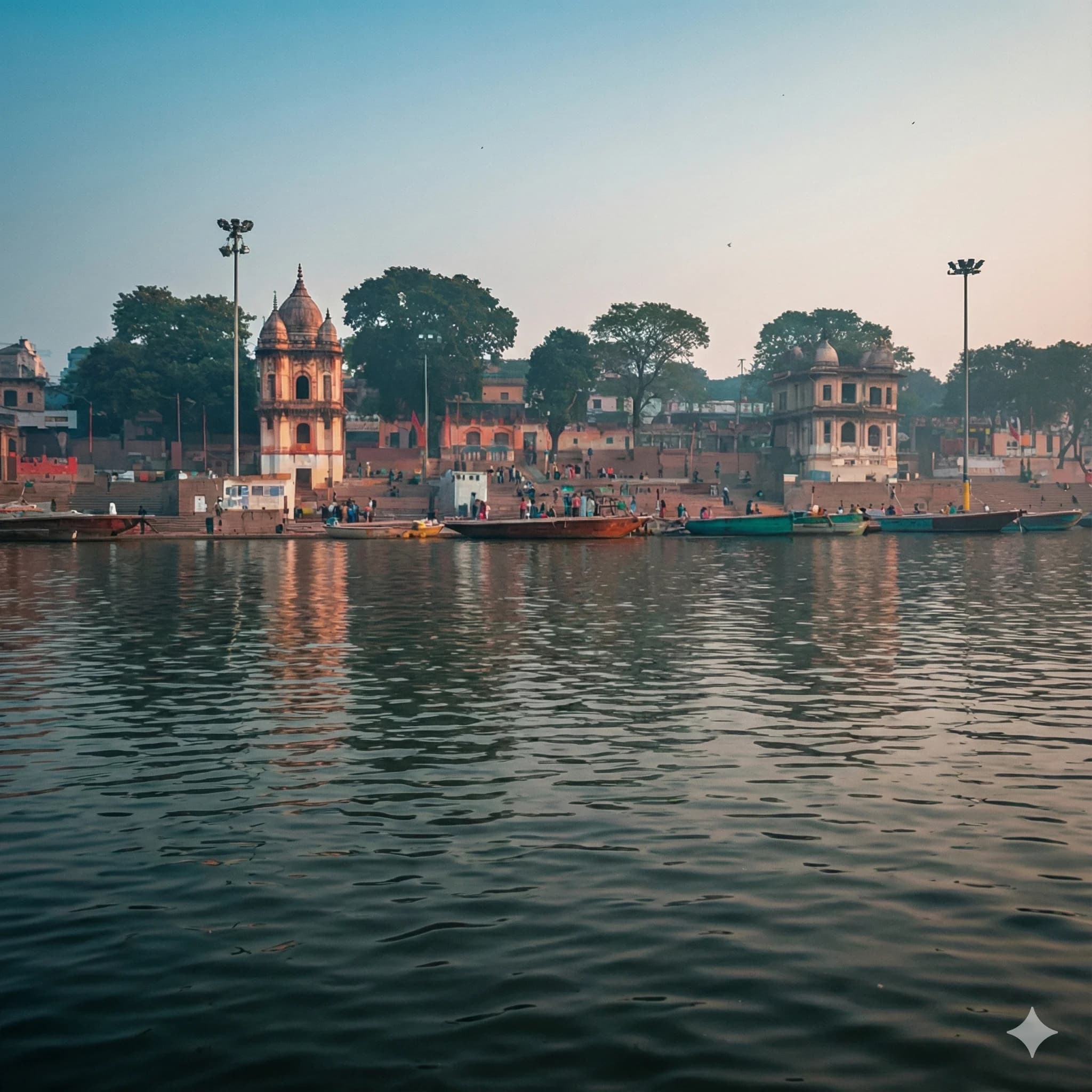
The southernmost ghat where the river Assi meets the Ganges. Famous for its 'Subah-e-Banaras' morning program, yoga sessions, long-term student residents, and a more tranquil, bohemian atmosphere.