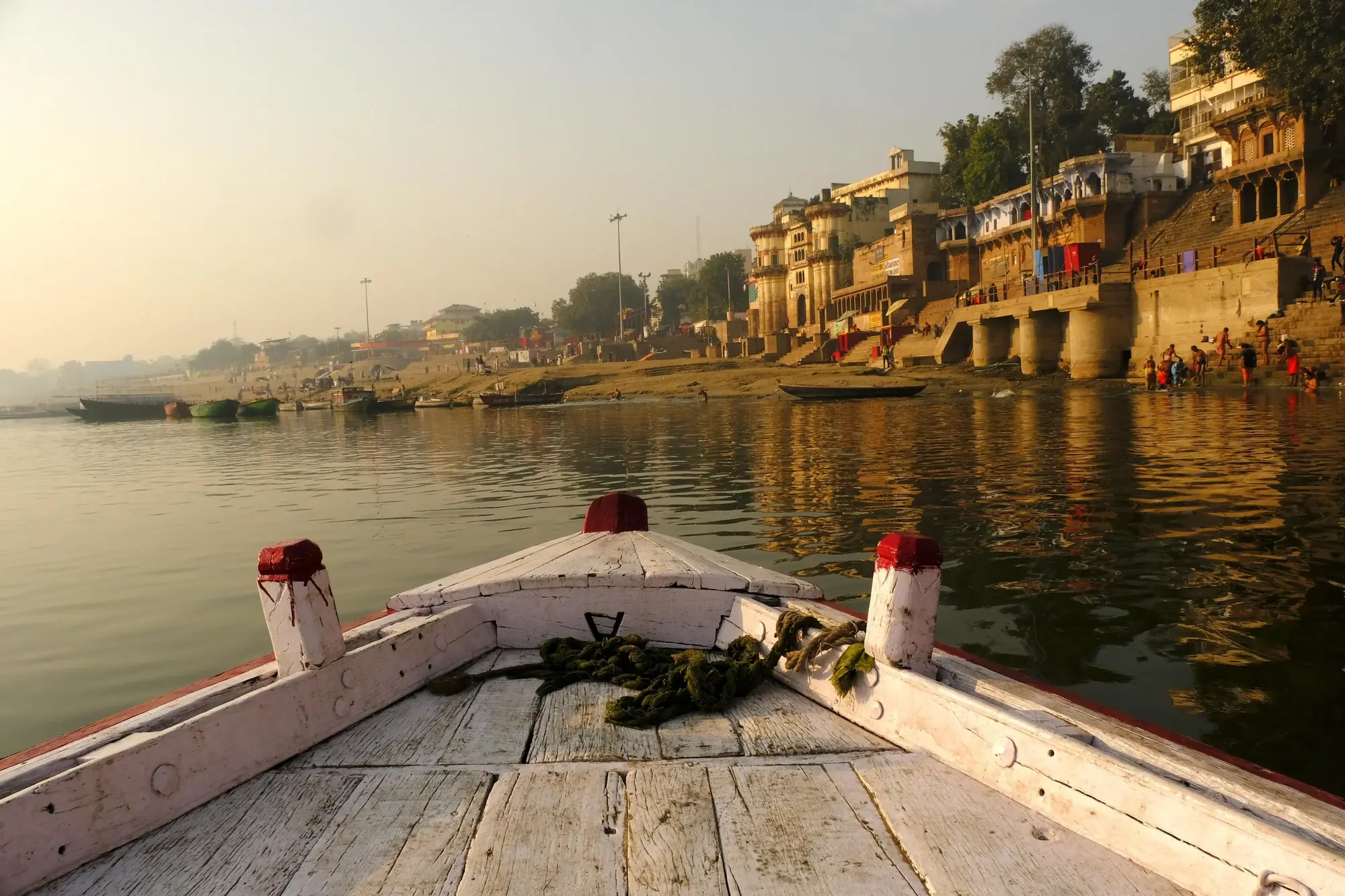
Guptar Ghat holds a somber and profound significance in the Ramayana. 'Gupt' means hidden or disappearance. It is believed that this is the precise spot where Lord Rama, having completed his earthly duties and his reign as King, walked into the waters of the Saryu to take 'Jal Samadhi' and leave his mortal form to return to Vaikuntha as Lord Vishnu. As such, it marks the end of the Treta Yuga and the conclusion of the avatar's journey.
Located a few kilometers away from the main city center, this ghat is significantly more peaceful and less crowded than the central ghats. It was renovated in the 19th century by Raja Darshan Singh. The ghat features wide sandstone steps leading down to the river, flanked by temples like the Chakra Harji Vishnu Temple and the Raja Mandir.
The sunsets here are legendary. Because of its location, one can see the sun dipping into the Saryu waters, painting the sky in hues of orange and purple. Many devotees come here to perform rites for their ancestors, believing the site facilitates the liberation of the soul, just as it did for Rama.
Recently, the ghat has been developed with a long riverfront drive and boating facilities. You can take a motorboat from Naya Ghat to Guptar Ghat, enjoying a scenic ride that connects the birth (Ayodhya center) and the departure (Guptar Ghat) of the Lord.
It is a place for quiet contemplation on the impermanence of life, contrasting the celebration of birth at the Ram Janmabhoomi.
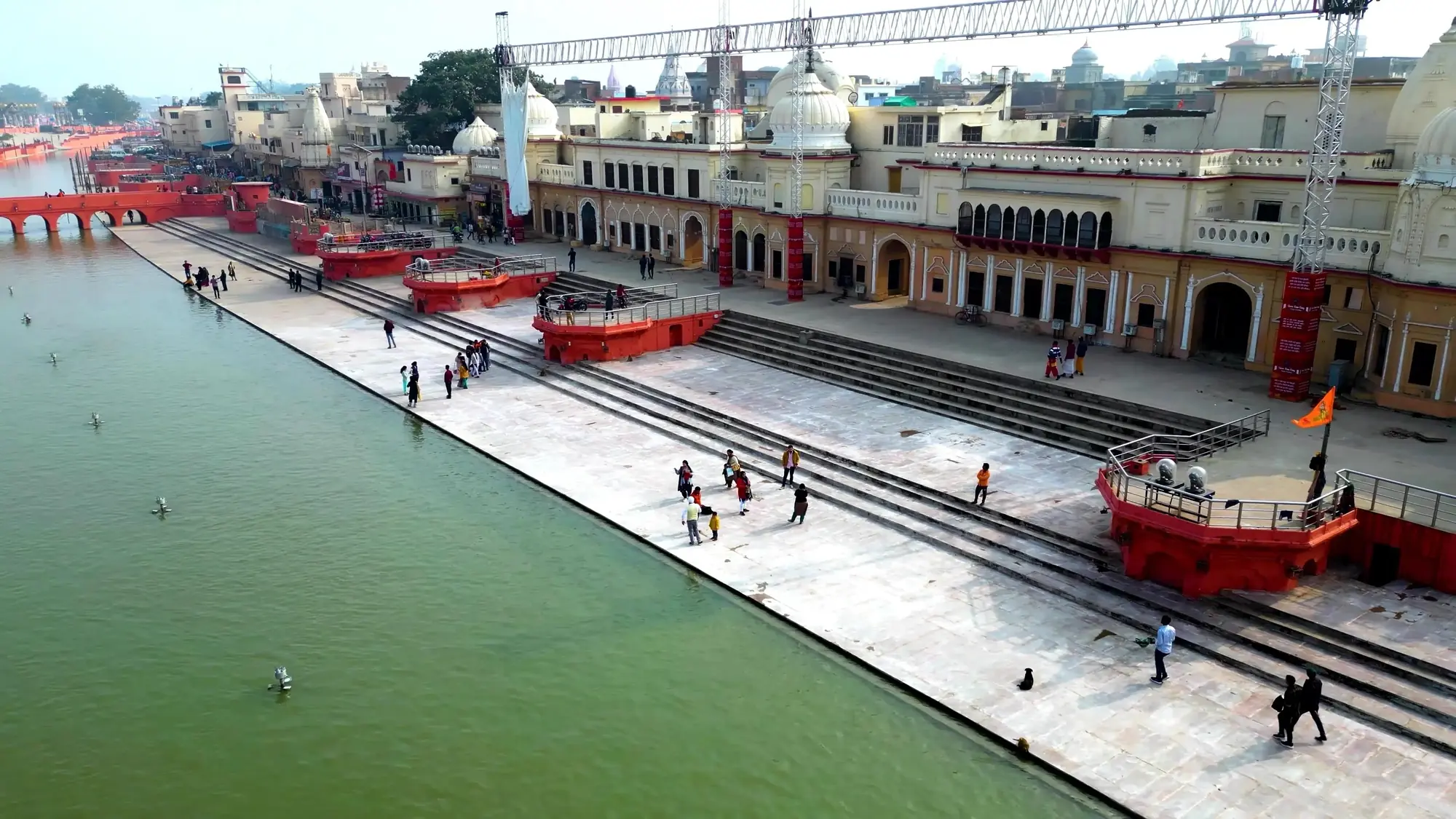
A series of ghats on the riverfront, famous for its spectacular renovation and the Guinness World Record-breaking Deepotsav festivals.
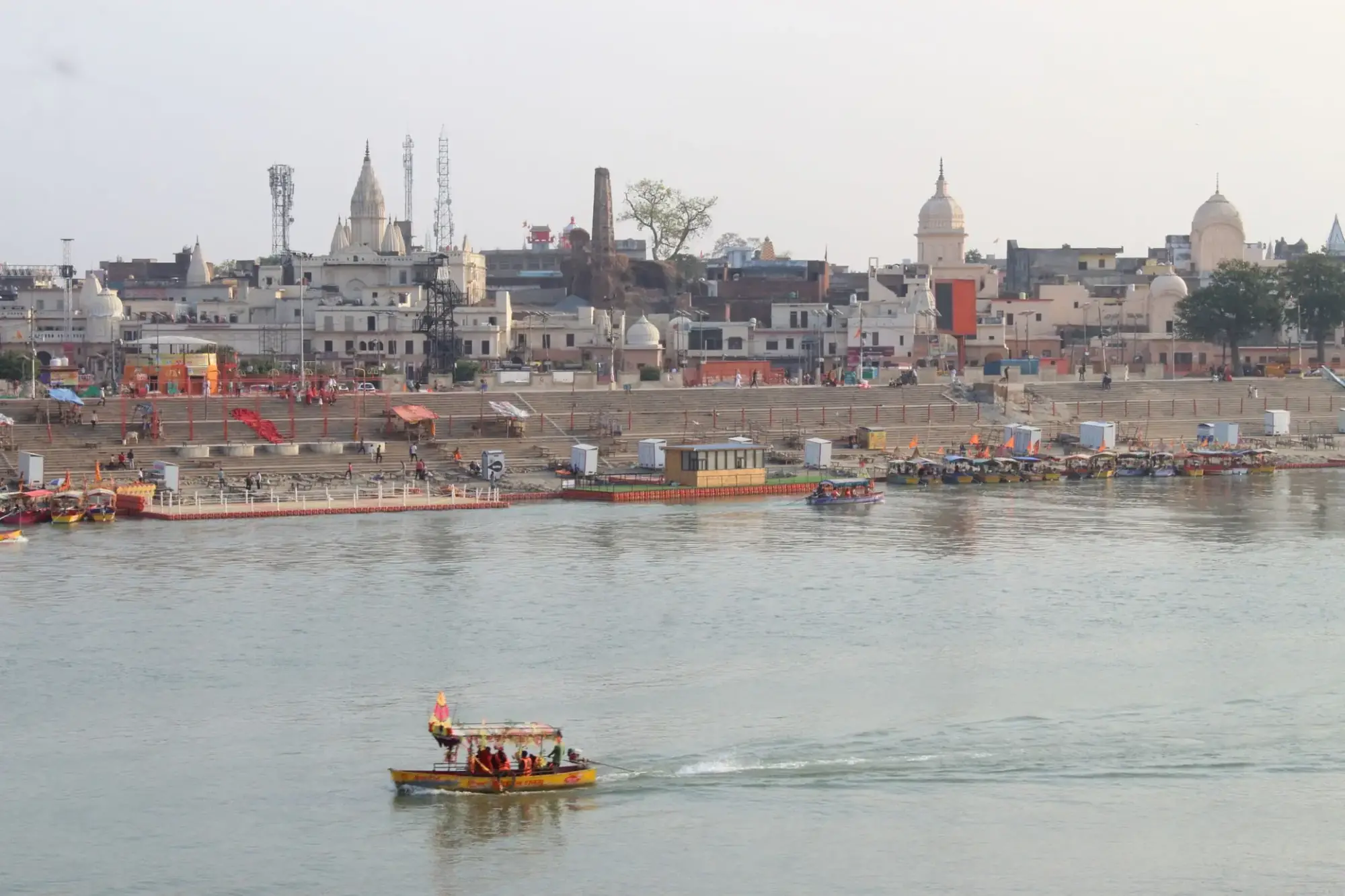
The bustling entry point to the Saryu riverfront, featuring beautiful parks and the statue of Lord Rama. A hub for boat rides and evening leisure.

The magnificent new temple marking the birthplace of Lord Rama. A masterpiece of Nagara architecture carved from pink sandstone.