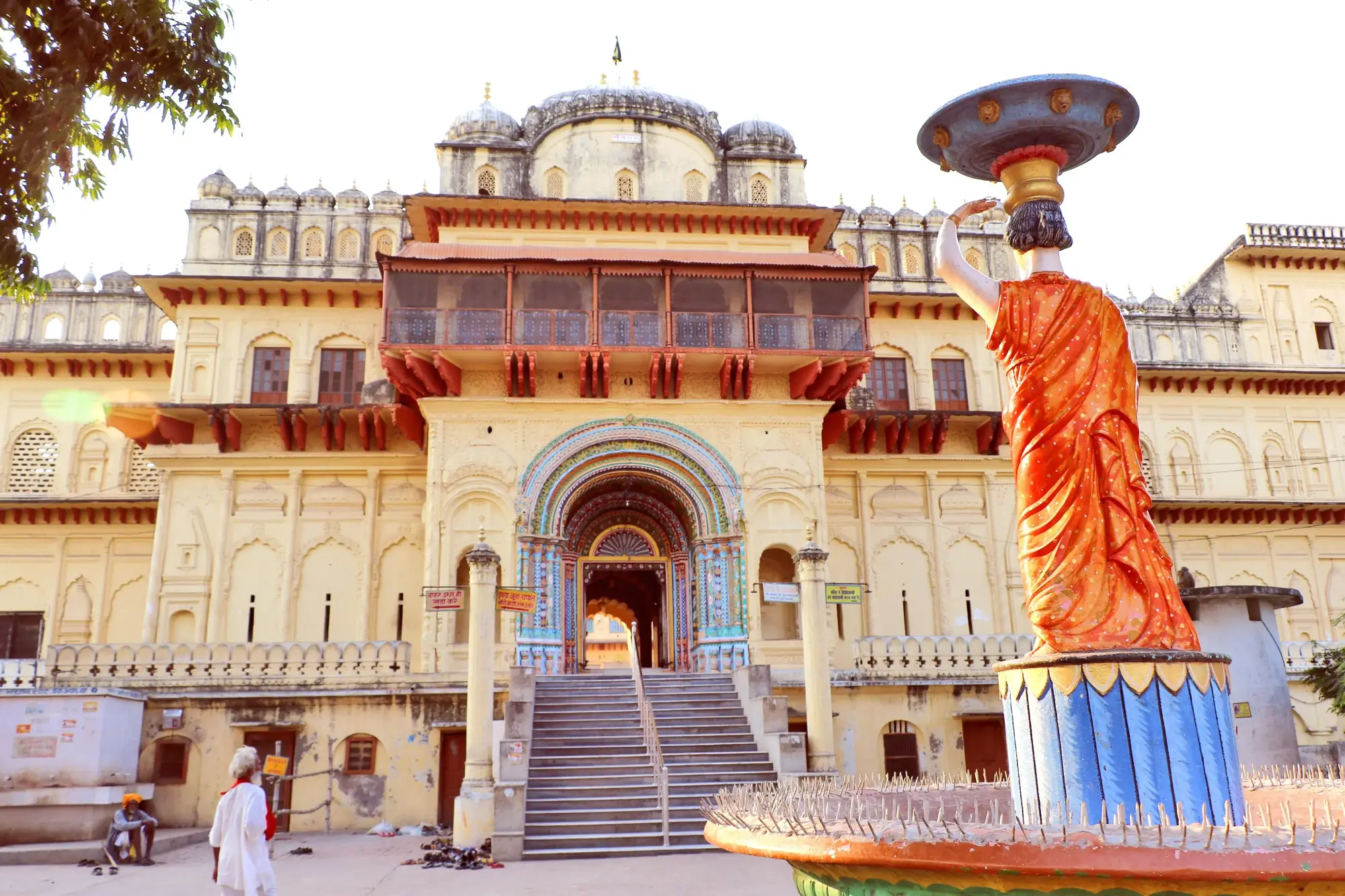
Kanak Bhavan (House of Gold) is often considered the most beautiful building in Ayodhya. Legend says that this palace was gifted to Goddess Sita by Kaikeyi (Rama's stepmother) immediately after her marriage to Rama. It was meant to be their private palace.
The current structure was built in the late 19th century by the Royal House of Orchha (Bundelkhand). Consequently, the architecture is a stunning blend of Rajasthani and Bundelkhand styles, featuring scalloped arches, enclosed courtyards, and intricate stonework. It looks more like a royal haveli than a traditional temple.
The main shrine houses three pairs of idols of Rama and Sita. The atmosphere here is different from other temples; it is intimate and musical. It is famous for its devotional music; musicians sit in the courtyard singing 'Bhajans' and 'Padas' that describe the romantic and domestic life of the divine couple.
It is said that the original palace was studded with gold and gems, hence the name Kanak (Gold). While the gems are gone, the spirit of royal grandeur remains. The sunset view from the upper terraces is serene.
This is a must-visit for art and architecture lovers, as it is one of the best-preserved heritage structures in the region.
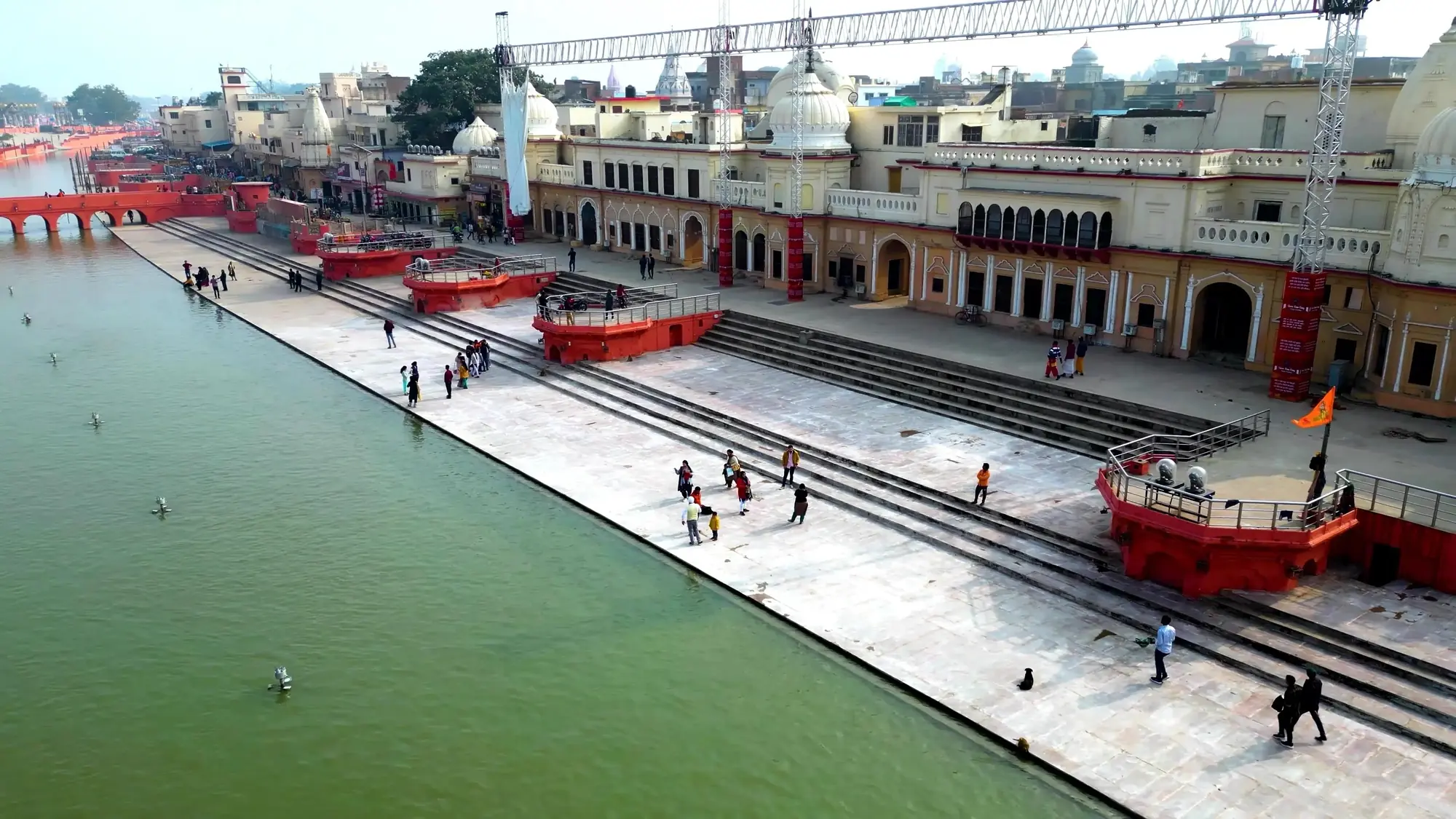
A series of ghats on the riverfront, famous for its spectacular renovation and the Guinness World Record-breaking Deepotsav festivals.
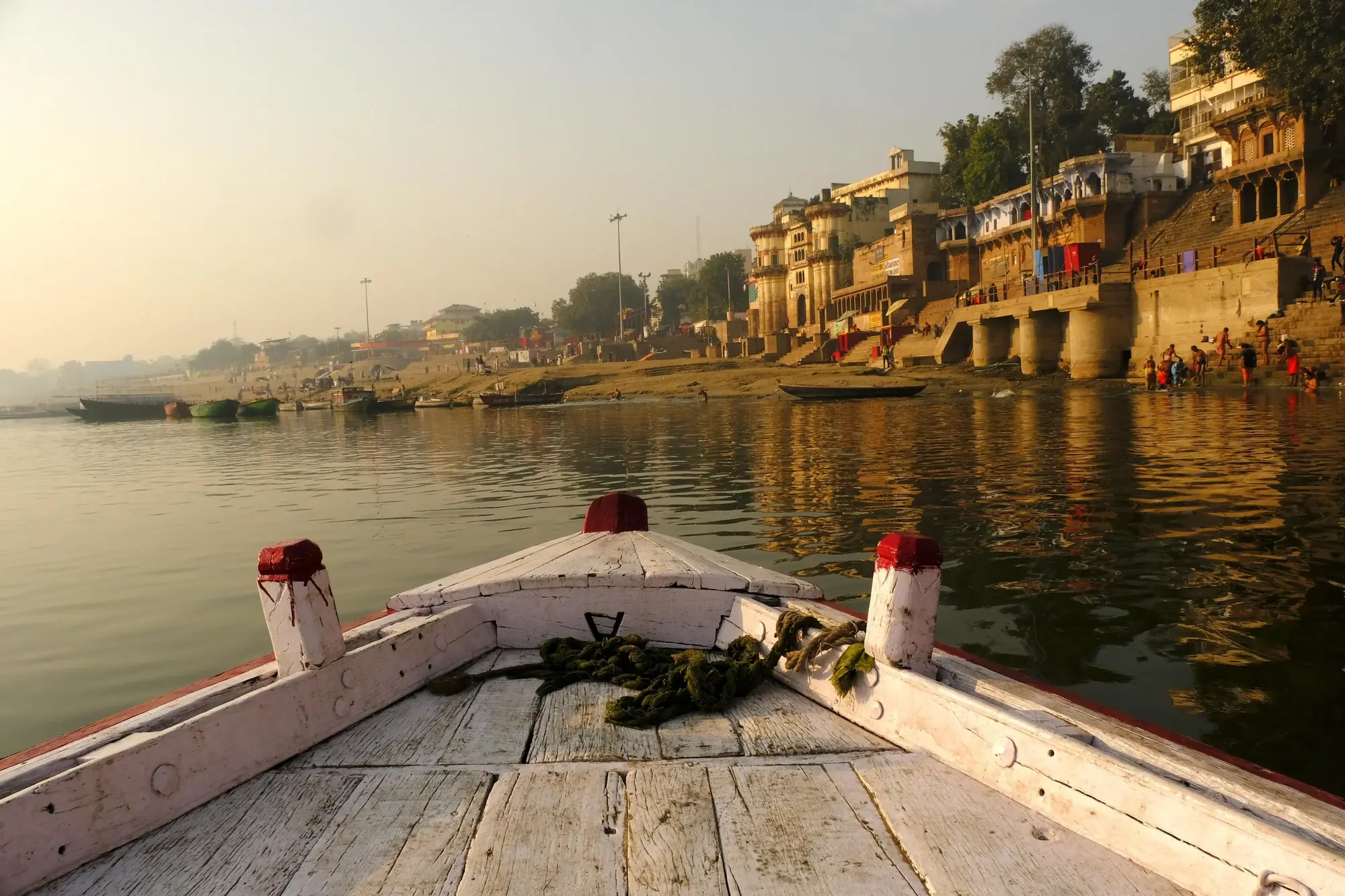
The sacred site where Lord Rama is believed to have taken 'Jal Samadhi' (left his physical body) to return to his celestial abode, Vaikuntha.
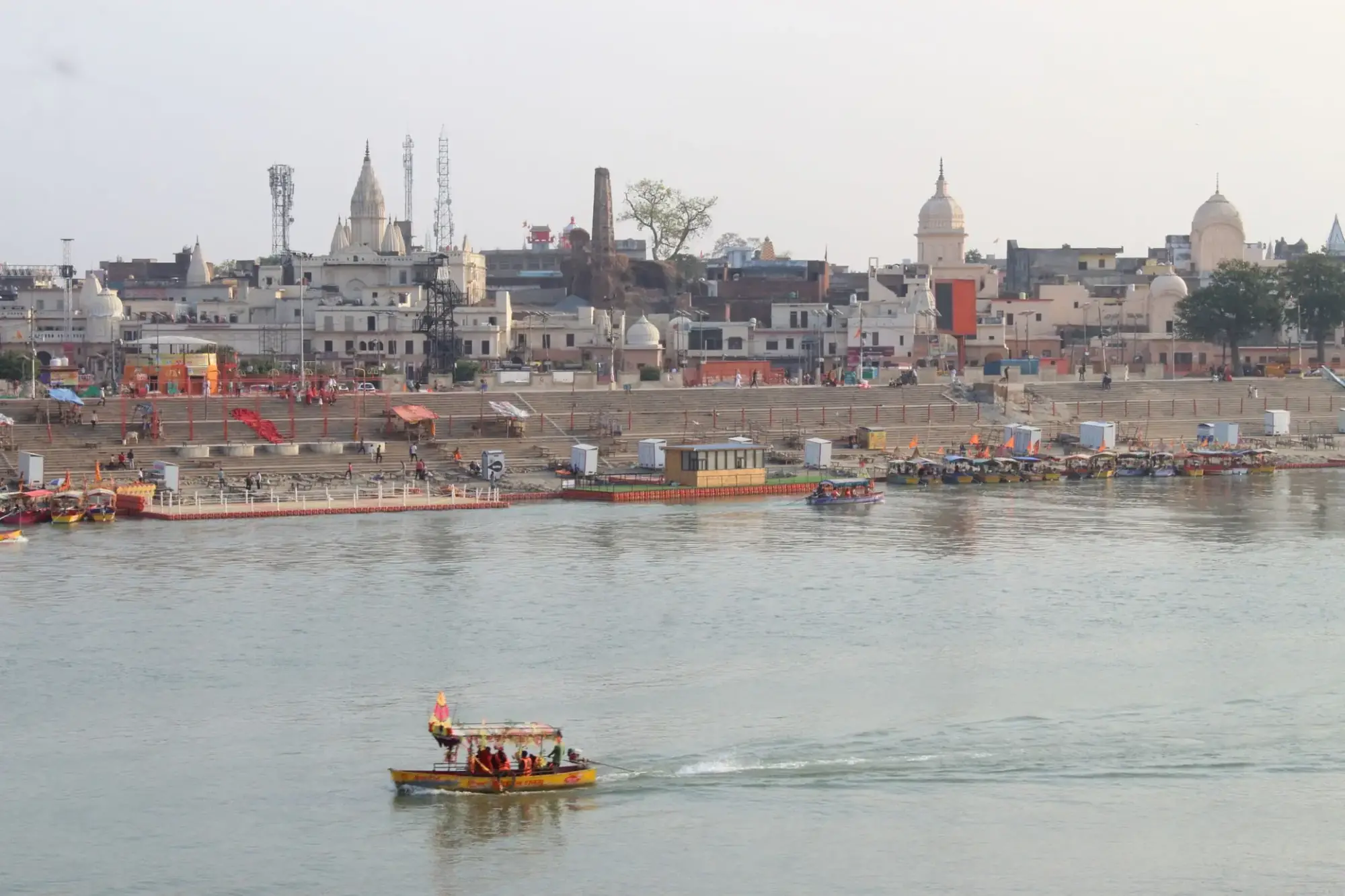
The bustling entry point to the Saryu riverfront, featuring beautiful parks and the statue of Lord Rama. A hub for boat rides and evening leisure.