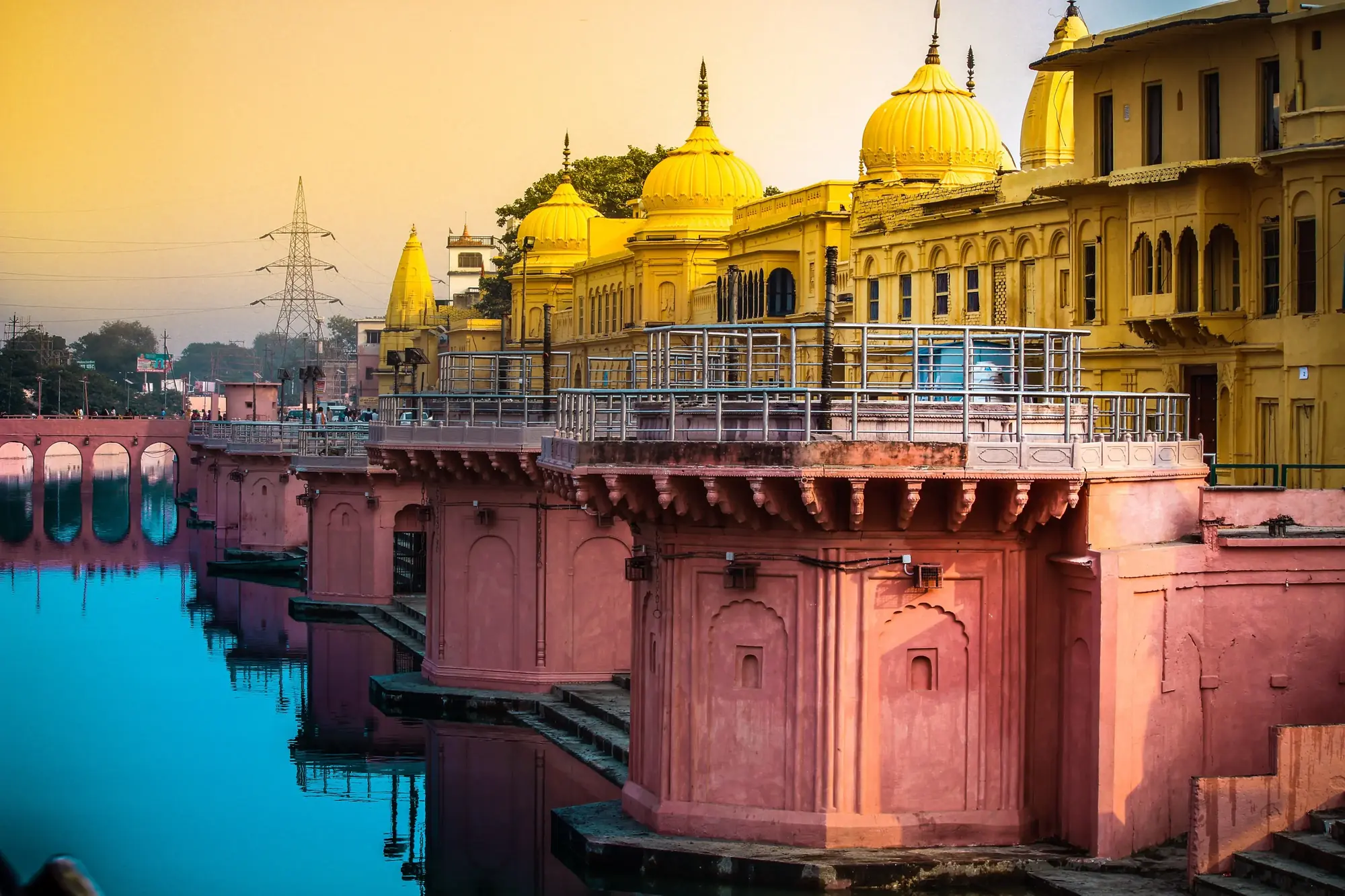
Treta Ke Thakur acts as a historical marker for the 'Ashwamedha Yajna' (Horse Sacrifice) performed by Lord Rama. This ritual was the supreme assertion of sovereignty in ancient India. The temple stands on the spot where the sacrificial fires were lit.
The temple houses idols of the deity carved out of single blocks of black sandstone (Kasauti stone). These idols are said to be ancient, potentially recovered from the river Saryu. The temple opens only on specific auspicious days (like Ekadashi), making it a rare sight for lucky pilgrims.
The architecture is distinctively reddish in color, built by the the King of Kullu (Himachal Pradesh) roughly three centuries ago.
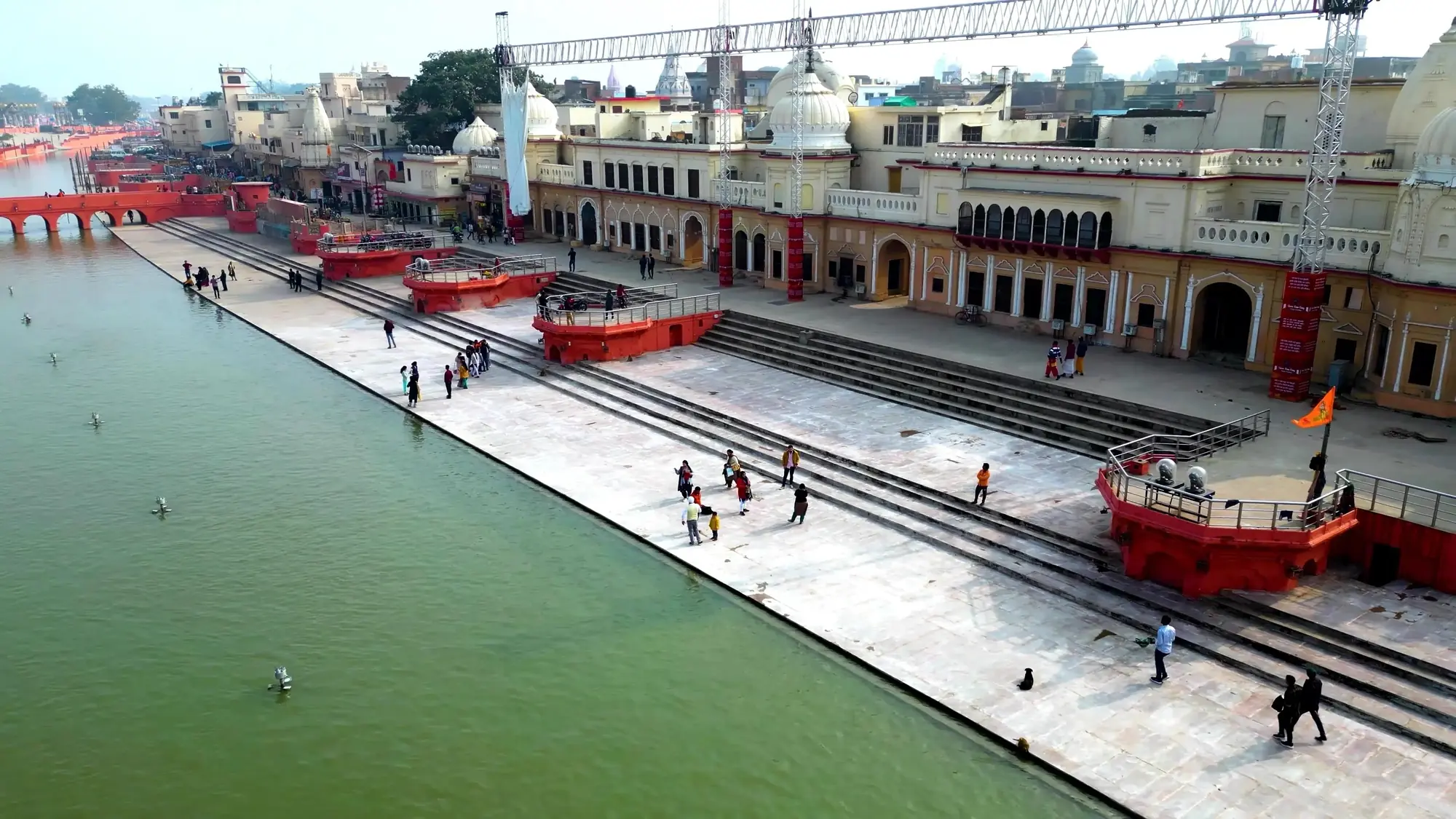
A series of ghats on the riverfront, famous for its spectacular renovation and the Guinness World Record-breaking Deepotsav festivals.
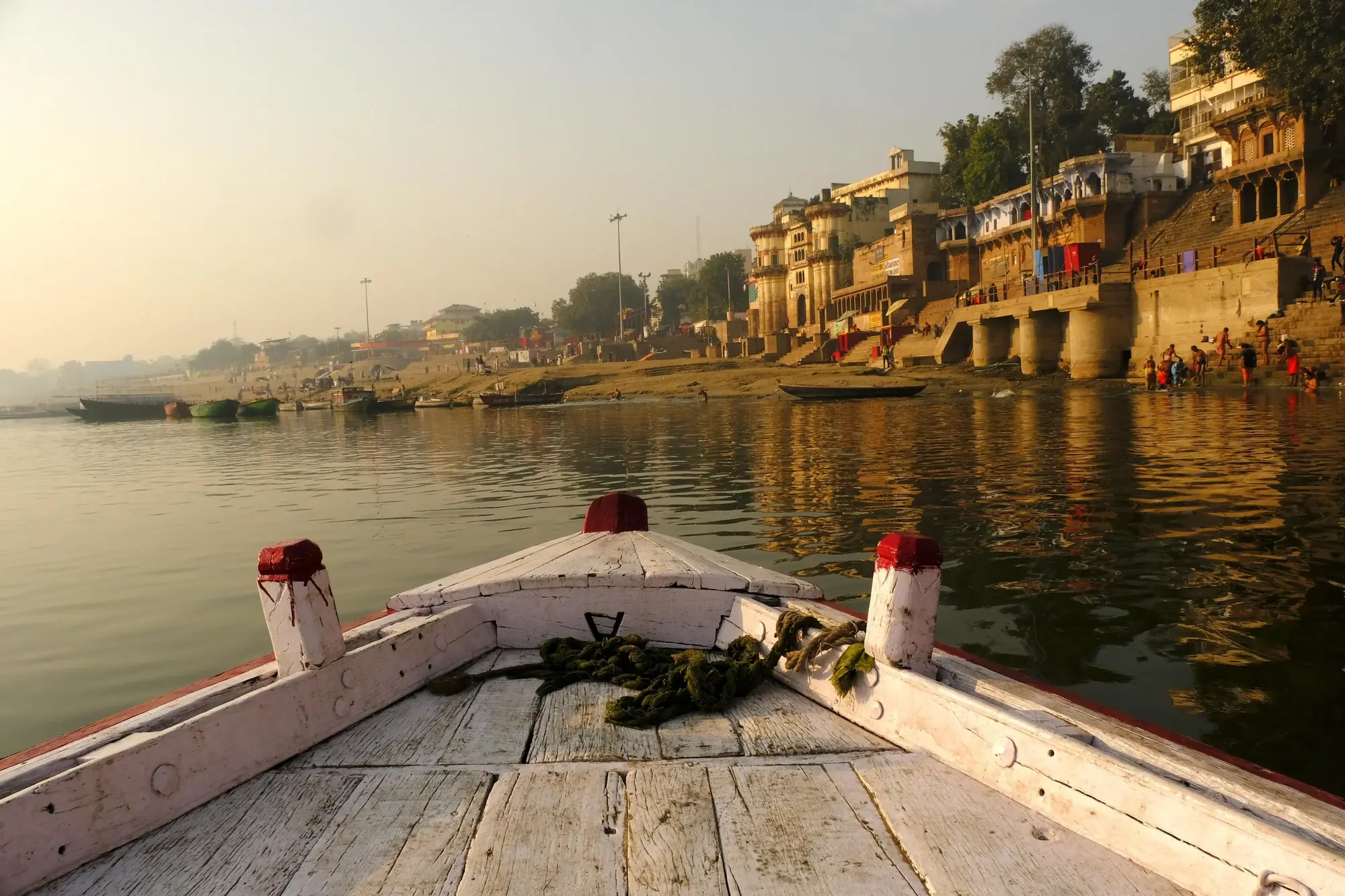
The sacred site where Lord Rama is believed to have taken 'Jal Samadhi' (left his physical body) to return to his celestial abode, Vaikuntha.
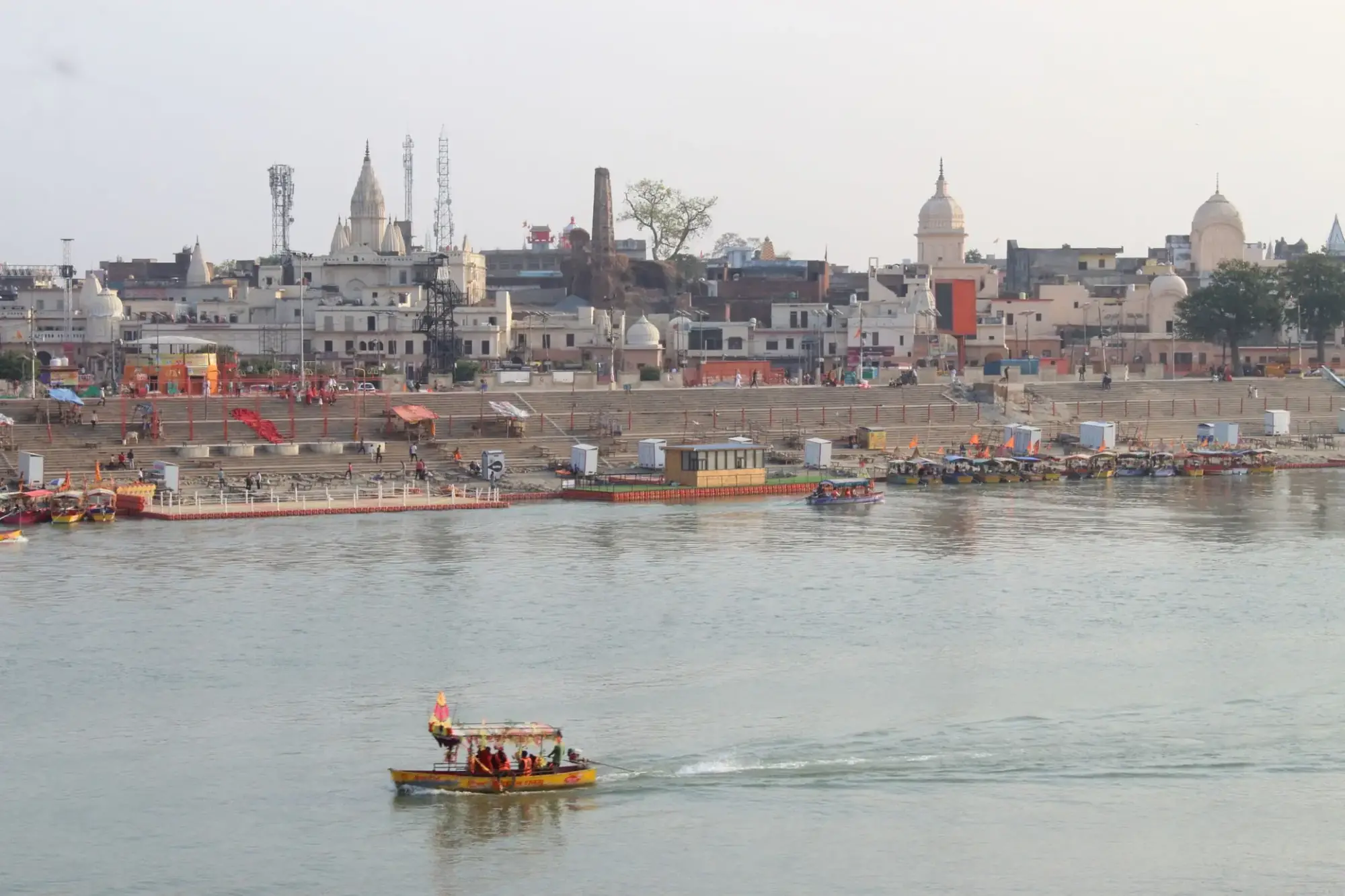
The bustling entry point to the Saryu riverfront, featuring beautiful parks and the statue of Lord Rama. A hub for boat rides and evening leisure.